
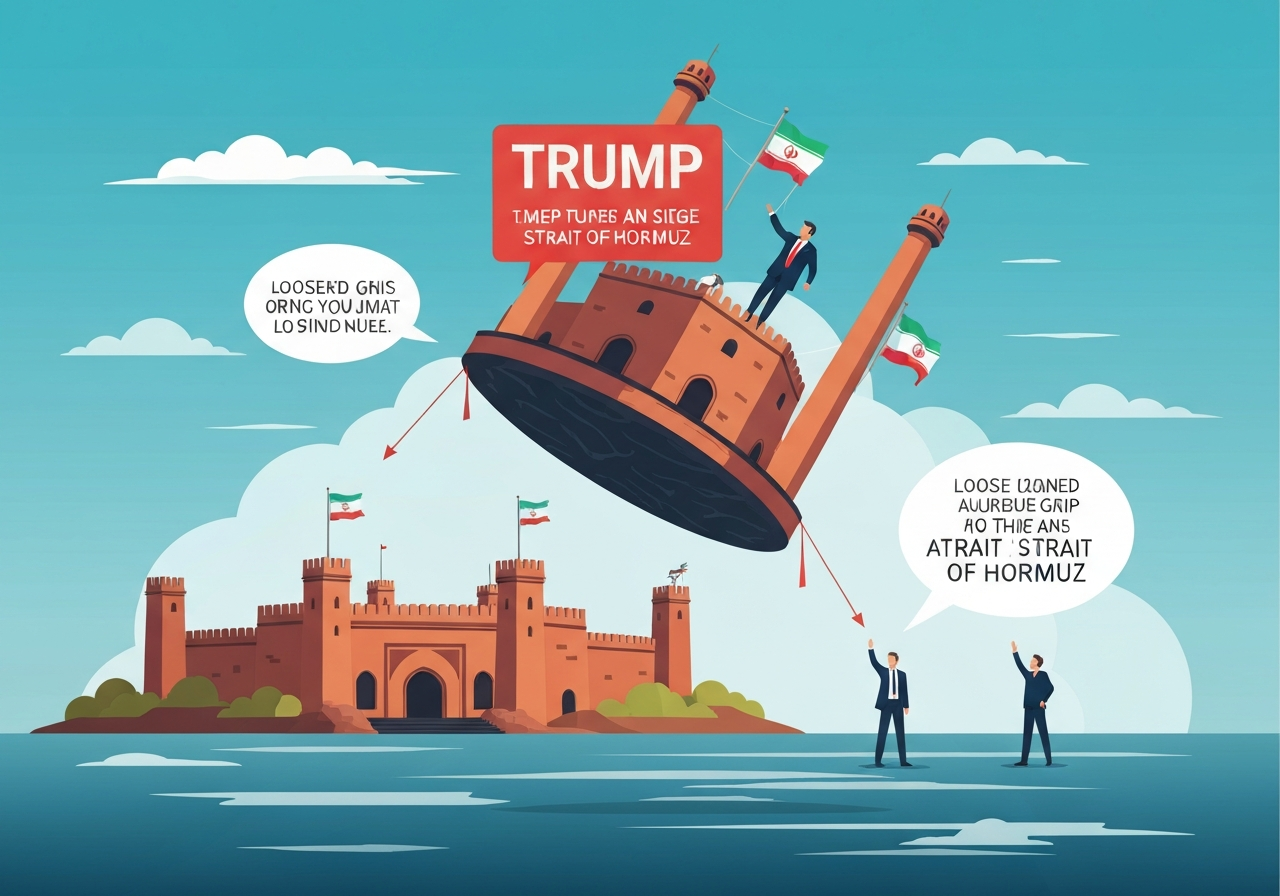
President Donald Trump suggested on Monday that U.S. forces could seize Iran’s Kharg Island if negotiations fail, even as Tehran temporarily allowed 20 oil tankers to transit the Strait of Hormuz amid ongoing ceasefire talks. The remarks came after both sides reported progress in discussions, while military movements and diplomatic protests multiplied across allied and regional capitals. The concession to let 20 cargo ships pass marks a limited thaw in maritime access but leaves core security and political disputes unresolved. International actors reacted sharply — from Spain restricting U.S. warplane access to official statements from CENTCOM and Israeli sources — underscoring how rapidly the situation remains liable to escalation.
Key Takeaways
- President Trump said U.S. forces might attack or seize Kharg Island if a deal is not reached, while also stating a preference for diplomacy.
- Tehran permitted 20 oil tankers to transit the Strait of Hormuz over the weekend as U.S.-Iran talks continued.
- U.S. Central Command released a photo of a B-52 refuel during a March 26 combat flight supporting Operation Epic Fury.
- Spain closed its airspace to U.S. warplanes engaged in operations tied to the Iran conflict and labeled the war illegal.
- Iran has experienced a prolonged internet outage reported as more than 700 hours, which officials say obscures the full extent of recent strikes.
- Analysts noted that Iran acquired North Korean systems, including a Musudan-class missile purchased in 2005 (19 units reported), which shapes its long-range strike capabilities.
- The broader U.S.-Israeli campaign against Iran entered its fifth week of combat as of late March, with mixed diplomatic signals and persistent military activity.
Background
Friction between the United States and Iran has escalated into open hostilities in recent weeks following a series of strikes, maritime incidents, and reciprocal military actions. Iran’s role as a regional power, its relationships with proxy groups across Lebanon, Iraq and Yemen, and its ballistic missile inventory have long made the Gulf a focal point for strategic competition. Kharg Island is a key node in Iran’s oil export infrastructure and has symbolic and operational significance for control of hydrocarbon shipments from the Persian Gulf.
Diplomatic channels have intermittently opened and closed as both sides weigh military pressure against the costs of escalation. Tehran’s limited allowance of 20 tankers through the Strait of Hormuz comes against this tense backdrop, where narrow commercial concessions can serve both tactical and messaging purposes. Meanwhile, allied states have reacted differently: some backing U.S. operations, others signaling legal or political objections to elements of the campaign.
Main Event
On Monday President Trump warned that if talks do not quickly resolve the dispute and the Strait of Hormuz is not restored to unobstructed commercial use, the United States could take direct action against Iranian infrastructure, including energy and desalination facilities and Kharg Island. He framed the threat as retribution for past Iranian attacks on U.S. personnel, while also claiming that negotiators had made “serious progress.” The administration described the discussions as with a “new and more reasonable” Iranian leadership.
Tehran’s decision to allow 20 oil cargo ships through the Strait was presented by negotiators as a limited confidence-building measure designed to reduce immediate commercial disruptions. U.S. officials confirmed the transits but cautioned that passage of a small number of tankers does not resolve deeper security concerns over shipping insurance, naval escorts, and the legal environment in the Gulf.
Operationally, CENTCOM circulated imagery of a B-52 Stratofortress refueled during a March 26 combat sortie tied to Operation Epic Fury, signaling sustained U.S. air mobility and strike readiness in the region. Spanish authorities separately announced a closure of national airspace to U.S. warplanes involved in the Iran campaign and labeled the conflict unlawful, complicating logistics for allied air operations.
Analysis & Implications
The president’s public threat to target Kharg Island elevates the risks facing an energy node that handles crude exports and related infrastructure. Striking such facilities would have immediate economic effects — disrupting flows of oil, increasing insurance and freight costs, and potentially driving spikes in global energy prices. It would also complicate relations with third-party countries reliant on Gulf oil and with global markets already sensitive to supply shocks.
Politically, the message serves multiple audiences: it signals to domestic constituencies a posture of forceful retribution, it aims to pressure Tehran at the negotiating table, and it attempts to deter Iranian proxy attacks by raising the possible costs of escalation. However, the threat of attacking civilian infrastructure raises legal and humanitarian questions that could erode international support if carried out.
Militarily, Iran’s longer-range missile capabilities — including systems linked to earlier procurement from North Korea, such as the Musudan-class missiles reportedly purchased in 2005 — mean that any expanded U.S. strike campaign risks wider retaliatory strikes against U.S. bases or partner states in the region. That dynamic constrains options for both calibrated punishment and full-scale invasion, increasing the appeal of limited, targeted measures and parallel diplomacy.
Comparison & Data
| Item | Reported Figure |
|---|---|
| Tankers allowed through Strait of Hormuz | 20 |
| Internet blackout duration reported | 700+ hours |
| Reported Musudan missiles acquired from North Korea | 19 (delivered 2005) |
| Distance to Diego Garcia (missile launch range cited) | ~2,500 miles |
The table summarizes figures cited in reporting and official releases: 20 tankers were allowed through the Strait, a reported internet blackout has lasted more than 700 hours, and analysts cite a 2005 delivery of 19 Musudan-class missiles to Iran. These data points illustrate both the economic dimensions (tankers, infrastructure) and the military-technical backdrop (missile inventories, strike ranges) that shape decision-making on all sides.
Reactions & Quotes
Spanish Defense Minister Margarita Robles announced an immediate closure of Spain’s airspace to U.S. warplanes operating in operations related to the Iran conflict, framing the action in legal and moral terms and saying Madrid would not authorize bases or overflight for those actions.
“Neither the bases are authorized, nor is the use of Spanish airspace authorized for any actions related to the war in Iran.”
Margarita Robles, Spanish Defense Minister (official statement)
CENTCOM posted imagery of a B-52 refueling during a combat flight to convey ongoing U.S. readiness in the theater while officials publicly described discussions with Tehran as ‘serious’ but contingent on verifiable outcomes.
“A U.S. Air Force B-52 Stratofortress is refueled during a combat flight supporting Operation Epic Fury, March 26.”
U.S. Central Command (official media release)
Israeli officials told reporters that Iran’s internet blackout has likely concealed the true extent of damage from recent strikes, a claim that highlights the difficulty of independent damage assessments when access and communications are restricted.
“When this blackout is lifted, the full extent of the damage to the regime will become clear.”
Senior Israeli intelligence official (media interview)
Unconfirmed
- Whether Washington has made any final decision to seize or attack Kharg Island remains unconfirmed and appears contingent on negotiation outcomes and high-level authorization.
- The full physical damage allegedly inflicted by recent strikes is unclear due to Iran’s extended internet outage and restricted on-the-ground access for independent verifiers.
- Assertions about internal Iranian deliberations — including claims that some leaders are preparing for extended war while others favor negotiation — are reported but not independently verified.
Bottom Line
The situation remains precarious: a small diplomatic opening — 20 tankers allowed to pass — has not reduced the strategic risk created by public threats and sustained military deployments. Threats to strike energy infrastructure such as Kharg Island raise the cost of escalation for all parties, with clear economic and humanitarian implications if carried out.
Policymakers face a narrow set of choices between pursuing a limited, verifiable agreement that stabilizes maritime traffic and de-escalates military posture, or continuing pressure that risks wider retaliation and long-term disruption to global energy markets. Close monitoring, independent verification, and concerted diplomatic engagement by third-party states will be crucial in the coming days to prevent miscalculation and to translate tactical pauses into durable arrangements.