
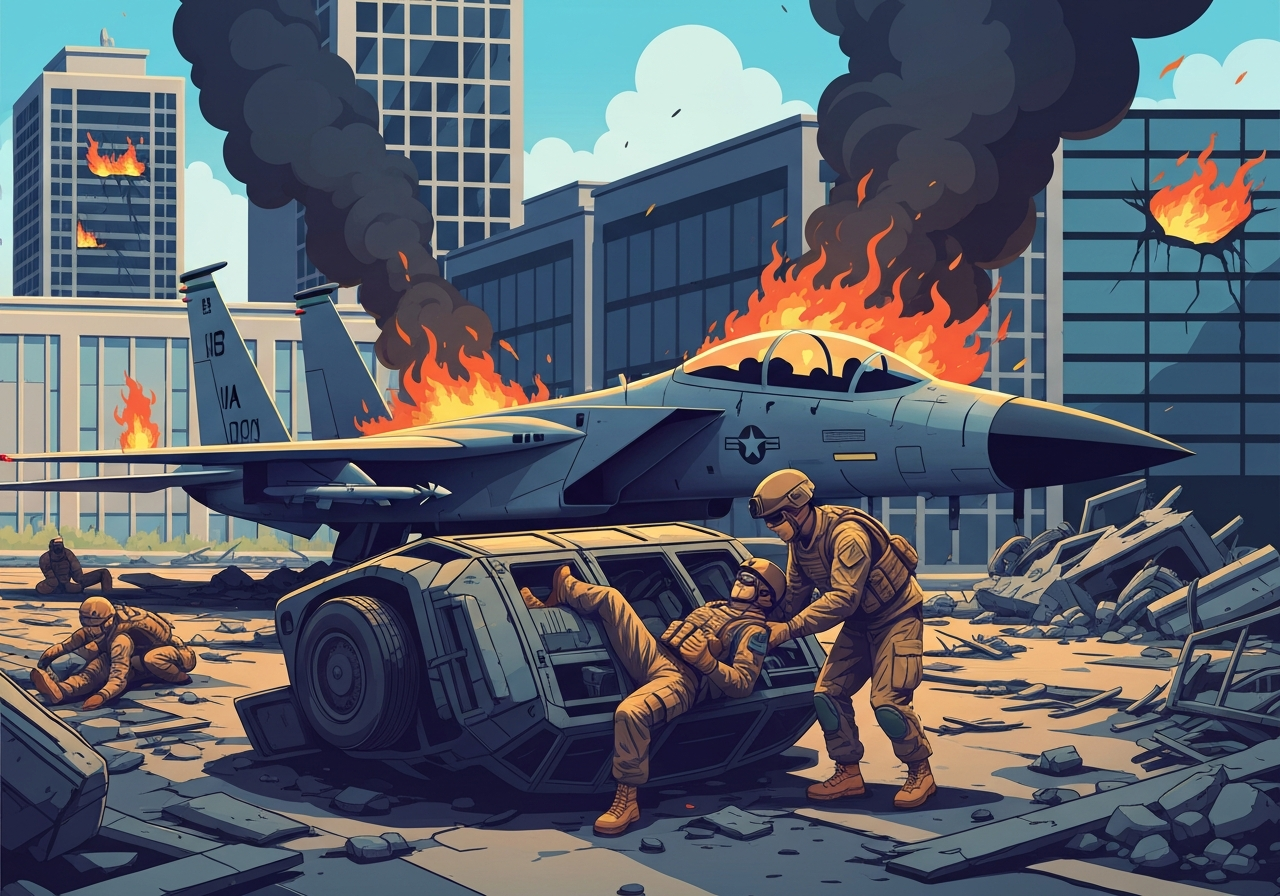
Lead: A U.S. F‑15E Strike Eagle was shot down over Iran on Friday, and U.S. forces recovered one of the aircraft’s two crewmembers, sources said. The rescued service member is in U.S. custody and receiving medical treatment; the fate of the second crewmember remains unknown as search-and-rescue operations continue. President Donald Trump has been briefed, and U.S. and allied forces are coordinating recovery and intelligence efforts. Iranian state media released images it said showed wreckage and urged citizens to aid searches.
Key takeaways
- Aircraft and crew: The aircraft was confirmed by U.S. sources as an F‑15E Strike Eagle, normally crewed by a pilot and a weapon systems officer; two people ejected, and one was recovered alive.
- Rescue status: Three U.S. sources told reporters the recovered crewmember is alive, in U.S. custody and receiving medical treatment; search efforts for the second crewmember are ongoing.
- Local claims and rewards: Iranian state outlets urged citizens to help find any captured Americans and reported local offers including 10 billion tomans (about $76,000) for turning in a pilot.
- Civilian harm: Separately, strikes on Iranian infrastructure have produced deadly effects—local reports say a key bridge collapse killed at least 13 people and injured dozens.
- Regional attacks: Iran continued strikes across the Gulf, with reported launches at Kuwait, the UAE, Saudi Arabia and Bahrain and multiple air-defense engagements reported by Gulf states.
- Economic impact: U.S. average regular gasoline reached $4.09 per gallon, about 37% higher than before the conflict, underlining broader energy-market fallout.
- First of its kind in this war: This is the first confirmed incident in which a U.S. warplane was shot down over Iran during the current conflict.
Background
The shoot-down comes amid an expanded U.S.-led campaign of strikes on Iranian military and infrastructure targets that followed an escalation across the region. U.S. officials have repeatedly asserted air superiority over Iran, but the loss of an F‑15E suggests contested control of some airspace or exposure to portable air defenses. The wider confrontation has also involved Israeli operations and strikes on Iranian facilities, raising the risk of broader escalation.
Domestic politics are a key factor: President Trump has said he expects the campaign to continue for weeks, while his administration frames operations as degrading Iran’s strike capability. At the same time, mounting U.S. casualties—reported locally as at least 13 dead and hundreds wounded among U.S. personnel since February—are fueling scrutiny of the campaign’s scope and duration. International diplomatic moves, including a draft U.N. response on the Strait of Hormuz, reflect rising concern about commerce and navigation in the Gulf.
Main event
According to multiple U.S. sources, an F‑15E was downed over Iranian territory on Friday. Social media video geolocated by reporters showed low-flying aircraft and helicopters over Khuzestan Province consistent with active search-and-rescue operations. Iranian state outlets published images and short clips shortly afterward that they said depicted wreckage and an ejection seat consistent with the F‑15 family.
U.S. forces carried out an immediate search-and-rescue mission; three sources told reporters one crew member was found alive and taken into U.S. custody for medical care. The second crewmember’s status has not been confirmed publicly. Iranian regional officials and state media described local searches and posted rewards for those who turn in American personnel, while Iranian security agencies said they had not yet found the missing crew.
Israel told U.S. officials it was delaying some planned strikes to avoid interfering with the rescue, and Israeli sources said they offered intelligence support for the recovery effort. The White House press office confirmed President Trump was briefed but issued no further operational details. The U.S. military has remained publicly circumspect about tactical specifics and the precise crash site.
Analysis & implications
The downing of an F‑15E over Iran marks a notable kinetic escalation with immediate military and political consequences. Militarily, it demonstrates Iranian forces retain capabilities—whether integrated air defenses, mobile MANPADs, or other systems—that can threaten high-end U.S. aircraft, complicating assumptions of uncontested air superiority. That reality may force U.S. commanders to adjust flight profiles, ISR coverage, and suppression-of-enemy-air-defenses priorities.
Politically, the incident intensifies pressure on U.S. leadership. Each American casualty or capture raises domestic scrutiny and can narrow perceived options for continued offensive operations. The White House faces a choice between increasing protection and force posture or seeking rapid de-escalatory diplomatic channels; both carry costs. Allied partners are already managing spillover effects—shipping, energy markets and regional security commitments all factor into their responses.
Regionally, the episode could prompt further retaliatory cycles. Iran’s continued strikes across Gulf states and the targeting of logistics infrastructure—such as bridges and transport routes—underscore the conflict’s interdiction strategy. If the second crewmember is confirmed missing, captured or killed, Tehran and Washington would face heightened incentives to act, increasing the chance of miscalculation.
Comparison & data
| Metric | Current figure | Context |
|---|---|---|
| Recovered crew | 1 of 2 | One crewmember alive and in U.S. custody; second unconfirmed |
| Bridge strike fatalities | At least 13 | Local reporting of a major bridge collapse near Tehran after strikes |
| U.S. gas price (AAA) | $4.09/gal | Reported as ~37% higher than before the war |
The table summarizes verified figures made public by sources or reported by local media. These data points indicate both human cost and economic ripple effects from the current campaign in and around Iran.
Reactions & quotes
Officials and commentators offered rapid, contrasting responses. The White House confirmed the president had been briefed while withholding operational details; U.S. military spokespeople declined additional public comment as the search continued. Iranian state outlets framed the incident as a success for domestic forces and encouraged civilian assistance.
“If you capture and hand over a pilot or pilots of the enemy alive to the law enforcement and military forces, you will receive a valuable reward and prize.”
IRIB anchor (state media)
This short public appeal by state broadcasters was followed by provincial officials offering a monetary reward reported at 10 billion tomans (about $76,000). Iranian outlets used the broadcasts to mobilize local populations in the search.
“Fighter pilots attend survival school — they practice ejecting and evasion, but ejecting over a vast country complicates recovery operations.”
Amy McGrath (former Marine combat pilot)
Former aviators noted that survival training improves individual odds, but stressed that local conditions, hostile forces and terrain can greatly affect outcomes. Separately, an Israeli official said Israel delayed some strikes to avoid hindering U.S. rescue operations and offered intelligence support.
Unconfirmed
- The exact crash coordinates and the full sequence of events leading to the shoot-down remain unverified by U.S. or independent investigators.
- Claims of civilians capturing or detaining U.S. personnel reported by some Iranian outlets have not been independently corroborated.
- Some casualty figures tied to specific strikes vary across local reports; authoritative tallies are pending.
Bottom line
The recovery of one U.S. crewmember is a limited tactical success amid a far larger, intensifying conflict with human, political and economic costs. The downing underlines that high-end U.S. platforms face real risks in the current battlespace and that Iran retains strike and defensive capabilities despite sustained attacks.
Watch for confirmation of the second crewmember’s status, any U.S. operational changes to flight patterns and suppression tactics, and diplomatic moves at the U.N. and with Gulf partners to stabilize shipping through the Strait of Hormuz. Each development will shape whether the confrontation escalates further or moves toward negotiated de-escalation.
Sources
- CNN (news report; live updates and reporting)