
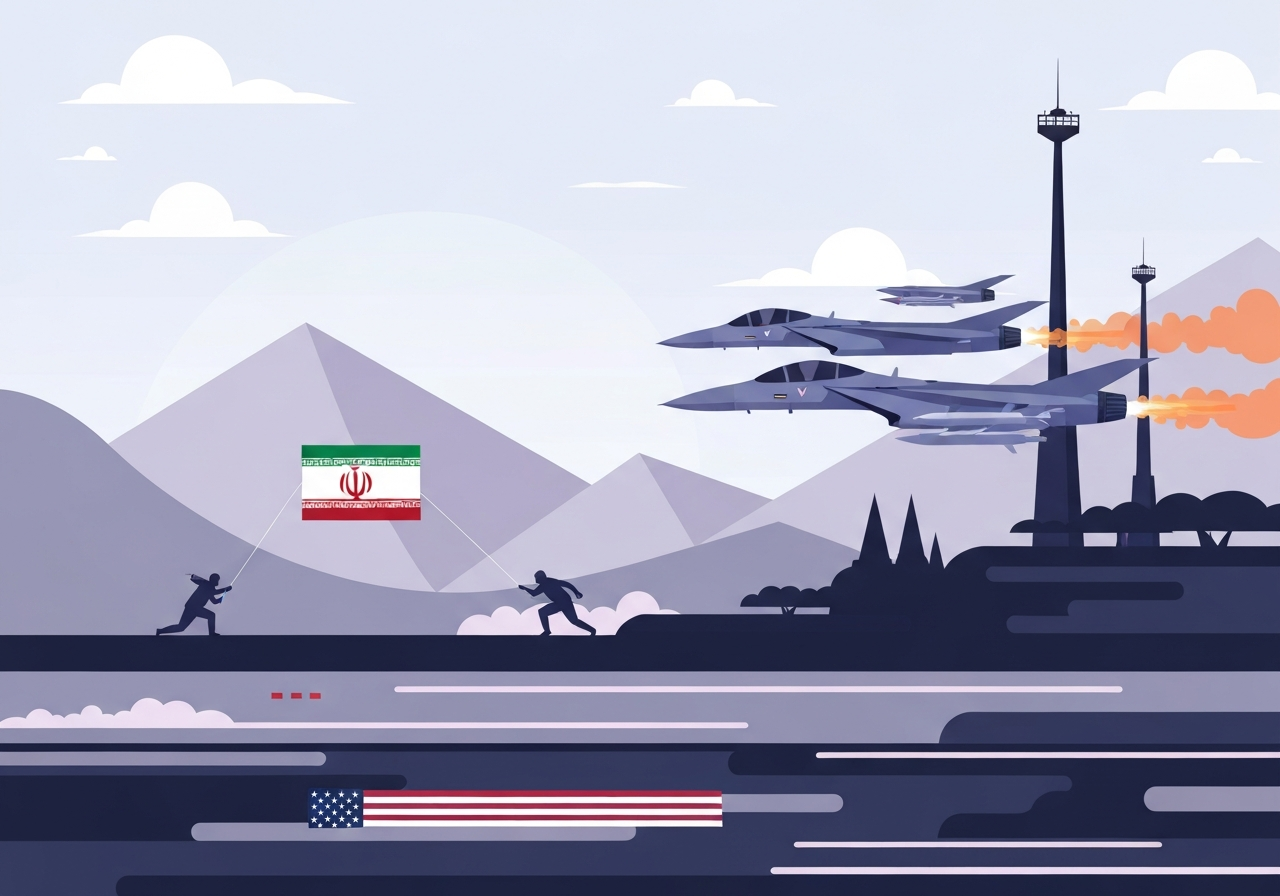
Lead: A US Air Force F-15 was shot down over Iran on April 4, 2026, prompting an active search-and-rescue effort as Tehran and Washington both seek the fate of one missing crew member. One of the two aircrew was recovered and is receiving medical care in US custody; the other remains unaccounted for. The incident comes amid a widening campaign of strikes that has hit petrochemical sites, steel plants and the perimeter of the Bushehr nuclear plant, intensifying regional and global security concerns. Concurrent disruptions to shipping through the Strait of Hormuz have further raised economic and diplomatic stakes.
Key Takeaways
- One US F-15 was downed over Iran on April 4, 2026; one crew member rescued and in US medical custody, one crew member missing and the subject of ongoing search efforts.
- An A-10 Thunderbolt II was also struck; its pilot ejected after flying out of Iranian airspace and was rescued, bringing confirmed recent manned aircraft losses in the conflict to at least seven.
- Iran reported that one person was killed after a projectile struck the perimeter of the Bushehr nuclear power plant; the IAEA reported no detected rise in radiation levels.
- Multiple petrochemical facilities in Khuzestan and major steel plants in Esfahan were struck in separate attacks, damaging industrial infrastructure central to Iran’s export economy.
- Iran said it will allow vessels carrying “essential goods” to transit the Strait of Hormuz; some foreign-owned and -operated ships have used Iran-approved corridors or alternative routes.
- An airstrike near the Shalamcheh border crossing killed one Iraqi civilian and injured five, prompting a suspension of traffic at the crossing.
- The UN Security Council postponed a vote on a Bahraini draft resolution to secure transit through the Strait of Hormuz; diplomatic resistance from China and Russia was reported.
Background
The downing of a manned US F-15 over Iran marks a significant escalation in a conflict that has, over the last month, extended strikes across multiple domains — air, maritime and critical infrastructure. Since the war began, both state and non-state actors have targeted military and industrial sites, producing a pattern of reciprocal actions and accelerating damage to Iran’s heavy industry and transport nodes. Iran’s strategic geography, including the Strait of Hormuz, has magnified the conflict’s global economic impact because roughly one-fifth of seaborne oil flows historically transited that chokepoint.
US air operations over and near Iranian airspace intensified after a series of strikes attributed to the US and Israel. Iran has responded with both ballistic and air defenses, and senior Iranian commanders have described changes in tactics and equipment that they say contributed to recent successes. Regional actors — including Iraq, Oman and Gulf states — have been drawn into the operational picture through strikes that have crossed or neared their territories, and through rapidly shifting maritime traffic patterns as shipowners seek safe passage.
Main Event
On April 4, 2026, US and Iranian forces both reported active efforts related to a downed F-15. US sources say two crew members ejected; one was recovered by US forces and is receiving medical care. The status of the second crew member remains unknown as both nations and international actors search the area. Iran’s state media said it had offered a reward to anyone who locates the missing crew member, and a senior Iranian military official framed the engagement as a success of Iran’s air-defense tactics.
Separately the same day, an A-10 Thunderbolt II was struck by Iranian fire after leaving Iranian airspace. According to a US official, that pilot ejected and was rescued. Taken together with earlier incidents — including a KC-135 tanker crash that killed six on March 12 and other losses — US manned-aircraft destruction in the campaign now totals at least seven confirmed planes.
Ground and industrial targets in southern and central Iran were also hit. State-affiliated outlets reported strikes on the Mahshahr and Bandar Imam petrochemical complexes and damage to the Mobarakeh Steel Complex in Esfahan. Iranian authorities said some facilities sustained “fundamental destruction” and that some operations were halted. Officials reported one fatality after perimeter damage at the Bushehr nuclear plant, while international monitors said radiation levels had not risen.
Analysis & Implications
The immediate tactical consequence of the F-15 loss is a heightened risk to personnel and to any ongoing recovery missions; both sides have signaled restraint in the short term so as not to jeopardize search-and-rescue operations. Strategically, the incident underscores Iran’s ability to contest air operations over its territory and adds political pressure on Washington to calibrate military actions against the need to protect service members.
Economically, continued strikes on petrochemical and steel infrastructure threaten export revenue streams that fund Tehran’s military and civilian budgets. Disruption to petrochemical production also has downstream effects for global supply chains — plastics, fertilizers and industrial inputs — particularly in Asia where manufacturing dependency on petrochemical feedstocks is high.
Diplomatically, the status of the Strait of Hormuz has become a flashpoint. Iran’s conditional offer to allow “essential goods” to pass does not resolve uncertainties about which vessels qualify or how coordination will work in practice. A UN Security Council resolution to authorize defensive action in the strait faces opposition, and any multinational naval operation could further escalate tensions with countries that oppose military intervention.
Comparison & Data
| Date | Aircraft | Incident |
|---|---|---|
| March 2, 2026 | Three F-15s | Downed by Kuwaiti air defenses (friendly fire); six crew ejected safely |
| March 12, 2026 | KC-135 | Crash in Iraq; six crew killed |
| March 27, 2026 | E-3 Sentry | Destroyed on tarmac at Prince Sultan Air Base |
| April 4, 2026 | F-15 | Shot down over Iran; one rescued, one missing |
| April 4, 2026 | A-10 | Struck after leaving Iranian airspace; pilot ejected and rescued |
The table above summarizes confirmed losses of manned US aircraft in the campaign to date. Counting conventions exclude unmanned systems and equipment damaged on the ground; officials have publicly confirmed at least seven manned aircraft destroyed or rendered inoperable as of April 4, 2026. These losses have operational consequences for sortie rates, force posture and mission planning.
Reactions & Quotes
“We are conducting ongoing search-and-rescue operations and coordinating to determine the status of the missing airman,” a US official said, stressing both urgency and operational caution.
US defense official (statement to press)
“This is the result of tactics, the use of modern equipment, and innovations in air defense systems,” an Iranian commander said, characterizing the downing as an operational success.
Brig. Gen. Alireza Elhami / IRNA (state-affiliated media)
“There must be maximum military restraint to avoid the risk of a nuclear accident,” the UN nuclear watchdog warned after damage near Bushehr, urging all parties to steer clear of nuclear facilities.
International Atomic Energy Agency (IAEA)
Unconfirmed
- Israeli claims that strikes have destroyed 70% of Iran’s steel production capacity are reported by some Iranian and Israeli-linked outlets but cannot be independently verified at this time.
- Details asserted by Iranian commanders about specific new air-defense technologies or tactics have not been independently corroborated by open-source imagery or third-party intelligence.
- Some casualty figures and damage assessments from state-affiliated Iranian media remain incomplete; independent on-the-ground verification is limited in several affected regions.
Bottom Line
The downing of a US F-15 over Iran and the continued targeting of industrial and maritime infrastructure represent a dangerous intensification that combines tactical battlefield actions with strategic economic pressure. The missing crew member remains the immediate humanitarian and operational priority; search-and-rescue efforts and diplomatic channels will shape next steps.
Beyond personnel recovery, the conflict’s effects on petrochemical and steel production and on shipping through the Strait of Hormuz are likely to produce sustained global economic knock-on effects. International attempts to secure transit and to impose penalties for attacks face geopolitical friction, meaning markets and regional security dynamics may remain volatile in the near term.
Sources
- CNN — Live updates on Iran war (International news organization, primary aggregation of reported events)
- Tasnim News Agency (Iranian state news agency, reported strikes and official statements)
- IRNA (Islamic Republic News Agency — state-affiliated reporting on military statements)
- Reuters (International news agency — reporting on UN and diplomatic developments)
- Lloyd’s List Intelligence (Maritime intelligence — shipping transits and routing)
- International Atomic Energy Agency (IAEA) (International organization — nuclear monitoring and safety statements)