
Lead
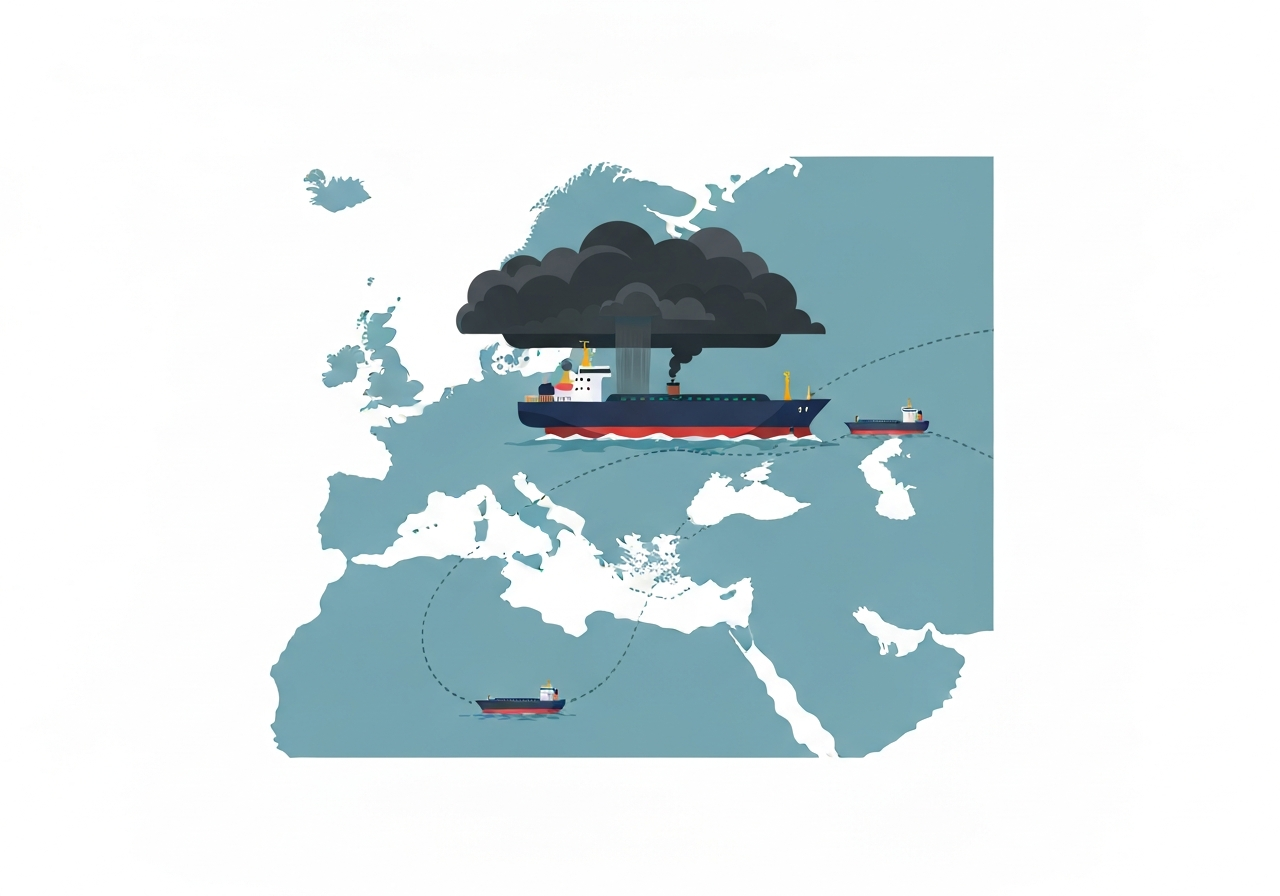
The head of the International Energy Agency (IEA) told the Associated Press on Thursday that Europe could have “maybe six weeks or so” of jet fuel remaining if oil flows through the Strait of Hormuz remain blocked. Fatih Birol said the disruption, tied to the Iran war and shipping restrictions, is part of what he called the largest global energy crisis he has seen. He warned that a prolonged choke on supplies could lead to flight cancellations and higher prices for gasoline, natural gas and electricity. Birol spoke from his Paris office, saying the impact will hit developing economies first and spread to Europe and the Americas.
Key Takeaways
- The IEA’s executive director, Fatih Birol, told AP Europe may have about six weeks of jet fuel if the Strait of Hormuz remains closed or restricted.
- Birol described the current situation as “the largest energy crisis we have ever faced,” warning of higher petrol, gas and electricity prices globally.
- He identified Japan, South Korea, India, China, Pakistan and Bangladesh as among the countries on the front line of immediate impact.
- Birol cautioned that poorer countries in Asia, Africa and Latin America will likely suffer most, despite having less international influence.
- He criticized Iran’s partial “toll booth” approach to shipping through the strait and warned it could set an unwelcome precedent for other waterways, including the Malacca Strait.
- The IEA warned that continued supply disruption raises the risk of flight cancellations and widening inflationary pressure worldwide.
Background
The Strait of Hormuz is a narrow but vital maritime passage through which a significant portion of world-traded oil and petroleum products transits. Tensions stemming from the Iran war and measures by Iranian authorities have intermittently constrained traffic, prompting international concern about energy security. Over recent weeks, shipping routes and insurance costs have risen as operators weigh transit risks and occasional Iranian controls that allow passage for a fee. Energy agencies and market participants track stockpiles of refined products such as jet fuel closely because aviation supply chains have limited short-term flexibility.
Europe imports refined products and crude oil through multiple channels; disruption in the Gulf affects refinery feedstocks and tanker schedules globally. Refineries can adjust output to some degree, but jet fuel is a specialized product whose supply-demand balance can tighten quickly during supply shocks. Historically, temporary chokepoints have translated into regional price spikes and logistical bottlenecks rather than immediate, continent-wide shortages—unless disruptions are prolonged. The IEA’s public statements reflect concern that the current constraints could be more sustained and wider in scope than prior short disruptions.
Main Event
In an interview from Paris, IEA Executive Director Fatih Birol stated that Europe might have roughly six weeks of jet fuel left under current conditions, framing that estimate as an urgent warning rather than a precise countdown. He emphasized that if shipments through the Strait of Hormuz are not restored, airlines could start seeing cancellations “soon” because aircraft cannot be refueled without reliable product deliveries. Birol linked the problem to a broader squeeze on oil, gas and electricity markets, saying the longer the strait remains constrained the deeper the economic fallout will be.
Birol criticized a so-called “toll booth” practice reportedly applied by Iranian authorities to some vessels transiting the strait, arguing that normalizing such a system would set a dangerous precedent for other narrow passages worldwide. He warned that once toll-like controls become accepted in one waterway, pressures could mount to apply similar measures elsewhere, including the Malacca Strait that serves Asian trade. The IEA chief called for unconditional flow of oil from point A to point B and urged against any durable change to long-standing maritime norms.
He outlined uneven impacts across countries: several advanced Asian economies—Japan and South Korea—and large developing energy importers—India and China—are among those on the frontline, along with Pakistan and Bangladesh. Birol stressed that lower-income nations in Asia, Africa and Latin America, which typically lack strategic reserves or diversified supply sources, will face disproportionate hardship. From his office overlooking the Eiffel Tower, he warned that the ripple effects would reach Europe and the Americas if disruptions persist.
Analysis & Implications
Short-term aviation operations depend on established logistics: refineries, storage hubs and timely tanker deliveries. A six-week estimate of stocks signals that, absent prompt restoration of flows or emergency reallocations, airlines could confront operational constraints. Carriers often manage fuel by repositioning product within airline networks and using suppliers’ inventories, but those options are limited when a major trade route is impaired. Consequently, some flights might be curtailed regionally before full-scale, long-haul disruptions emerge.
Economically, a sustained squeeze on oil and refined products would likely raise headline inflation and slow growth. Higher fuel and energy prices feed into transport, manufacturing and food costs, amplifying inflationary pressure that central banks are already monitoring. The distribution of pain will be uneven: advanced economies can deploy fiscal buffers, strategic reserves and diplomatic measures to mitigate hits, while poorer nations may have fewer policy instruments and less market influence to secure alternative supplies.
Strategically, normalizing tolls or fees on passage through a major chokepoint could shift the rules that govern global maritime trade and increase geopolitical friction. The Malacca Strait is a critical artery for Asian energy and trade; any precedent that allows discretionary fees or conditional transit could prompt reciprocal measures, higher shipping costs and a reassessment of trade routes. That would raise insurance premiums and increase the cost and lead time of rerouting cargoes, with knock-on effects for global supply chains.
Comparison & Data
| Item | Detail |
|---|---|
| IEA jet-fuel runway (Europe) | ~6 weeks (IEA estimate reported to AP) |
| Primary near-term risks | Strait of Hormuz transit constraints; regional shipping/tanker delays |
| Front-line economies named | Japan, South Korea, India, China, Pakistan, Bangladesh |
The table summarizes the IEA’s public estimate and the countries Birol identified as most immediately affected. It does not attempt to model downstream demand elasticity or refinery switching capacity, which would require proprietary market data. Policymakers and industry participants will be watching weekly stock and flow data to see whether the IEA’s short-term estimate is borne out or if mitigation measures—which can include strategic reserve draws, rerouting and temporary production shifts—extend runway.
Reactions & Quotes
The IEA chief’s remarks prompted swift attention from energy market watchers and aviation planners, who flagged the fragility of refined-product logistics when a major transit route is at risk.
“Maybe six weeks or so [of] jet fuel left,”
Fatih Birol, IEA executive director (to AP)
Birol used that phrase to underscore urgency; he framed it as an estimate contingent on ongoing restrictions in the Strait of Hormuz rather than an exact inventory countdown.
“It is the largest energy crisis we have ever faced,”
Fatih Birol, IEA (statement to AP)
He invoked the scale of the disruption to emphasize likely global consequences for prices and growth if flows are not restored promptly.
“If we change it once, it may be difficult to get it back,”
Fatih Birol, IEA (on tolling precedent)
Birol warned that accepting fee-based transit could create a durable precedent that complicates maritime governance and commercial shipping norms.
Unconfirmed
- The precise timeline for any flight cancellations remains uncertain; the IEA’s six-week figure is an estimate contingent on evolving supply, demand and emergency measures.
- The long-term fate of Iran’s reported “toll booth” practice and whether it will be normalized or reversed is not yet confirmed.
- The degree to which the Malacca Strait or other waterways might face similar treatment is speculative and lacks independent confirmation.
Bottom Line
The IEA’s warning that Europe could face roughly six weeks of jet fuel highlights the brittle nature of refined-product logistics when a major transit route is compromised. Short-term operational decisions by airlines and refiners, plus policy responses such as strategic reserve releases, will determine whether the situation becomes an acute supply crisis or a manageable disruption.
Policymakers and industry participants should treat the IEA’s estimate as a prompt for contingency planning: boost monitoring of weekly stocks and flows, coordinate possible reserve draws, and prepare targeted relief for vulnerable countries. If the strait’s status is not resolved quickly, expect widening economic and inflationary impacts that will reach beyond the Gulf to Europe, the Americas and developing economies.