
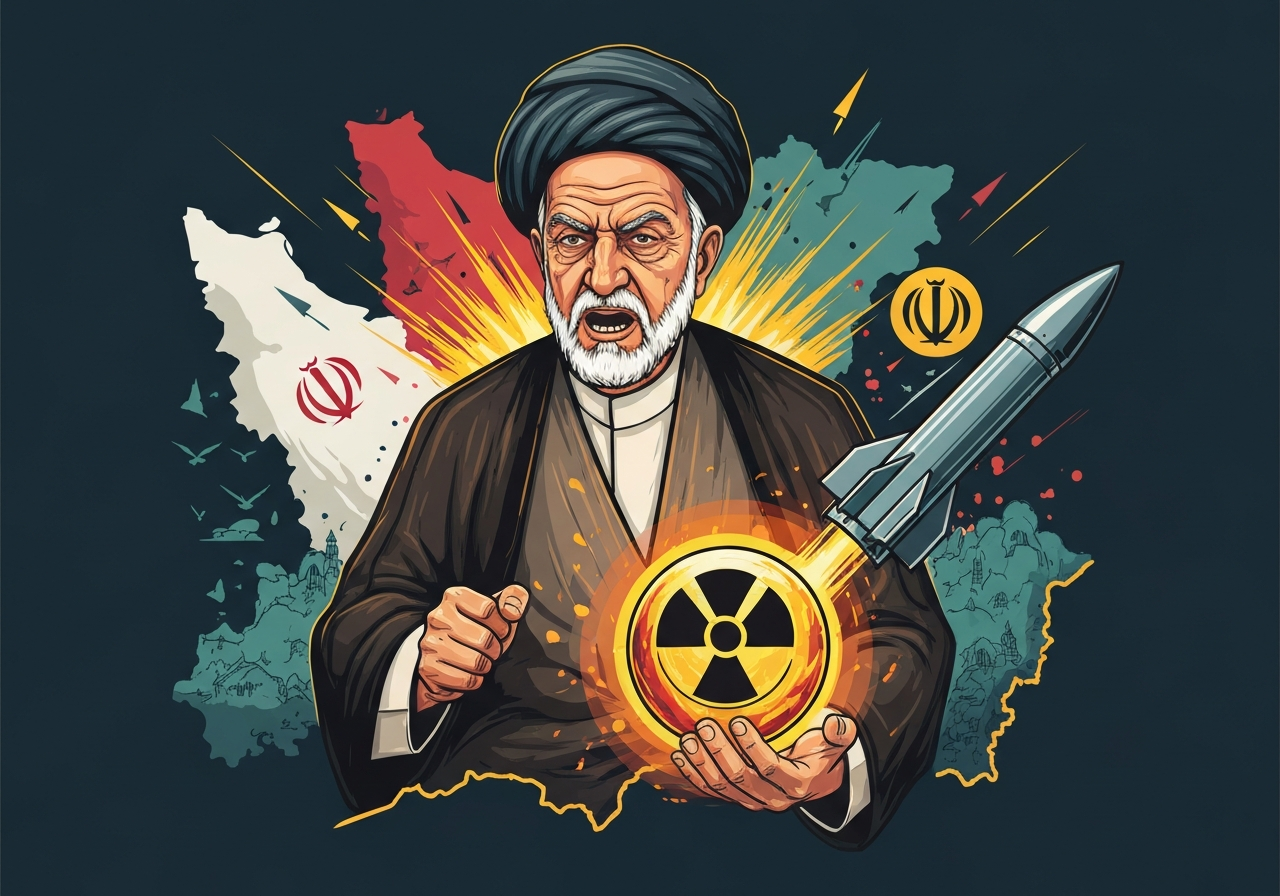
Lead: On Thursday, Iran’s new supreme leader, Ayatollah Mojtaba Khamenei, declared that Tehran will safeguard its nuclear program and ballistic missile capabilities amid an escalating confrontation with the United States in the Persian Gulf. His statement, read on state television, came as a U.S.-led naval blockade has restricted Iranian oil exports and turned back about 44 commercial ships, and as global oil prices spiked, with Brent trading as high as $126 a barrel. Khamenei framed Iran’s posture as defensive and national in character, signaling that nuclear and missile issues would not be traded away even as diplomatic channels show limited movement. The remarks deepen regional tensions and complicate U.S. efforts to open the Strait of Hormuz to freer navigation.
Key Takeaways
- Ayatollah Mojtaba Khamenei publicly pledged on Thursday to protect Iran’s nuclear and missile capacities and affirmed a continued hardline stance toward the United States.
- The U.S. naval blockade has reportedly turned back roughly 44 commercial vessels, aiming to deprive Iran of oil revenue and limit its ability to export crude.
- Brent crude reached about $126 per barrel Thursday, reflecting market stress linked to disruptions in the Strait of Hormuz, which handles roughly one-fifth of global crude shipments.
- Iran is said to have enriched uranium to near-weapons-grade levels of 60%, a technical detail Washington cites as a key security concern.
- The U.S. State Department has circulated a cable asking diplomats (excluding posts in Belarus, China, Cuba and Russia) to seek support for a coordinated “maritime freedom construct.”
- Human rights and protest-related repression continued inside Iran: judiciary outlets reported the execution of Sasan Azadvar, 21, and U.N. officials say at least 21 executions have occurred since the war began.
- Fighting and strikes persist along Israel-Lebanon frontiers; Israel reported one soldier killed Thursday, bringing troop casualties to 17 since the Iran-related war started.
Background
Iran’s new supreme leader, Mojtaba Khamenei, assumed the position following the death of his father early in the conflict that began with wide-ranging airstrikes. The transfer of authority occurred against a backdrop of intensified hostilities between Iran and a U.S.-led coalition, with Tehran and Washington trading military pressure and strategic posturing. For decades Tehran’s nuclear program has been a focal point of international concern; Iranian officials maintain the program is peaceful even as enrichment to higher levels has alarmed outside powers.
The Strait of Hormuz is central to the crisis: about 20% of global crude transits the waterway. Iran’s actions in and around the strait—ranging from legal claims over territorial waters to reported fees charged for passage—have been denounced by Gulf Arab states and some maritime actors as coercive. The U.S. and its partners view freedom of navigation through the strait as essential to global energy markets and have discussed collective measures to counter Iranian maritime interference.
Domestically, Iran’s economy is strained by sanctions, a naval blockade that limits tanker movements, and disruption to oil revenues. Concurrently, rights groups and U.N. officials have documented a tightening security response inside Iran, including closed-door trials and executions tied to protests and civil unrest that predate but have been intensified by the broader conflict.
Main Event
On Persian Gulf Day, Khamenei’s televised statement emphasized national pride and listed science, technology and defense—including nuclear and missile programs—as core elements of Iran’s identity. He used pointed language toward the United States, repeating longstanding anti-American epithets and asserting that American presence in the Gulf belonged “at the bottom of its waters.” The televised reading underlined Tehran’s intent to resist external attempts to curb those capabilities.
Parallel to Khamenei’s declaration, U.S. officials have advanced plans for a “maritime freedom construct,” a proposed coalition effort to ensure unhindered commercial navigation through the Strait of Hormuz. A senior U.S. official told reporters the initiative would be defensive and intended to raise the cost to Iran for obstructing shipping. The State Department circulated guidance asking many U.S. diplomatic posts to solicit partner support for the construct.
Operationally, the U.S. blockade has intercepted or turned away about 44 commercial vessels, according to U.S. Central Command statements cited by news outlets. The measure aims to prevent Iran from exporting oil and to strain its finances, while also deterring what Washington characterizes as Iranian attempts to weaponize maritime traffic. Tehran has responded by asserting new legal rules and management for the strait, and by suggesting that its control enhances Gulf security—an assertion disputed by several Gulf Arab governments.
On the diplomatic front, Pakistan said it is facilitating indirect U.S.-Iran talks and indicated a willingness to host or support direct communication if both sides agree. Islamabad described real-time engagement as a potential way to narrow sticking points, although details of any offers or proposals were not shared publicly. Meanwhile, regional tensions have manifested on other fronts: ongoing exchanges along the Israel-Lebanon border have produced casualties and renewed airstrikes.
Analysis & Implications
The supreme leader’s vow not to relinquish nuclear and missile capacity closes off easy diplomatic trade-offs and raises the bar for negotiations. If Tehran treats those capabilities as non-negotiable, Washington and its partners face the choice of escalating coercive measures, accepting a prolonged standoff, or seeking creative confidence-building steps that stop short of disarmament. Each option carries economic, political and military risks.
Economic impact is immediate. With Brent near $126 per barrel and the strait’s effective closure or restricted passage, global energy markets are vulnerable to supply shocks that can ripple into inflationary pressure worldwide. For Iran, the blockade’s effect on tanker movements and export revenue aggravates domestic economic stress, which in turn could influence internal stability and the regime’s calculus on escalation versus accommodation.
Regionally, the situation pushes Gulf states and external powers into complex balancing acts. Gulf Arab governments have condemned Iran’s maritime controls but are also cautious about direct military involvement that could expand the conflict. The U.S. effort to build a maritime security coalition will test partner willingness to expose vessels and bases to retaliation, and it may require tradeoffs on basing rights, force posture and diplomatic priorities in Europe and the Middle East.
Legally and normatively, Iran’s assertions about territorial control collide with established maritime law norms that treat the Strait of Hormuz as an international transit route. A prolonged contest over passage rights could prompt new legal disputes at international fora or motivate ad hoc enforcement consortia—both of which would complicate crisis management and raise the prospect of miscalculation at sea.
Comparison & Data
| Indicator | Reported Value |
|---|---|
| Commercial vessels turned back (U.S. claim) | ~44 |
| Brent crude (peak reported) | $126 per barrel |
| Iran uranium enrichment level (reported) | ~60% |
| Troop casualties since war began (Israel) | 17 soldiers |
| Executions reported since conflict began (U.N. cited) | At least 21 |
The table highlights several metrics driving the current crisis: naval interdictions, energy prices, nuclear enrichment levels and human costs. Together they show a conflict that spans military, economic and humanitarian domains. Higher oil prices reflect both actual disruptions and risk premiums; the enrichment figure underscores proliferation concerns that predate the current fighting but are now a focal point of diplomatic rhetoric.
Reactions & Quotes
“The only place Americans belong in the Persian Gulf is at the bottom of its waters,”
Ayatollah Mojtaba Khamenei (state television)
This remark encapsulates the rhetorical escalation from Iran’s leadership and was delivered as part of a broader claim that Iran’s scientific and military capacities are integral to national identity.
“This is a fundamentally defensive response to protect the rights of all countries to navigate international waters freely and safely,”
U.S. State Department (cable cited by reporting)
The State Department cable framed the proposed coalition as defensive and sought diplomatic backing from many U.S. posts to establish a coordinated maritime response to Iranian actions in the strait.
“If the two parties can engage in real-time conversations, that could ease the sticking points,”
Tahir Andrabi, Pakistan Ministry of Foreign Affairs
Pakistan positioned itself as a possible facilitator for indirect or direct talks, suggesting that immediate communication could help bridge differences though details remain scarce.
Unconfirmed
- Reports that Iran charged $2 million per vessel for passage through the strait remain variably sourced and lack independent verification.
- Exact operational parameters and participating countries for the U.S.-led maritime construct have not been publicly confirmed beyond diplomatic outreach guidance.
- Details of any specific bilateral proposals exchanged indirectly between Washington and Tehran were not released and remain unverified.
Bottom Line
Khamenei’s pledge marks a clear signal that Iran views its nuclear and missile capabilities as non-negotiable strategic assets, narrowing room for quick diplomatic compromise. The U.S. response—pressuring Iran economically through a naval blockade and seeking partner support for coordinated maritime security—reflects a strategy of containment but carries significant escalation and economic risks.
For global markets and regional stability, the immediate concern is the Strait of Hormuz. Continued disruption there sustains elevated oil prices and increases the chance of miscalculation at sea. International actors will face difficult choices: pursue tighter containment with attendant military risk, or invest in diplomatic channels that may require novel confidence-building measures to address both security and nuclear concerns.
Sources
- Associated Press (news report)