
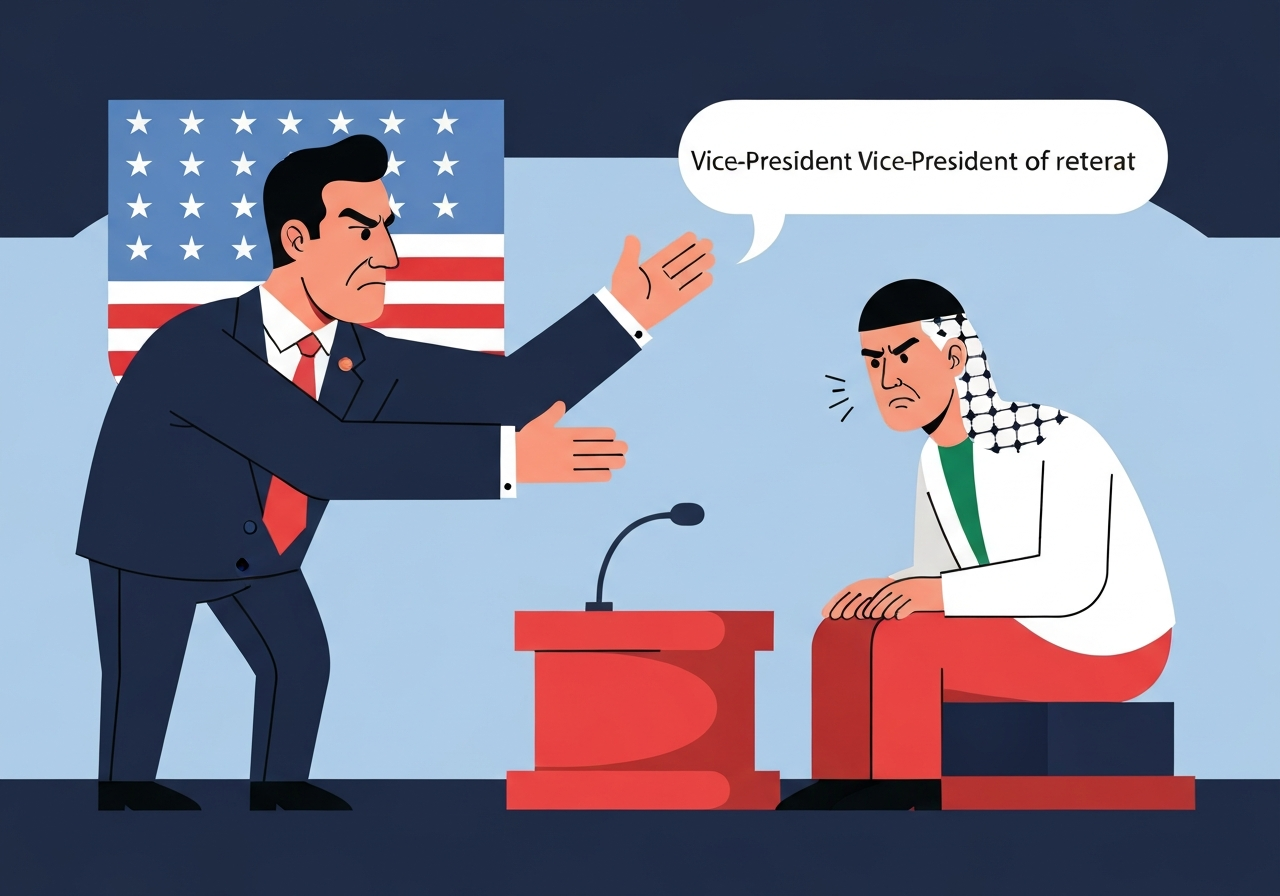
Lead: On 19 May a State Department cable instructed the US embassy in Jerusalem to press the Palestinian Authority to withdraw a bid for a vice-presidency of the UN General Assembly by 22 May, warning of unspecified “consequences” if it did not comply. The move reflects Washington’s concern that a Palestinian vice-president could be asked to chair high-profile Middle East sessions during UNGA81 in September. The communication cited prior US appeals that led Riyad Mansour to drop a separate presidential candidacy in February and framed the current bid as undermining US policy approaches.
Key Takeaways
- The cable is dated 19 May and ordered a demarche by the US embassy in Jerusalem asking the PA to withdraw by 22 May.
- The election for 16 vice-presidential posts at the UNGA is scheduled for 2 June; winners may deputise to preside over sessions.
- US officials warned a Palestinian vice-president might chair high-profile Middle East debates during UNGA81 high-level week in September.
- Riyad Mansour withdrew a presidential candidacy in February after US lobbying, according to the cable.
- The cable threatened consequences including revisiting visa restrictions applied to Palestinian officials in August before a previous UN summit week.
- The message linked the bid to perceived prioritization of symbolic appointments over substantive engagement, and said it could damage US–PA relations.
- The cable noted Israeli withholding of PA tax and customs transfers (about 60% of PA revenue) since October 2023 as leverage in related disputes.
Background
The Trump administration has consistently opposed unilateral steps toward Palestinian statehood and has used diplomatic and economic levers to influence Palestinian strategy at international organisations. UN General Assembly leadership posts—one president and multiple vice-presidents—are elected annually; vice-presidents can chair plenary sessions when called upon. In 2026 the assembly’s leadership elections are set for 2 June, with the following session’s high-level week of leaders’ speeches scheduled for September (UNGA81).
Riyad Mansour has been the long-serving Palestinian observer to the UN and previously withdrew a bid for GA president in February after US lobbying, an action Washington highlighted as constructive engagement. Since the Gaza war began in October 2023, Israel has withheld tax and customs transfers amounting to roughly 60% of PA revenue, a pressure point in PA–Israel relations. US diplomacy toward the PA has at times included visa restrictions and other measures tied to political developments.
Main Event
The State Department cable dated 19 May instructed the US embassy in Jerusalem to issue a formal demarche to Palestinian leaders, urging withdrawal of the VP candidacy by 22 May. The cable framed the request as intended to prevent any scenario in which a Palestinian vice-president could be asked to preside over high-profile Middle East sessions, potentially elevating Palestinian visibility at UNGA81 in September.
According to the communication, US diplomats were told to recall that Mansour had previously stepped back from a presidential bid in February after American outreach, and that the vice-presidency bid called that prior cooperation into question. Washington described the PA move as prioritising “symbolic appointments” above substantive negotiations and tied the candidacy to potential harm to bilateral relations and to the administration’s policy package described as a 20-point plan for Gaza reconstruction.
The cable set out two explicit pressure points: a reminder of visa denials and revocations that took place in August before a prior UN summit week, and a warning that tax-and-customs revenue withheld by Israel—accounting for about 60% of PA income—would be difficult to recover without what Washington described as good-faith engagement. The communication concluded with a stark line that the US would hold the PA responsible if the delegation did not withdraw and that consequences would follow.
Analysis & Implications
The incident highlights how diplomatic postings at multilateral bodies can become focal points for broader geopolitical contests. A UN vice-presidency is formally a procedural post, but in practice it can provide visibility and an occasional platform to steer plenary agendas or chair sessions that attract global attention. For the PA, even symbolic recognition at the UN carries domestic and international resonance; for the US, limiting that visibility fits a policy of constraining unilateral diplomatic gains.
Washington’s use of embassy demarches and implicit threats—visa restrictions and the leveraging of withheld revenues—demonstrates a layered toolkit combining diplomatic, consular and economic pressure. These instruments are effective partly because the PA depends heavily on external revenue streams and on international mobility for its officials. The reference to prior visa denials underscores how such measures can be re-deployed rapidly around UN calendar milestones.
Regionally, the episode may widen mistrust between the PA and the US at a time when reconstruction, security coordination and donor relationships remain delicate after the Gaza war. If the PA resists, the US could escalate steps that complicate Palestinian diplomatic engagement at the UN and potentially further reduce avenues for negotiated outcomes. Conversely, acquiescence could deepen domestic criticism of PA leadership for conceding international standing under external pressure.
Comparison & Data
| Role | Election Date (2026) | Typical Powers |
|---|---|---|
| President of GA | 2 June | Sets assembly agenda for year; high visibility at high-level week |
| Vice-President of GA | 2 June | Ceremonial and procedural duties; may chair sessions when deputised |
The table shows that while the presidency carries sustained agenda-setting power over a year, vice-presidential posts are dispersed among many states and are principally procedural. Nevertheless, deputised chairing of plenary sessions—especially during high-profile moments such as the high-level week—can grant temporary but significant visibility to a delegation.
Reactions & Quotes
The US cable warned that failure to withdraw the candidacy “would result in consequences” for the Palestinian delegation.
US State Department (as reported)
The excerpt summarises the cable’s tone: a direct warning tying diplomatic behaviour to tangible outcomes. State Department officials declined public comment when asked.
Riyad Mansour previously withdrew a presidential bid in February, a decision Washington cited as evidence of constructive engagement.
US State Department (as reported)
That reference was included to signal that US diplomatic appeals had produced a prior concession, and that Washington expected similar deference for the vice-presidency bid.
Israeli withholding of PA tax transfers has left the Palestinian Authority reliant on external goodwill for fiscal survival.
Financial observers / regional analysts
Analysts note that withheld transfers—about 60% of PA revenue—are a central vulnerability the US and Israel can reference when seeking concessions.
Unconfirmed
- Whether the US actually followed through on visa revocations referenced in the cable during the 2026 sequence is not independently confirmed beyond the cable’s reporting.
- Any specific post-22 May punitive measures by Washington or concrete follow-up steps were not publicly documented at the time of reporting.
Bottom Line
The 19 May State Department cable reveals an assertive US campaign to limit Palestinian leadership visibility at the UN through diplomatic pressure and the threat of consular and financial consequences. The immediate objective was to prevent a Palestinian vice-presidency that Washington feared could translate into high-profile procedural control during UNGA81 in September.
Beyond the near-term contest over a procedural post, the episode underscores larger dynamics: the deployment of diplomatic demarches and economic levers to shape Palestinian choices, the PA’s fiscal vulnerability given withheld revenues, and the way multilateral institutions become arenas for bilateral pressure. Observers should watch whether the PA withdraws its candidacy, how other states respond during the 2 June elections, and whether Washington implements any of the penalties suggested in the cable.
Sources
- The Guardian (media report summarising a State Department cable)
- United Nations — General Assembly (official information on GA role and calendar)