
Lead
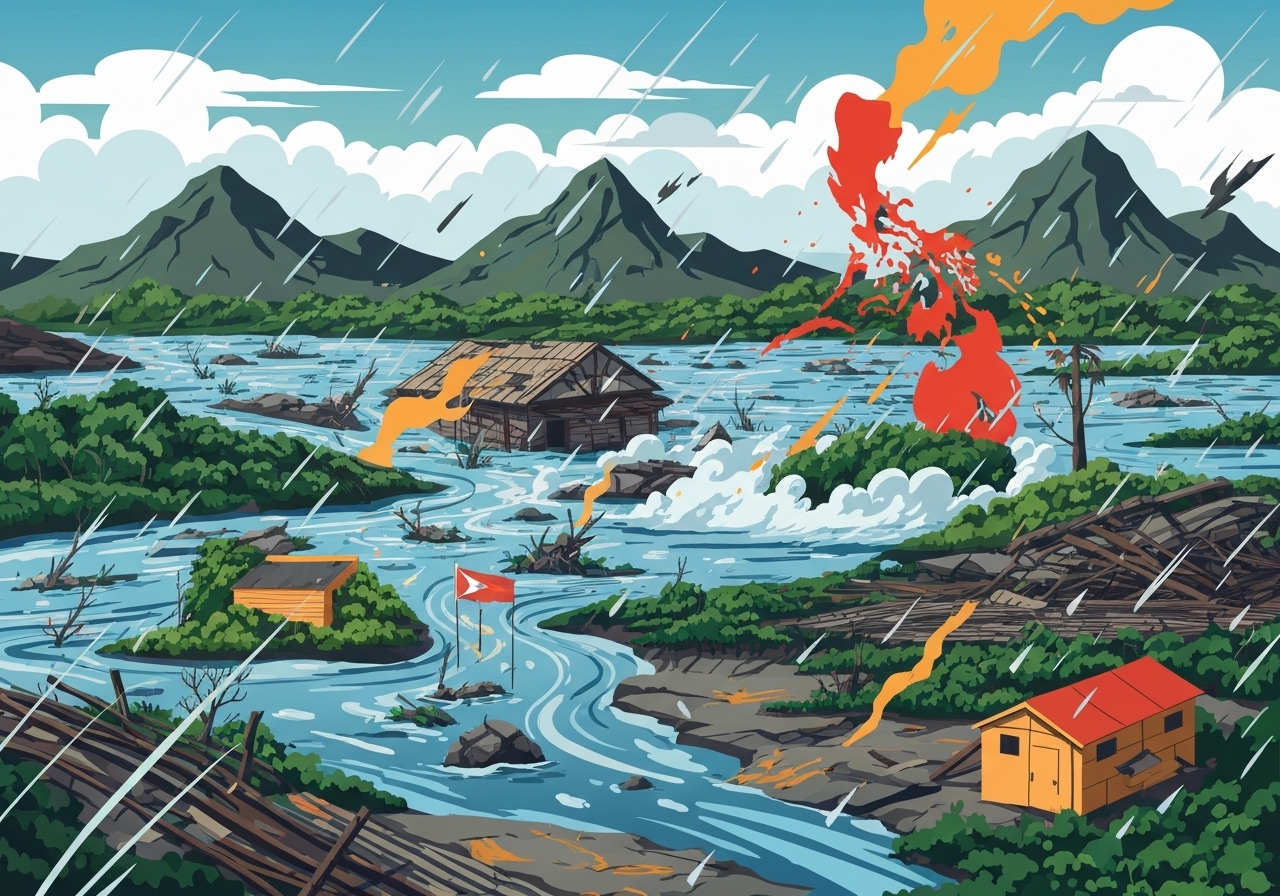
Typhoon Kalmaegi swept across central Philippines on Monday after making landfall near midnight in Silago, Southern Leyte, leaving at least one person dead and displacing tens of thousands. Officials reported sustained winds up to 150 kph (93 mph) with gusts to 185 kph (115 mph) as the storm moved northwest at about 25 kph (16 mph). Heavy rains produced flooding, a provincewide power outage in Southern Leyte and widespread evacuations; more than 150,000 people were moved to safer ground ahead of the storm. Authorities warned of storm surges up to 3 meters (nearly 10 feet) and expected the system to shift toward the South China Sea by Tuesday.
Key Takeaways
- Landfall: Kalmaegi made landfall around midnight in Silago, Southern Leyte, then crossed central islands including parts of Negros Occidental and Cebu.
- Intensity: Sustained winds reached 150 kph (93 mph) with gusts up to 185 kph (115 mph); the storm’s wind field spanned roughly 600 kilometers (373 miles).
- Casualties and outages: One elderly villager drowned in Southern Leyte; a provincewide power outage was reported there.
- Evacuations: More than 150,000 people were evacuated in eastern provinces before landfall, per disaster-response officials.
- Transport disruptions: Interisland ferries and fishing boats were barred from sailing, stranding over 3,500 passengers and cargo drivers across nearly 100 seaports; multiple domestic flights were canceled.
- Volcanic risk: Heavy rains raised warnings of possible volcanic mudflows (lahars) on Kanlaon volcano on Negros island, which has been emitting ash and steam recently.
- Context: Kalmaegi is the 20th tropical cyclone to affect the Philippines this year; the nation averages about 20 storms annually.
Background
The Philippines sits along a frequent typhoon corridor and is struck by roughly 20 named storms each year, making it one of the world’s most disaster-prone countries. Communities across the central archipelago are still recovering from recent shocks: Cebu provinces sustained major damage and displacement after a 6.9-magnitude earthquake on Sept. 30 that killed at least 79 people. That recent seismic event has left housing stock and infrastructure more vulnerable to subsequent wind and water damage.
Kalmaegi developed over the western Pacific and intensified before reaching the eastern islands. Philippine disaster agencies and local governments have established evacuation centers and pre-positioned response teams in provinces forecast to receive the worst winds and rainfall. The Philippine Institute of Volcanology and Seismology (PHIVOLCS) has also monitored volcanic activity on Kanlaon, flagging potential lahars if heavy rains remobilize fresh ash and loose material.
Main Event
Kalmaegi made landfall near midnight in Silago, Southern Leyte, then tracked northwestward across central islands. By mid-morning it was passing over Sagay in central Negros Occidental with the reported sustained winds and powerful gusts. Flooding inundated low-lying communities and triggered at least one fatality: an elderly villager drowned in Southern Leyte, according to initial official reports.
Local authorities ordered mandatory evacuations in several municipalities; Eastern Samar’s governor, RV Evardone, said residents moved to safety without resistance, citing memories of past deadly storms. Utilities were disrupted—Southern Leyte experienced a provincewide power outage—and transport links were widely affected. The Philippine Coast Guard and port authorities prohibited interisland ferries and small boats, leaving more than 3,500 passengers and cargo drivers stranded in nearly 100 seaports.
Flight operations were curtailed with a number of domestic services canceled as carriers adjusted to rapidly deteriorating conditions. Emergency teams and local responders focused on search-and-rescue readiness, evacuation center operations and rapid assessment of flood-damaged areas as the storm moved toward the western section of the archipelago and into the South China Sea.
Analysis & Implications
Kalmaegi’s rapid transit and broad wind field—about 600 kilometers—mean impacts were spread across multiple islands rather than concentrated in a single corridor. That pattern increases the number of provinces exposed to damaging winds, heavy rainfall and coastal surge. Critical infrastructure such as power grids, ports and transport links are at heightened risk, particularly where recent earthquakes or volcanic unrest have already weakened structures.
The evacuation of more than 150,000 people reduced immediate life-safety risk, but displacement also strains local capacities for shelter, sanitation and medical aid. For areas still recovering from the Sept. 30 Cebu earthquake, additional damage to housing and lifelines could prolong displacement and raise reconstruction costs. The intersection of seismic, volcanic and meteorological hazards complicates emergency planning and recovery prioritization.
Economically, repeated storm impacts compress recovery budgets at all levels of government and disrupt local livelihoods—fishing, small-scale agriculture and interisland commerce—which depend on functioning ports and intact supply chains. International assistance and domestic contingency funds may be required if damage assessments show widespread housing loss or prolonged power outages.
Comparison & Data
| Event | Peak Sustained Winds | Gusts | Fatalities (reported) | Notes |
|---|---|---|---|---|
| Typhoon Kalmaegi (2024) | 150 kph (93 mph) | 185 kph (115 mph) | 1 (confirmed) | Broad 600 km wind band; landfall Silago, Southern Leyte |
| Typhoon Haiyan / Yolanda (2013) | Estimated 195–315 kph (121–196 mph) | Extreme gusts on landfall | 7,300+ dead or missing | One of the strongest landfalling cyclones on record; vast destruction |
The table places Kalmaegi in context: while intense, Kalmaegi’s measured sustained winds were lower than the extreme forces seen in 2013’s Haiyan. Nevertheless, its wide wind field and rainfall potential made it a serious threat for flooding, storm surge and secondary hazards such as lahars on volcanically active slopes. Comparing events highlights that storm impacts depend on intensity, size, speed and local vulnerability.
Reactions & Quotes
“Nobody’s complaining among the residents because of their experience with Yolanda. They know it’s better to be safe than sorry.”
Gov. RV Evardone, Eastern Samar (quoted to The Associated Press)
More than 150,000 people were moved to safer ground in eastern provinces, and interisland ferry operations were suspended as seas grew rough.
Disaster-response officials and Philippine Coast Guard (official reports)
PHIVOLCS warned that heavy rains over Kanlaon could trigger volcanic mudflows where ash and loose material have accumulated.
Philippine Institute of Volcanology and Seismology (official advisory)
Unconfirmed
- Comprehensive damage estimates across all affected provinces are not yet available; full assessments are pending field surveys.
- Reports of additional fatalities or missing persons beyond the confirmed drowning in Southern Leyte have not been substantiated and remain unverified.
- Forecast track and intensity could change; projections that Kalmaegi will shift into the South China Sea are subject to model revisions.
Bottom Line
Typhoon Kalmaegi struck central Philippines with destructive winds, heavy rainfall and a wide wind field that affected multiple island provinces. Early evacuations likely saved lives, but flooding, power outages and transport disruptions will compound recovery needs, especially in areas still recovering from recent earthquakes and volcanic unrest.
Authorities and relief agencies will need rapid damage assessments and resources for shelter, medical care and infrastructure repair. Monitoring for secondary hazards—particularly lahars on Kanlaon and coastal storm surges—remains critical as Kalmaegi moves away and recovery begins.
Sources
- The Associated Press — international news organization (original reporting)
- Philippine Institute of Volcanology and Seismology (PHIVOLCS) — official agency monitoring volcanic hazards
- Philippine Coast Guard — official maritime safety and port advisory
- NDRRMC — National Disaster Risk Reduction and Management Council (official disaster coordination)