
Lead
President Donald Trump’s November 2025 call to resume U.S. nuclear testing has reignited debate about the human and environmental costs of detonations. Experts remain unclear whether he meant atmospheric warhead explosions or non-nuclear delivery-system trials, and they warn that renewed testing would carry political and humanitarian risks. Few places illustrate those risks more starkly than the Marshall Islands, where the United States detonated 67 nuclear devices between 1946 and 1958. The islands continue to bear measurable cancer, ecological and cultural damage from those tests.
Key Takeaways
- The U.S. conducted 67 nuclear detonations in the Marshall Islands from 1946–1958, equivalent to roughly one Hiroshima-sized bomb per day for 20 years, per a 2025 IEER report.
- An IEER analysis attributes about 100,000 excess cancer deaths worldwide to fallout from Pacific tests; fallout hotspots were detected as far away as Sri Lanka and Mexico.
- On Enewetak’s Runit Island a concrete “dome” (377 ft / 115 m across) caps about 85,000 cubic meters of radioactive debris; the crater beneath is unlined.
- Castle Bravo at Bikini Atoll produced a blast roughly 1,000 times Hiroshima’s yield and blanketed nearby atolls such as Rongelap with radioactive “ash,” causing acute and long-term illnesses.
- U.S. continental testing included about 100 atmospheric tests (1951–1962) and 828 underground tests through 1992; 32 underground tests in Nevada vented fallout into the atmosphere, per a 1993 U.N. report.
- Isotopes from fallout—linked to cancers including leukemia, thyroid and breast—can persist in the environment for years, with plutonium-239 having a half-life of 24,110 years.
Background
After World War II, the United States rapidly developed and expanded its nuclear arsenal, and from 1946 to 1958 carried out 67 atmospheric tests in the Marshall Islands while administering the islands as a U.N. trust territory. Those detonations were part of a broader Cold War testing program that later moved to the Nevada Test Site for both atmospheric and underground experiments. International opposition to atmospheric testing grew in the 1960s and 1970s, culminating in treaties and de facto moratoria, but the social and environmental damage in testing zones remained.
Residents of affected atolls were relocated or exposed to fallout on orders or assurances from U.S. officials; promises that relocation would be temporary and that return would be safe were later reversed as illnesses and contamination persisted. The Marshallese loss extended beyond health metrics: the disruption altered livelihoods, traditional navigation and cultural practices. The islands’ case is also entangled with geopolitics—compensation claims, sovereignty issues and continuing U.S. military presence in the region complicate remediation and accountability.
Main Event
President Trump’s public suggestion in November 2025 to resume U.S. nuclear testing prompted immediate questions from arms-control specialists about intent and technical scope—whether the administration contemplated full-yield warhead detonations or subcritical and delivery-system trials. Analysts warned that any return to explosive testing would reduce margins for diplomatic restraint and could prompt reciprocal moves from other nuclear-armed states.
The Marshall Islands stand as a concrete example of what testing produces when detonations occur in or above inhabited regions. The U.S. detonated 67 devices there between 1946 and 1958; among them, Castle Bravo at Bikini Atoll produced the largest yield, dispersing radioactive ash over atolls hundreds of miles away. Residents who were evacuated then allowed to return later suffered radiation-related illnesses, forcing renewed evacuations and long-term displacement.
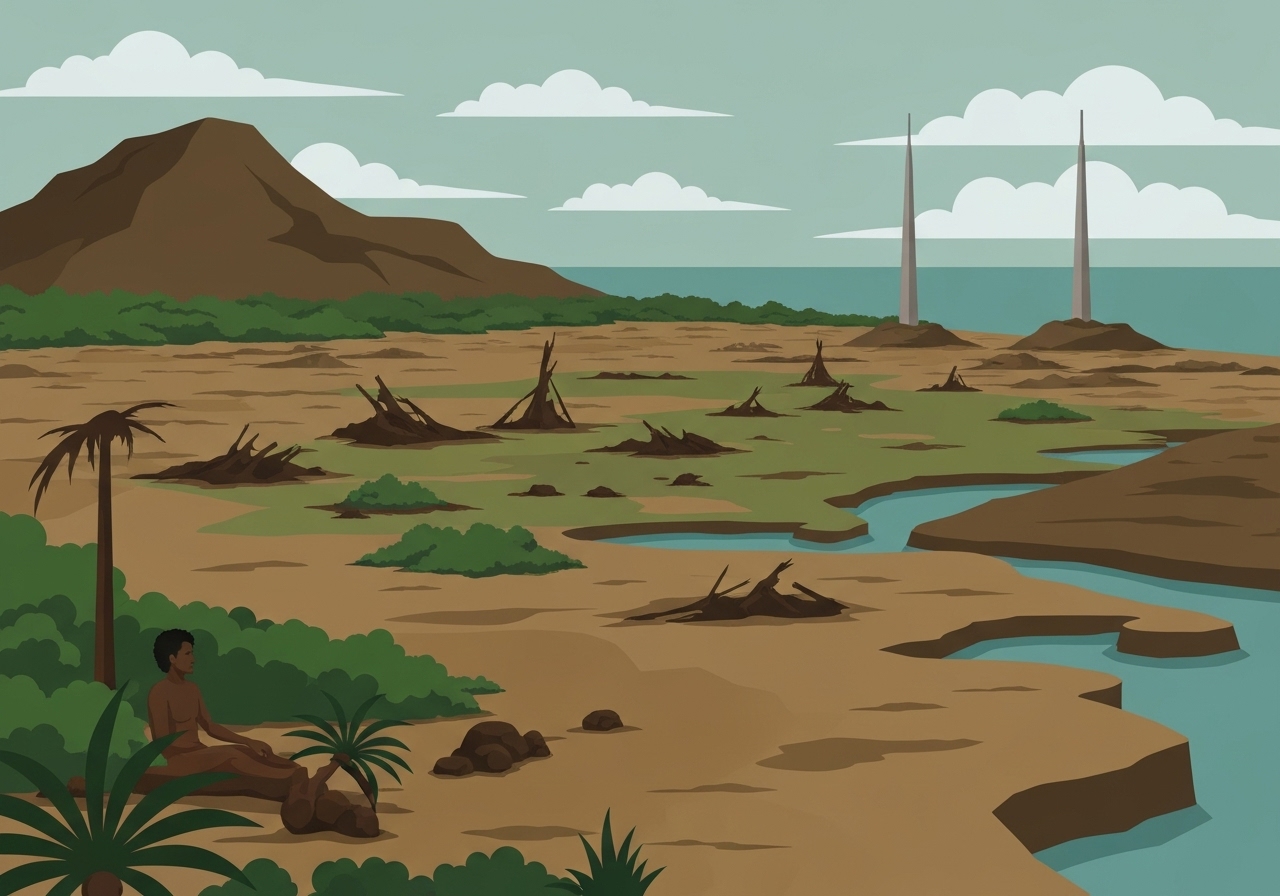
On Enewetak Atoll’s Runit Island a concrete cap—often called “the dome”—covers contaminated debris gathered in cleanup efforts during the 1970s. The cap is about 377 feet (115 meters) across and covers roughly 85,000 cubic meters of material. Because the underlying crater was not lined to modern standards, contaminants remain in island soils and vegetation, and the dome’s integrity is threatened by rising seas and seasonal storms.
Beyond the Pacific tests, the United States carried out atmospheric and underground tests at the Nevada Test Site—about 100 atmospheric tests between 1951 and 1962 and 828 underground tests concluding in 1992. Even underground tests can vent radioactivity: a 1993 U.N. report found 32 Nevada tests released fallout into the atmosphere, exposing U.S. communities downwind.
Analysis & Implications
Resuming explosive testing, even limited to underground detonations, risks political and humanitarian consequences. Technically, atmospheric blasts would recreate globally dispersed fallout; underground tests can still vent radioactivity if containment fails. Either path would strain arms-control regimes and could catalyze a new arms race as rival states reassess testing and development posture.
For populations already impacted by past testing—Marshallese, U.S. downwinders, and communities near test sites—the health and cultural costs have been multi-generational. Empirical studies and government reports link testing fallout to elevated rates of leukemia, thyroid disorders and other cancers; the presence of long-lived isotopes such as plutonium-239 means environmental hazards can persist for millennia, constraining land use and undermining economic recovery.
Politically, renewed testing would complicate the United States’ stance on treaties such as the Comprehensive Nuclear-Test-Ban Treaty (CTBT), which the U.S. signed but did not ratify. Even without ratification, the U.S., Russia and China observed a testing pause after 1996; a policy reversal could weaken nonproliferation norms and increase pressure on other nuclear-capable states to respond in kind.
Economically and diplomatically, testing would likely revive compensation and remediation demands and strain U.S. relationships in the Pacific. The Marshall Islands’ unresolved damage—environmental contamination, lost livelihoods and cultural dislocation—illustrates the long-term liabilities that follow testing programs and frames the costs beyond immediate military considerations.
Comparison & Data
| Item | Count / Date | Notes |
|---|---|---|
| U.S. tests in Marshall Islands | 67 (1946–1958) | Equivalent to ~1 Hiroshima-sized bomb/day for 20 years (IEER, 2025) |
| U.S. Nevada tests | 100 atmospheric (1951–1962), 828 underground (through 1992) | 32 underground tests vented fallout (U.N., 1993) |
| French Pacific tests | 193 (over ~30 years) | Paris’s program also linked to widespread illnesses in Polynesia |
| Estimated excess cancer deaths from Pacific fallout | ~100,000 (IEER, 2025) | Model-based estimate; subject to methodological variance |
| Plutonium-239 half-life | 24,110 years | Indicates persistence of contamination in environment |
The table summarizes testing volumes and documented effects across major programs. While counts and yields are well documented, estimates of health impacts (for example, the ~100,000 excess cancer deaths attributed to Pacific fallout by IEER) depend on modeling choices and available epidemiological data. Comparing programs shows a common pattern: extensive environmental persistence of isotopes and long-term social dislocation for affected communities.
Reactions & Quotes
Advocacy groups and scientific organizations responded sharply to proposals to restart testing. Their statements emphasize both the human cost and the geopolitical risks.
“We know that nuclear testing has devastating consequences on communities and ecosystems throughout the United States…Resuming testing would almost certainly inflict new harms on those groups.”
Matt Korda, Federation of American Scientists (FAS), Nuclear Information Project
Korda’s comment locates risk domestically as well as abroad, citing lingering harms to U.S. communities seeking reparations. His group focuses on transparency and the broader safety implications of testing policy.
“This isn’t fiction, nor the distant past. It’s a chapter of history still alive through the environment, the health of communities, and the data we’re collecting today.”
Shaun Burnie, Greenpeace (after 2025 island visit)
Burnie’s observations followed a scientific and documentary voyage to the Marshall Islands in March–April 2025. Greenpeace collected environmental samples and reported visible impacts on soil, vegetation and community health markers.
“The human rights impacts of the nuclear legacy are not limited to what is known and easily quantifiable.”
Nada Al-Nashif, U.N. Deputy High Commissioner for Human Rights (2024)
The U.N. framing emphasizes intangible harms—cultural loss, displacement and intergenerational trauma—alongside measurable health statistics.
Unconfirmed
- President Trump’s precise technical intent: public statements did not specify whether he meant full-yield atmospheric detonations, underground explosions, or non-explosive delivery-system trials.
- The global excess cancer-death figure (~100,000) is an estimate from IEER (2025) and varies with different modeling assumptions and available health records.
- The future integrity and leakage pathways of the Runit dome under accelerating sea-level rise are uncertain and depend on future storm frequency and engineering interventions.
Bottom Line
The Marshall Islands remain a living testament to the long-term human and environmental costs of nuclear testing: measurable cancer burdens, contaminated land and disrupted cultures. Scientific measurements—soil and biota contamination, isotope half-lives, and epidemiological signals—make clear that those costs persist across generations.
Policymakers weighing a return to testing must account for technical containment risks, international nonproliferation implications and moral obligations to affected communities. The Marshallese experience underscores that testing decisions are not abstract strategic choices but actions with durable, transboundary human consequences.
Sources
- CNN (news report) — original reporting and compilation of statements
- Institute for Energy and Environmental Research (IEER), 2025 report — (independent research organization)
- Atomic Heritage Foundation — (historical nonprofit)
- American Society of Clinical Oncology Journal, 2024 paper — (peer-reviewed medical journal)
- Greenpeace (2025 island expedition) — (environmental NGO)
- U.N. Office of the High Commissioner for Human Rights (speech, 2024) — (international organization)
- International Campaign to Abolish Nuclear Weapons (ICAN) — (advocacy NGO)
- Ploughshares Fund statement — (anti-nuclear NGO)