
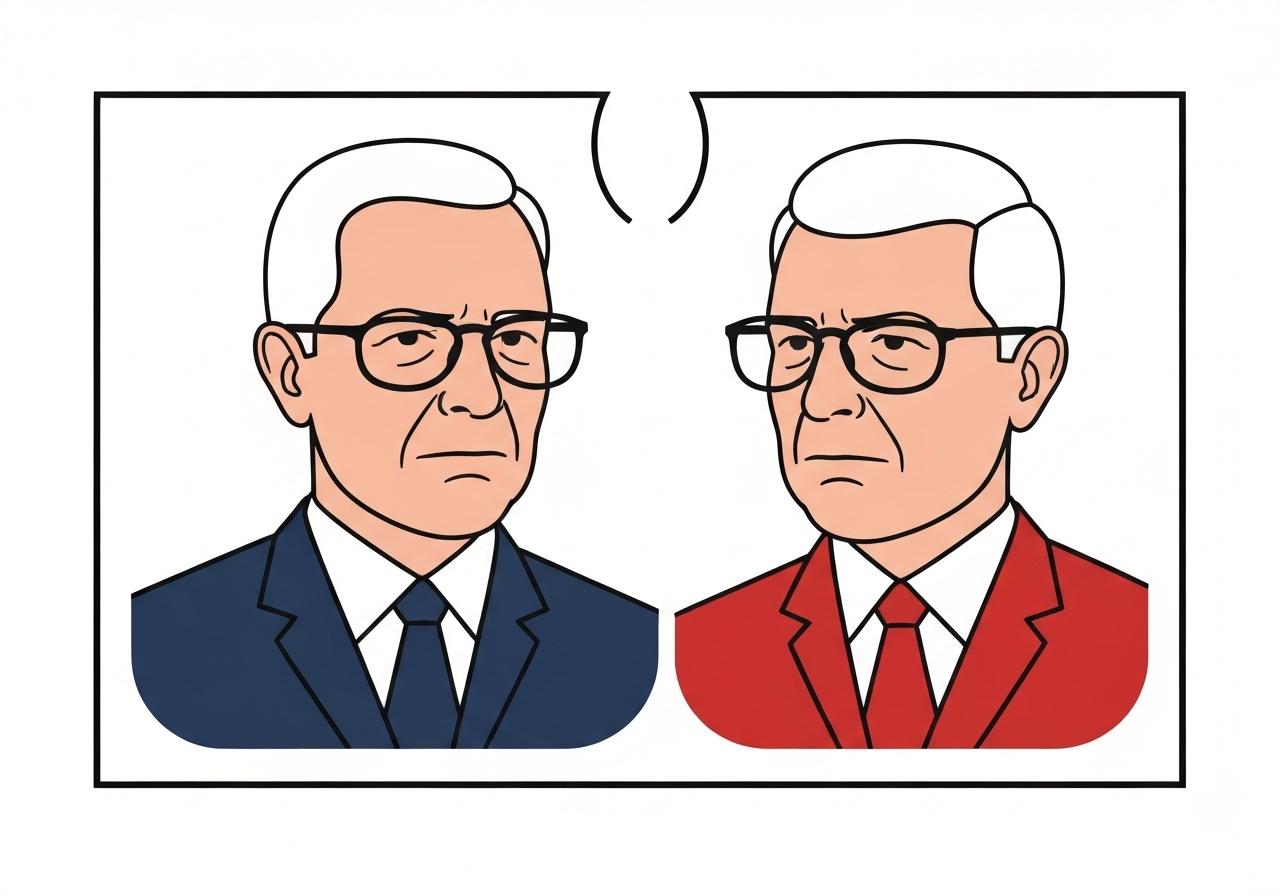
Former vice-president Dick Cheney died at age 84, provoking an immediate mix of formal condolences and fierce denunciations across the US political spectrum on 4 November 2025. Senior Republicans, including President George W. Bush, praised Cheney’s steadiness and long record of public service, while progressives and activists renewed sharp criticism over his role in the Iraq war and controversial post-9/11 policies. The rapid stream of responses highlighted Cheney’s persistent status as a polarizing figure even in death, exposing fractures within the GOP and raising renewed debate over his policy legacy. The White House had not issued a formal statement at the time of reporting.
Key Takeaways
- Dick Cheney, 84, died on 4 November 2025; he served as the 46th vice-president and earlier as US secretary of defense.
- George W. Bush issued a statement praising Cheney as a “calm and steady” presence and a committed public servant.
- Prominent Republicans from Wyoming, Ohio, Iowa and elsewhere issued tributes noting his leadership on national security and Desert Storm.
- Critics on the left condemned Cheney over the Iraq war, rendition and torture programs, with several public figures offering harsh rebukes.
- The White House had not released an official comment by midday; former President Donald Trump had not posted about Cheney on his platform that morning.
- A small number of Democrats offered condolences to Cheney’s family while reiterating policy disagreements.
Background
Dick Cheney’s public career spanned decades: he served in the House of Representatives, as US secretary of defense during Operation Desert Storm, and as vice-president under George W. Bush from 2001 to 2009. Cheney was widely viewed as a central architect of the Bush administration’s national security approach after 9/11, advocating expansive executive authorities, strong military responses and contested counterterrorism measures. That record — particularly the decision to invade Iraq in 2003 and the administration’s use of rendition and enhanced interrogation techniques — became the focal point for intense criticism from human-rights advocates and many on the political left.
In later years Cheney broke with parts of the GOP base, notably opposing Donald Trump and supporting efforts to hold the former president accountable for January 6-related actions. That estrangement complicated his standing within a party that moved sharply toward populism after his vice-presidency. As a result, Cheney’s death reopened unsettled debates about modern Republican identity, the legacy of post-9/11 policy choices, and how history will judge architects of controversial security programs.
Main Event
News of Cheney’s death produced swift responses from political leaders. Former President George W. Bush issued a statement calling Cheney “a calm and steady presence in the White House amid great national challenges” and described him as a dedicated public servant. Senator John Barrasso memorialized Cheney’s impact on Wyoming and national policy, while other Republican senators and governors emphasized his role in shaping US military strategy and domestic leadership.
Several Republican figures highlighted Cheney’s record on national security. Ohio Republican Jon Husted praised Cheney’s commitment to American strength and founding ideals; Senator Joni Ernst cited his service in multiple roles and credited his counterterrorism efforts with preventing a repeat of 9/11. Ohio Governor Mike DeWine recalled working with Cheney in Congress and referenced his leadership during Desert Storm.
At the same time, immediate and forceful denunciations surfaced from the left and the fringes. Activists and commentators blamed Cheney for the human cost of the Iraq war and for post-9/11 policies they called unlawful or immoral. Some right-wing commentators also used his death to promote conspiratorial narratives. Several public figures contrasted formal condolences with emphatic moral condemnation, underscoring the polarized public memory of his career.
Analysis & Implications
Cheney’s death crystallizes competing narratives about US foreign policy in the early 21st century. To supporters, he is a disciplined steward of national security whose decisive actions preserved American interests; to critics, he symbolizes a suite of policies that expanded executive power and produced long-term humanitarian and strategic costs. Those divergent views will shape how historians, policymakers and voters interpret the post-9/11 era.
Within the Republican Party, reactions reveal continuing fault lines. Many establishment conservatives and national-security figures praised Cheney’s judgment and influence, while others — particularly those aligned with Trump-era populism — remained distant or openly hostile. His passing may briefly re-center neoconservative arguments within GOP debate, but it is unlikely to reverse the broader party shift toward populist priorities.
Internationally, memories of Cheney’s policies will influence diplomatic and public responses in countries affected by US actions in Iraq and the broader Middle East. Calls for accountability and renewed scrutiny of detention, rendition and interrogation practices could resurface in advocacy and academic circles, even if legal remedies remain limited by time and jurisdictional constraints.
Comparison & Data
| Reaction Type | Representative Voices |
|---|---|
| Formal Republican Praise | George W. Bush, John Barrasso, John Thune |
| Conservative Think-Tank Response | American Enterprise Institute leadership |
| Left-Wing Condemnation | Progressive commentators, activists |
| Mixed/Personal Condolences | Some Democrats and former colleagues |
This simple comparison shows the spectrum of public responses without quantifying public opinion. The pattern tracks longstanding divisions in American politics: establishment conservatives emphasize service and security outcomes, while progressives foreground human-rights concerns and accountability. Over time, polling and historical reassessment will determine which interpretations of Cheney’s legacy gain predominance.
Reactions & Quotes
“He was a calm and steady presence in the White House amid great national challenges.”
George W. Bush (former president)
This brief excerpt captures the tone of many establishment tributes that foreground Cheney’s steadiness and dedication to public service.
“Wyoming mourns the passing of Vice President Dick Cheney.”
Senator John Barrasso (R–Wyoming)
Barrasso’s comment was typical of state and regional leaders who tied Cheney’s national role to his long-standing connection to Wyoming.
“May the 1 million murdered souls of Iraq haunt you for eternity.”
Omar Suleiman (scholar/activist)
Sharp condemnations such as this highlight the moral and emotional intensity of some responses; they also reflect contested figures and estimates tied to the Iraq conflict.
Unconfirmed
- Precise casualty totals attributed solely to decisions associated with Cheney vary widely; specific figures cited in social posts are disputed and lack single-source verification.
- Conspiracy claims that Cheney was personally involved in planning the 9/11 attacks or that events were staged remain unsubstantiated and are contradicted by mainstream investigations.
- Some online posts asserting the timeline and personal circumstances of Cheney’s final hours have not been corroborated by official family or medical statements.
Bottom Line
Dick Cheney’s death reopened contentious debates about a consequential, controversial public career. Tributes from senior Republicans and conservative institutions emphasized service, judgment and national-security achievements, while critics reiterated charges about the costs of the Iraq war and controversial counterterrorism practices. Those competing memories will continue to determine Cheney’s place in American political history.
In the near term, expect formal memorials and more statements from national leaders, as well as renewed attention from scholars, journalists and advocacy groups aiming to reassess policy choices of the post-9/11 era. Longer term, the debate over Cheney’s legacy will be shaped by historical scholarship, declassified records and evolving public attitudes toward the trade-offs of security and human rights.
Sources
- The Guardian (news report summarizing immediate reactions and statements)