
Lead
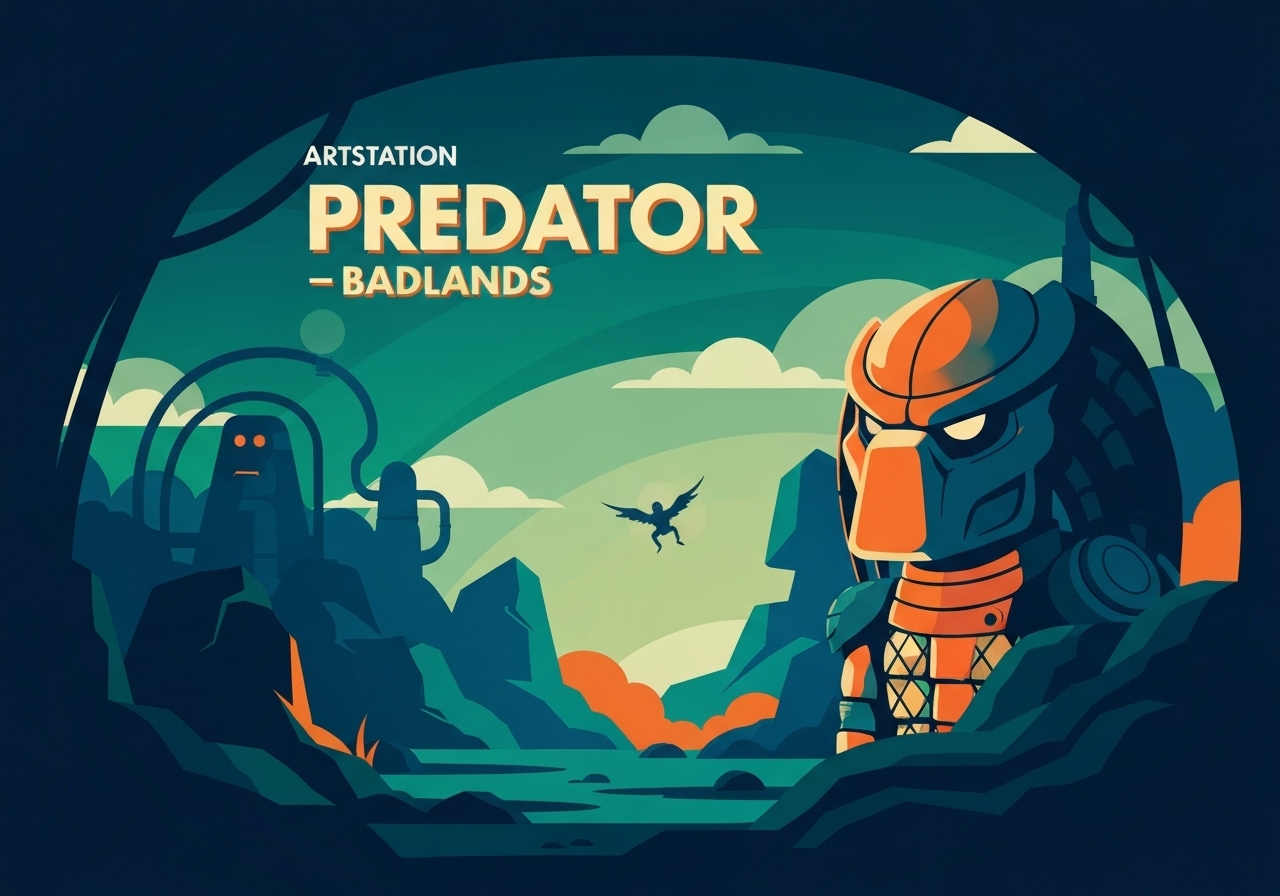
Director Dan Trachtenberg’s live‑action follow‑up to 2022’s Prey reframes the Predator mythos by centering the story on a Yautja hunter rather than human prey. Predator: Badlands, which opens November 7, follows Dek (Dimitrius Schuster‑Koloamatangi) as he hunts the nearly indestructible Kalisk on the lethal planet Genna and is joined by a Weyland‑Yutani synthetic, Thia (Elle Fanning). The film swaps the franchise’s usual predator‑as‑villain premise for a more sympathetic, character‑driven adventure while keeping the franchise’s trademark creature design and violent spectacle. The result is a visually inventive, emotionally grounded sci‑fi outing that aims to expand the series’ mythology.
Key Takeaways
- Predator: Badlands opens in theaters November 7 and is directed by Dan Trachtenberg, who also directed Prey (2022).
- The protagonist is Dek, a young Yautja (Predator species), played by Dimitrius Schuster‑Koloamatangi, who seeks to kill the Kalisk to prove himself.
- Elle Fanning portrays Thia and a lookalike synthetic, Tessa, giving a dual performance that anchors the film’s emotional core.
- The setting is Genna, a planet whose flora and fauna are lethally inventive—trees, insects and other lifeforms actively threaten the characters.
- The film is officially rated PG‑13, the first PG‑13 entry in the main Predator line; the story contains graphic non‑human gore in white and green tones rather than human blood.
- There are explicit nods to the Alien universe (Weyland‑Yutani and other Easter eggs) and franchise callbacks designed for longtime fans.
- Badlands reframes franchise rules—asking what the Predator looks like from the Predator’s point of view—while preserving signature weapons, action beats, and worldbuilding.
Background
The Predator franchise has historically presented the Yautja as apex hunters who—narratively—are antagonists in human‑centered stories. The original 1987 film and subsequent sequels established the Predator as a lethal force that humanity confronts and typically defeats. Dan Trachtenberg’s Prey (2022) adopted some of those franchise conventions while updating tone and perspective; Badlands pushes further by explicitly flipping the moral frame and putting a Yautja at the emotional center.
That shift arrives amid a broader franchise landscape that now intersects with properties and brands familiar to sci‑fi fans. References to Weyland‑Yutani and visual callbacks to earlier films connect Badlands to a larger speculative universe without requiring prior knowledge. At the same time, distribution and production changes—Badlands being a Disney‑distributed entry—affect how the film is rated and positioned for audiences, which influences both creative choices and commercial strategy.
Main Event
Predator: Badlands opens on Genna, an ecosystem engineered by the screenplay to be uniformly hostile. Dek arrives intent on a rite of passage: killing the Kalisk, a creature the film presents as arguably the planet’s apex terror. Genna’s lifeforms do not behave like familiar predators; instead they use camouflage, chemical warfare, and surprising biomechanics that keep the protagonists off balance and create continuous set‑piece variety.
On Genna, Dek encounters Thia, a Weyland‑Yutani synthetic played by Elle Fanning. Thia has suffered grievous injury on the planet—graphic bodily damage that is non‑human in appearance—and she joins Dek’s quest, motivated by reasons the film reveals gradually. The dual casting of Fanning as both Thia and a lookalike synthetic, Tessa, provides a throughline about identity, abandonment, and what it means to be sentient in a violent frontier.
The pair’s trek is punctuated by inventive creature encounters, surprising tonal shifts, and several narrative turns that reward franchise fans: from practical‑effect set pieces to visual Easter eggs such as a yellow power loader and corporate signatures that evoke the Alien series. Despite a friendlier PG‑13 envelope by franchise standards, the film maintains visceral stakes—gore is abundant, though it is depicted in non‑human colors and applied to non‑human victims.
Analysis & Implications
By centering a Yautja, Trachtenberg reframes the franchise’s ethical axis: predators need not be pure antagonists in every story. That perspective broadens the emotional palette available to the series, allowing writers to explore Predator social structures, rites, and family dynamics—elements Badlands treats with surprisingly Shakespearean weight in Dek’s motivations. Human viewers gain empathy for an alien protagonist without erasing the franchise’s core identity.
Commercially and culturally, the PG‑13 rating and Disney distribution suggest an attempt to expand the audience beyond the older, R‑rated demographic traditionally associated with Predator films. That carries both upside—larger family‑adjacent audiences, merchandise potential, and streaming placement—and risk, insofar as some longtime fans may prefer the grittier, more lethal tone of earlier entries. The filmmakers appear to hedge that risk by keeping the film bloody in creature terms and by including clear references for devoted fans.
On the franchise timeline, Badlands deepens continuity by invoking Weyland‑Yutani and material culture familiar to Alien/Predictor followers. This creates crossover possibilities but also raises questions about canonical alignment: the film offers connective tissue without committing to a full interseries merger. Creatively, the success of Badlands may encourage more stories told from nonhuman viewpoints across established monster franchises.
Comparison & Data
| Film | Central Perspective | Notable Year | Rating (main entry) |
|---|---|---|---|
| Predator | Human protagonist vs. Predator | 1987 | R (original theatrical) |
| Prey | Human protagonist (Comanche perspective) | 2022 | R |
| Predator: Badlands | Yautja protagonist (Dek) | — (opens Nov 7) | PG‑13 |
The table highlights Badlands’ notable tonal and point‑of‑view departure from earlier films: it is the first main‑series entry to center a Yautja and to carry a PG‑13 rating, while earlier recent entries favored human leads and R ratings. That contrast helps explain both fan debate and marketing choices.
Reactions & Quotes
Critics and early viewers have emphasized the film’s tonal gamble—humanizing a species long cast as antagonist—while praising practical creature work and the performances that carry it.
“Trachtenberg has again found a way to flip the franchise on its head.”
Gizmodo (review)
This remark captures a common critical reaction: the director preserves franchise hallmarks while rearranging moral focal points. The praise largely centers on the film’s emotional stakes and the fresh vantage point, rather than simple novelty alone.
“We learn so much about this mythical species”
Gizmodo (review)
Reviewers use language like this to explain why the film feels consequential for franchise lore: Badlands doesn’t merely entertain—it substantially expands the Yautja’s cultural and psychological portrait. Audience responses have noted Elle Fanning’s dual role as a key reason the film achieves emotional clarity.
Unconfirmed
- Whether Badlands is fully canonical within a unified Alien‑Predator continuity has not been officially confirmed and remains a topic for studio clarification.
- The claim that the PG‑13 rating stems solely from the absence of human characters is interpretive rather than an official studio statement and should be treated as analysis rather than fact.
- Longer‑term franchise plans (sequels, crossovers with Alien, or serialized expansions) related to Badlands have not been publicly detailed and are therefore speculative.
Bottom Line
Predator: Badlands is a deliberate reinvention that keeps the franchise’s visceral pleasures while presenting a fresh ethical and emotional center. By telling a Predator‑side story, Trachtenberg expands what the series can explore—family, honor, and identity—without abandoning the practical effects, creature design, and brutal encounters that fans expect.
For newcomers, Badlands functions as a self‑contained sci‑fi adventure with striking monsters and clear stakes. For long‑time fans, it offers rewarding lore and callbacks packaged in a more empathetic frame; whether that tonal shift endures across future entries will depend on audience response and studio direction after the film’s November 7 debut.