
Lead
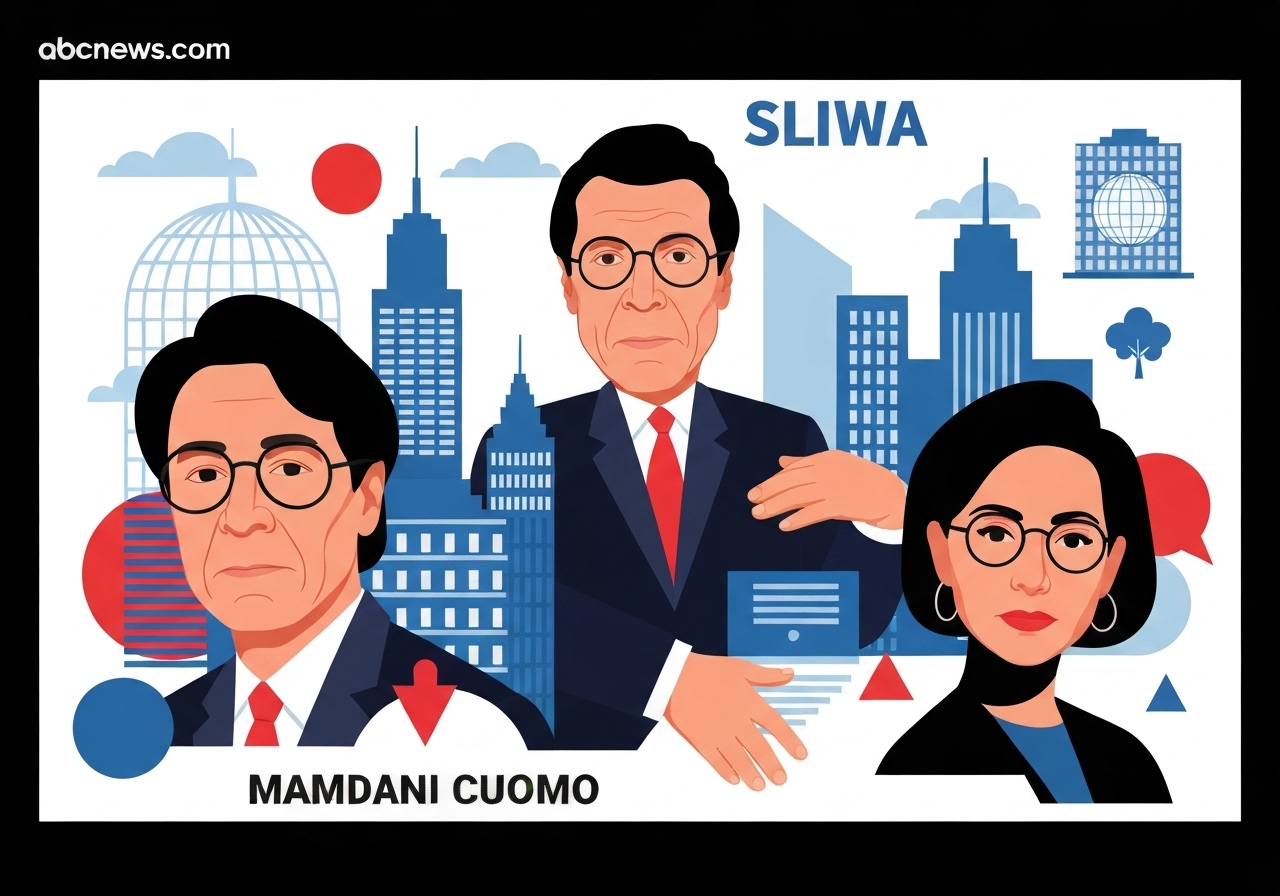
On November 4, 2025, New Yorkers watched a three-way mayoral contest that has come to symbolize a broader ideological struggle in the city. Democratic nominee and state Assemblyman Zohran Mamdani, running from the progressive wing, is matched against former governor Andrew Cuomo, who is campaigning as an independent, and Republican Curtis Sliwa. Mamdani has carried momentum since the primary and secured high-profile endorsements, while Cuomo seeks a political return after resigning as governor in 2021 amid misconduct allegations. Sliwa has refused calls to exit the race, keeping a three-way dynamic that shapes turnout and issue prioritization.
Key Takeaways
- Election snapshot: The race on November 4, 2025, features Zohran Mamdani (Democrat), Andrew Cuomo (independent), and Curtis Sliwa (Republican); other minor and third‑party candidates remain on the ballot.
- Mamdani profile: Mamdani, a state Assemblyman and self-identified democratic socialist, leads on a progressive economic platform and holds endorsements including Gov. Kathy Hochul.
- Cuomo comeback: Andrew Cuomo is campaigning as an independent after resigning as governor in 2021 amid sexual harassment and inappropriate conduct allegations; he emphasizes executive experience.
- Sliwa stance: Republican Curtis Sliwa maintains his candidacy despite pressure to withdraw, citing a distinct political lane from the two Democratic-aligned contenders.
- Adams campaign update: Incumbent Eric Adams began an independent bid but suspended his campaign in late September, citing media scrutiny and withheld public matching funds from the city’s campaign finance board.
- Main fault lines: Debates center on public safety, policing policy, housing affordability and the feasibility of large-scale progressive spending proposals.
- Electoral significance: The contest is widely read as a test of the Democratic Party’s progressive versus moderate coalitions in a major American city.
Background
New York City politics has long featured tension between reform-minded progressives and centrist Democrats who prioritize managerial experience. Over recent cycles, issues such as crime rates, housing costs and fiscal constraints have sharpened voter choices; candidates have framed their platforms around differing remedies for those challenges. In 2021 the incumbent mayor faced Curtis Sliwa in a prior general election contest, and the current mayor, Eric Adams, initially explored an independent 2025 run before pausing that bid in late September.
The Democratic primary yielded Zohran Mamdani as its nominee, reflecting an energized progressive base within the city’s Democratic electorate. That base has pushed for more aggressive interventions on inequality and tenant protections, while critics question how those proposals would be funded and implemented. Andrew Cuomo’s reappearance taps into a different argument: that executive experience and a more moderate posture can better restore stability. Curtis Sliwa’s Republican candidacy is positioned to consolidate conservative voters and appeal to residents prioritizing law-and-order messaging.
Main Event
Mamdani’s campaign has emphasized a progressive economic agenda that includes stronger tenant protections and investments in public services; his backers point to his primary win as evidence of sustained grassroots support. But opponents, including some fiscal moderates and local business groups, have publicly questioned the fiscal realism of certain proposals and flagged earlier statements by the candidate on policing for critics to scrutinize. Gov. Kathy Hochul’s endorsement of Mamdani added establishment weight to his campaign, though endorsements have not quelled all policy debates.
Andrew Cuomo has framed his candidacy around experience from his time as governor and described his run as an effort to offer pragmatic governance. His 2021 resignation following allegations of sexual harassment and inappropriate conduct remains a defining context for voters and commentators; Cuomo argues his record of executive decision-making is a counterpoint to those concerns. Running as an independent, Cuomo seeks to attract moderate Democrats, independents and disaffected voters who favor a centrist approach.
Curtis Sliwa has resisted overtures to withdraw and has continued to portray himself as an alternative to the city’s dominant Democratic factions. Sliwa’s campaign highlights public safety and law-and-order priorities and aims to mobilize Republican and swing voters in neighborhoods where crime and municipal services are primary concerns. With Adams having stepped back in late September, the three principal campaigns have intensified direct outreach and advertising to define contrasts ahead of final vote tallies.
Analysis & Implications
The election functions as both a local governance choice and a symbolic test of intra-party influence. A Mamdani victory would signal strengthened influence for the progressive flank in New York City and could embolden similar candidates elsewhere. However, governing from the mayor’s office requires coalition-building with city council members, state officials and funders; the durability of a progressive mandate will depend on policy details and revenue strategies.
If Cuomo succeeds, his win would represent an uncommon political comeback in a major city and could shift the municipal agenda toward managerial reforms and compromise-driven policymaking. Such an outcome would also complicate the national Democratic narrative about the party’s ideological center of gravity. Conversely, a Sliwa upset would mark a significant Republican inroad in New York City politics and could reshape local policy debates, particularly on public safety.
All outcomes carry fiscal and operational consequences. New York City’s budget constraints limit the speed and scale of new programs, so any winner will face trade-offs between campaign promises and budgetary reality. Policy success will hinge on administrative capacity, relations with Albany and the willingness of voters to tolerate short-term disruptions for long-term reforms. Finally, turnout patterns across boroughs and demographic groups will determine which message resonates most effectively.
Comparison & Data
| Candidate | Party/Label | Core emphasis |
|---|---|---|
| Zohran Mamdani | Democrat (progressive) | Economic justice, tenant protections, expanded public services |
| Andrew Cuomo | Independent (former Democrat) | Executive experience, centrist management, public safety |
| Curtis Sliwa | Republican | Law-and-order, public safety, conservative fiscal stance |
The table highlights party alignment and policy emphasis without asserting vote shares. Candidate platforms intersect on shared concerns—such as public safety and housing—but diverge sharply on proposed remedies and revenue approaches. Close attention to fundraising reports and precinct-level returns will be necessary to understand the electorate’s final calculus.
Reactions & Quotes
The responses from campaigns, officials and analysts have been immediate and varied, reflecting differing interpretations of what a win or a close result would mean for governance and party dynamics.
“This endorsement reflects confidence in our ability to tackle inequality and protect tenants,”
Mamdani campaign statement
The campaign statement accompanied public appearances and policy memos that stress progressive priorities and outreach to working-class neighborhoods.
“My focus is on delivering results and restoring effective management to the city,”
Andrew Cuomo campaign release
Cuomo’s materials emphasize executive experience and seek to reassure moderate voters wary of rapid policy shifts.
“I’m staying in the race because New Yorkers deserve alternatives,”
Curtis Sliwa press message
Sliwa’s messaging aims to consolidate conservative voters and appeal to residents prioritizing public safety.
Unconfirmed
- Reports of secret negotiations between Cuomo and centrist party figures to swap endorsements remain unverified and lack documentary confirmation.
- Specific claims about campaign fundraising totals withheld by the city’s campaign finance board for reasons beyond standard review have not been independently corroborated.
Bottom Line
This mayoral contest is more than a choice of personalities; it embodies a contest about the city’s direction on inequality, public safety and who has the mandate to govern. Mamdani’s progressive agenda, Cuomo’s bid for a return based on executive experience, and Sliwa’s conservative appeal present distinct paths with different governing implications.
Final outcomes will hinge on turnout, borough-level splits and how voters weigh experience against ideological change. Regardless of the winner, the next mayor will face immediate budgetary and operational constraints that will test campaign commitments against the practicalities of running a complex city.
Sources
- ABC News (news report)