
Lead
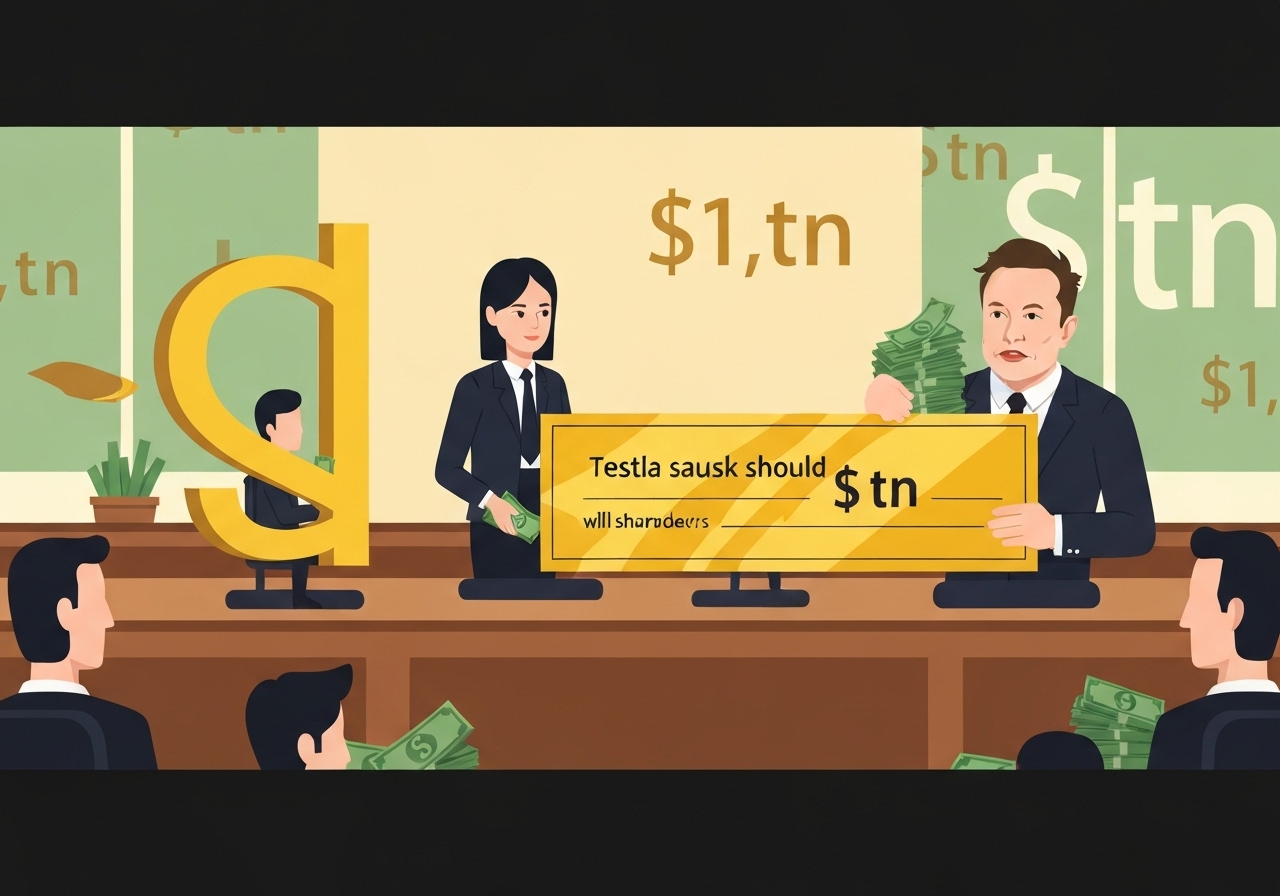
Ahead of Tesla’s annual general meeting in Austin, Texas on Thursday, the company is urging investors to approve an unprecedented pay package that could be worth nearly $1 trillion if Elon Musk meets aggressive targets. The board has taken out digital ads and posted endorsements to persuade shareholders that Musk is essential to Tesla’s future. Critics, proxy advisers and large institutional investors have pushed back, calling the package excessive and warning it could dilute shareholder value. The vote has become a de facto referendum on Musk’s leadership amid slowing vehicle sales and stalled autonomous-vehicle ambitions.
Key takeaways
- Tesla asked shareholders to approve a package that would grant Elon Musk 423.7 million new shares if Tesla’s market value reaches $8.5 trillion, up from about $1.4 trillion today.
- The plan ties awards to very large milestones including putting one million Robotaxi vehicles into commercial operation.
- Proxy advisers Glass Lewis and ISS have recommended investors reject the proposal, calling it excessively dilutive.
- Major institutional investors including Norway’s sovereign wealth fund and CalPERS have advised against supporting the package.
- The earlier 2018 compensation award was struck down by a Delaware judge in 2024; the Delaware Supreme Court is reviewing that decision.
- Tesla has run get-out-the-vote style ads and posted videos of board members urging support, an unusual campaign for a compensation vote.
- Retail shareholders—who tend to back Musk—could be pivotal if large institutions oppose the plan.
- Analysts say the AGM is one of Tesla’s most consequential governance moments with a real possibility the package fails.
Background
Tesla proposes a long-term incentive that would only vest if the company achieves an $8.5 trillion market capitalization and other operational milestones including mass deployment of autonomous, commercial Robotaxi services. At the time the proposal circulated, Tesla’s market value stood near $1.4 trillion. If targets are met, the grant of 423.7 million shares would be worth nearly $1 trillion at that valuation.
The company and its board argue Musk’s leadership is singularly important to realize Tesla’s mission and that losing him would harm the company. In support, Tesla has produced ads and a video featuring board chair Robyn Denholm and director Kathleen Wilson-Thompson, urging shareholders to vote in favor. That public persuasion push is unusual for a compensation vote and has drawn scrutiny from governance experts.
This is not Tesla’s first controversial CEO pay episode: shareholders previously ratified a 2018 package that would have awarded tens of billions if Tesla expanded tenfold, a deal later struck down by a Delaware judge in 2024 due to concerns about board independence. The state of that earlier ruling is now before the Delaware Supreme Court, adding legal uncertainty around director conduct and compensation processes.
Main event
The annual meeting in Austin will center on the compensation resolution, but also function as a broader assessment of Musk’s stewardship. Tesla’s campaign includes targeted digital advertising and the votetesla.com site hosting director endorsements; the company says it conducted a seven-month process with legal and compensation advisers to design the package. Musk has amplified the stakes on X, arguing Tesla’s future—he has even said it “could affect the future of civilization”—depends on his continued leadership.
Opponents argue the timing is wrong. Tesla’s vehicle deliveries and sales momentum have cooled from breakneck growth, and critics say the company should refocus on selling cars rather than promoting an executive pay plan. Ross Gerber, who reduced his Tesla holdings, criticized the ad spending on a payout campaign while sales soften.
Key proxy advisers have urged a no vote. Glass Lewis and Institutional Shareholder Services (ISS) concluded the package is overly dilutive or lacks appropriate governance safeguards. Large public investors including Norway’s Government Pension Fund Global and California Public Employees’ Retirement System (CalPERS) also oppose the proposal or have recommended against it, signaling institutional resistance.
The vote dynamics are complicated by Musk’s and his brother Kimbal’s voting power: both will be able to vote shares they control, which increases the chance management can marshal retail investor support to reach the majority threshold. Morgan Stanley analyst Adam Jonas has described the meeting as one of the most important events in Tesla’s history, noting a distinct possibility the package could fail.
Analysis & implications
If shareholders reject the proposal, the immediate consequence would be political and reputational: a loss would be seen as a rebuke of the current board and Musk’s influence. That could spur board changes, prompt a reassessment of corporate strategy, and embolden activist investors seeking governance reforms. Conversely, passage would cement Musk’s long-term control and align compensation incentives with his bold growth targets.
Financially, if the package were to vest, issuing 423.7 million shares would materially dilute existing holders unless offset by future buybacks or other measures. Reaching an $8.5 trillion market cap implies a roughly sixfold increase from the current $1.4 trillion level—an outcome that would require exceptional operational and market performance over an extended period.
The Robotaxi milestone—one million commercial autonomous vehicles—faces technological, regulatory and operational hurdles. Full commercialization at that scale would require both confident self-driving performance and broad regulatory acceptance across multiple jurisdictions, which remains uncertain given recent progress and setbacks in autonomy demonstrations.
Governance-wise, the board’s public advocacy for a compensation vote raises questions about independence and fiduciary role. Governance experts like Columbia Law’s Dorothy Lund have noted that active vote-getting on compensation is atypical and can suggest the board is more invested in protecting management than in independent oversight, a concern amplified by the Delaware litigation history.
Comparison & data
| Item | Current / Proposal |
|---|---|
| Tesla market value | ~$1.4 trillion → target $8.5 trillion |
| Share grant to Musk | 423.7 million new shares |
| Robotaxi commercial units | Target: 1,000,000 vehicles |
| Earlier 2018 package | Tenfold market cap target; later struck down in 2024 (Delaware) |
The table frames the scale gap between current metrics and the package’s targets. Achieving the market-cap goal would require sustained multiple expansion and growth in revenue and margins. The Robotaxi target of one million commercial vehicles implies very rapid deployment compared with current autonomous test fleets and regulatory timelines, making it a high bar rather than an incremental incentive.
Reactions & quotes
“There is no one remotely close to my brother,”
Kimbal Musk, Tesla director (endorsement featured on votetesla.com)
The remark appeared in Tesla’s promotional materials as the company sought to personalize the ask to shareholders. Elon Musk acknowledged the endorsement publicly, amplifying the message across social channels.
“The strategy is more of the same from Tesla; nothing about Tesla is normal,”
Dorothy Lund, Columbia Law School
Lund highlighted governance concerns, noting public advocacy for a compensation vote is unusual and could indicate defensive tactics by the board.
“It’s hard for me to imagine that Elon Musk, in the very near term, shakes off the damage that he’s done to this brand,”
Matthew Kotchen, Yale School of the Environment
Kotchen framed the debate as both reputational and commercial, linking Musk’s external profile to consumer and investor sentiment around Tesla’s core business.
Unconfirmed
- Whether Elon Musk would actually depart Tesla if shareholders reject the package remains unconfirmed; company statements frame departure as a risk but provide no formal resignation scenario.
- The feasibility and timeline for deploying one million commercial Robotaxis are uncertain and depend on regulatory approvals and technical progress that are not yet verifiable.
- The ultimate outcome of the Delaware Supreme Court review of the 2018 compensation ruling is pending and could influence perceptions but is not resolved.
Bottom line
The vote is more than a compensation decision: it is a test of investor appetite for concentrating authority and awarding massive, outcome-dependent equity to a single executive. If shareholders approve, Tesla will double down on a founder-centric governance model and set extremely ambitious financial and technical expectations. If they reject the deal, the board will face pressure to change course and to restore greater independence and operational focus.
For investors, the practical question is whether the market and Tesla’s operations can plausibly support the valuation and production milestones required for the award to vest. Retail investor turnout, institutional stances and the Delaware litigation backdrop together make the AGM a pivotal moment for Tesla’s future strategy and governance.
Sources
- BBC News (news report summarizing the AGM and package)
- votetesla.com (company campaign site; official)
- Glass Lewis (proxy advisory firm)
- Institutional Shareholder Services (ISS) (proxy advisory firm)
- Norges Bank Investment Management (Norway sovereign wealth fund; official)
- CalPERS (California Public Employees’ Retirement System; official)
- New York State Office of the Comptroller (public pension oversight; official)