
Lead
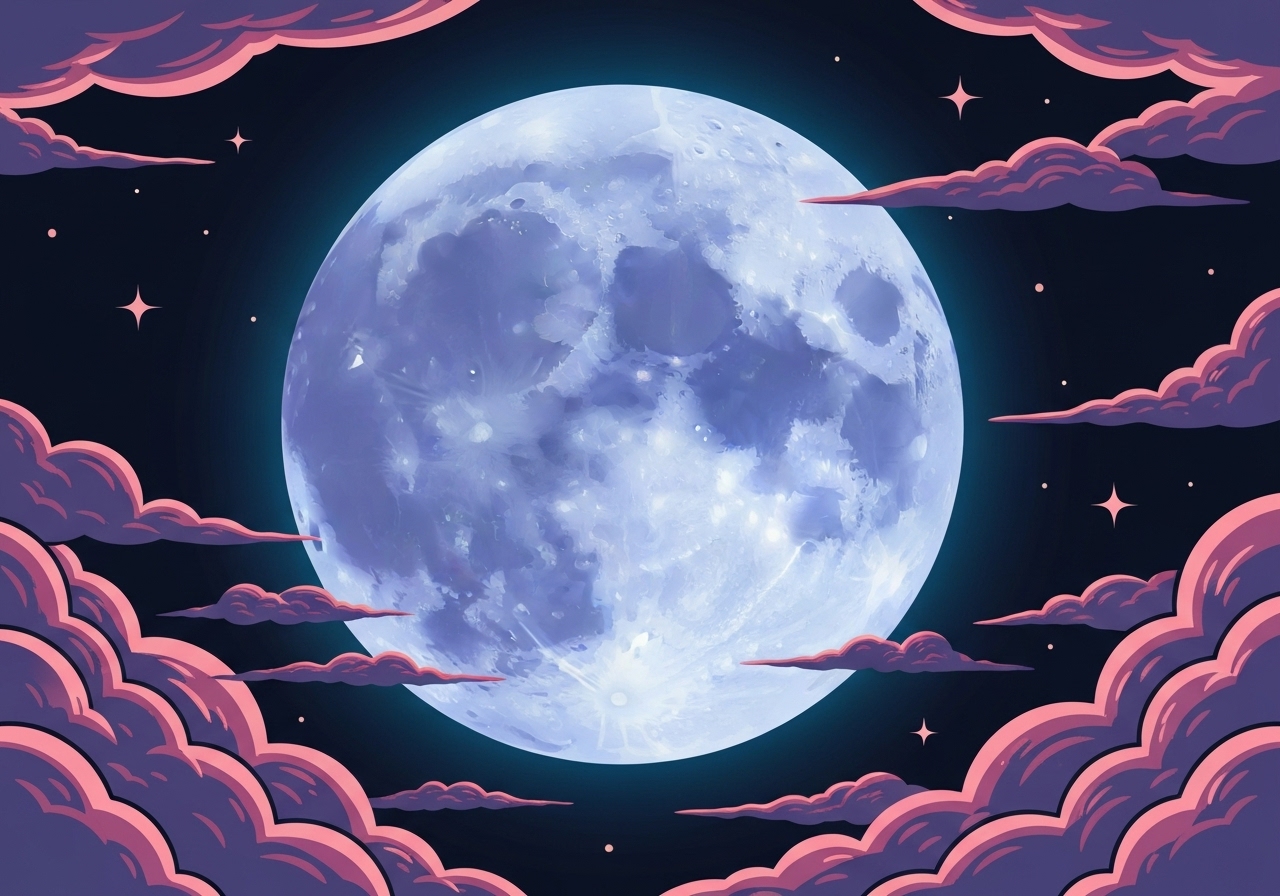
The November full moon will reach peak illumination on Nov. 5, 2025, at 8:19 a.m. EST (13:19 GMT), arriving just hours before the Moon reaches perigee. That timing makes this November full moon the largest and brightest “supermoon” of 2025, and it will climb near the peak of the Southern Taurid meteor shower. Observers in many regions should see a conspicuously large lunar disk on the eastern horizon after sunset, with Saturn nearby in the evening sky and Jupiter rising later. Free livestreams and clear-sky viewing opportunities make this an accessible event even for those hindered by clouds or city lights.
Key Takeaways
- The Moon is officially full at 8:19 a.m. EST (13:19 GMT) on Nov. 5, 2025, and reaches perigee within hours of that moment, creating the year’s largest supermoon.
- By conventional supermoon criteria (full moon within 90% of perigee), the November full moon can appear up to about 14% larger and roughly 30% brighter than a full moon near apogee.
- The full moon rises after sunset on Nov. 5 and will sit close to the stars of Aries; atmospheric scattering near the horizon can give it a yellow-orange tint.
- The November full moon is traditionally called the “Beaver Moon” or “Frost Moon,” names cited by farming and folklore sources for late-autumn behavior and weather patterns.
- The event coincides with the Southern Taurid meteor shower peak one night earlier; Taurid meteors (including occasional fireballs) will appear to radiate from Taurus, to the lower left of the lunar disk on Nov. 5.
- Saturn will be visible to the right (south) of the Moon at sunset; Jupiter rises later to the Moon’s lower left, beneath Castor and Pollux in Gemini.
- Photographers should expect strong lunar glare that makes deep-sky targets harder to see; the lunar surface itself, including maria and highlands, offers a bright, high-contrast target for imaging.
Background
Full moons receive folk names reflecting seasonal activities; in North America November’s moon is commonly called the “Beaver Moon,” a term recorded in multiple almanacs and rural traditions to mark trapping and other late-autumn preparation. The Farmer’s Almanac and similar sources also refer to it as the Frost Moon, emphasizing colder conditions and early frosts in many temperate regions.
Modern astronomy adds orbital detail to the folklore: the Moon follows an elliptical orbit with varying distance from Earth, so a full moon that occurs near perigee (the closest orbital point) appears larger and brighter than one near apogee. The informal term “supermoon” is widely used by skywatchers and media; astronomers generally define it operationally as a full or new moon occurring within about 90% of the Moon’s perigee distance.
The Southern Taurid meteor shower, whose debris stream produces slow-moving meteors and occasional bright fireballs, peaks around Nov. 4–5 some years. When a bright Moon is nearby in the sky, detecting fainter Taurids becomes harder, but the shower’s fireballs can still be striking and camera-friendly against a moonlit backdrop.
Main Event
On Nov. 5 the full Moon reaches peak illumination early in the morning Eastern time; because perigee follows closely, the lunar disk will appear noticeably larger that evening as it rises in the east at sunset. Observers should look toward the eastern horizon shortly after sunset to catch the so-called “moonrise effect,” where the disk appears largest near the skyline due to optical and perceptual factors.
Coloration is also affected by the low-altitude path through Earth’s atmosphere. As the full Moon climbs, shorter (bluer) wavelengths scatter more strongly, leaving a warmer yellow or orange cast when the Moon is near the horizon. This is an atmospheric effect, not an intrinsic change in the Moon’s surface color.
The Southern Taurid radiant lies in Taurus, to the lower left of the Moon on Nov. 5. Because the moonlight is bright, observers seeking faint Taurid meteors will have better luck in darker locations, but the shower’s infrequent bright fireballs remain visible even with a bright lunar background.
Planetary context: at sunset Saturn will appear as a bright object to the Moon’s right toward the south, and Jupiter will rise later to the Moon’s lower left, appearing beneath Gemini’s bright stars Castor and Pollux. These close pairings make the evening and late-night sky more attractive for casual stargazing.
Analysis & Implications
Scientific interest in supermoons is modest because the geometric changes are well understood and produce no measurable physical effects on human behavior or geologic activity. However, the visual prominence of a perigee full moon drives public interest in astronomy and can prompt increased viewing, photography, and informal outreach—valuable for public science literacy.
For astrophotographers and amateur astronomers, a supermoon presents both opportunity and challenge. The bright, high-contrast lunar surface makes excellent targets for high-resolution imaging of maria and crater detail, but the same brightness washes out faint deep-sky targets such as distant galaxies and emission nebulas. Planning sessions around moonrise and moonset, and using narrowband filters where appropriate, can help balance objectives.
From a public-safety and environmental perspective there is no evidence that a supermoon produces stronger tides or other Earth effects beyond the minor, predictable tidal changes associated with perigee. Any headlines suggesting dramatic physical impacts are not supported by mainstream geophysics.
In the context of meteor showers, a bright Moon complicates visual counts and small-camera detections of meteors; coordinated livestreams and multi-site imaging networks can compensate by increasing sky coverage and enabling detection of brighter Taurid fireballs that still outshine moonlight.
Comparison & Data
| Event | Relative apparent diameter | Relative brightness |
|---|---|---|
| Nov. 5, 2025 supermoon (near perigee) | ~14% larger vs. smallest full moon | ~30% brighter vs. smallest full moon |
| Smallest full moon (near apogee) | Baseline | Baseline |
The table summarizes commonly cited comparative figures: a perigee full moon can appear roughly 10–14% larger in apparent diameter and up to about 30% brighter than a full moon occurring near apogee. Those percentages are visual and photometric estimates that depend on exact orbital distances and observing conditions.
Reactions & Quotes
Organizers of public skywatch events and livestream teams highlighted the outreach potential of the supermoon, noting that a visually dramatic Moon attracts viewers who might not otherwise follow astronomy.
“Join us for a free livestream of the Nov. 5 moonrise to catch the view even if clouds interfere locally.”
Virtual Telescope Project (livestream announcement)
Folklore and seasonal guides emphasize the Moon’s traditional names and their connection to agricultural cycles, which help people link celestial events to cultural calendars.
“November’s full moon carries names like Beaver Moon and Frost Moon used in farming and folklore to mark late-autumn preparations.”
Farmer’s Almanac (traditional names)
Astronomers and photographers recommend practical steps for observers: choose a clear horizon, use a telephoto lens or small telescope for lunar detail, and remember that the Moon’s brightness will hinder faint-sky observations.
“The bright lunar disk is a superb target for lunar detail, but it makes observing faint nebulae and galaxies more difficult during the same night.”
Amateur astronomy guidance (general consensus)
Unconfirmed
- Reports claiming an unusually high Taurid fireball rate tied to this year’s encounter have not been confirmed by coordinated shower-monitoring networks.
- Claims that naked-eye viewers will perceive the Moon as 14% larger without side-by-side comparison are subjective; perceived enlargement is influenced by horizon context and local conditions.
Bottom Line
The Nov. 5, 2025 full Moon will be the year’s largest supermoon because its timing near perigee produces a visibly larger and brighter lunar disk. That timing, combined with the Southern Taurid shower around the same date, makes the early-November sky especially active for both casual viewers and dedicated photographers.
For the best experience: look to the eastern horizon shortly after sunset to catch the moonrise, consider attending or watching a livestream if conditions are poor locally, and plan separate sessions for lunar imaging versus deep-sky observing because the bright Moon will limit faint-object visibility. Expect good public interest and striking night-sky imagery, even as scientific effects on Earth remain negligible.