
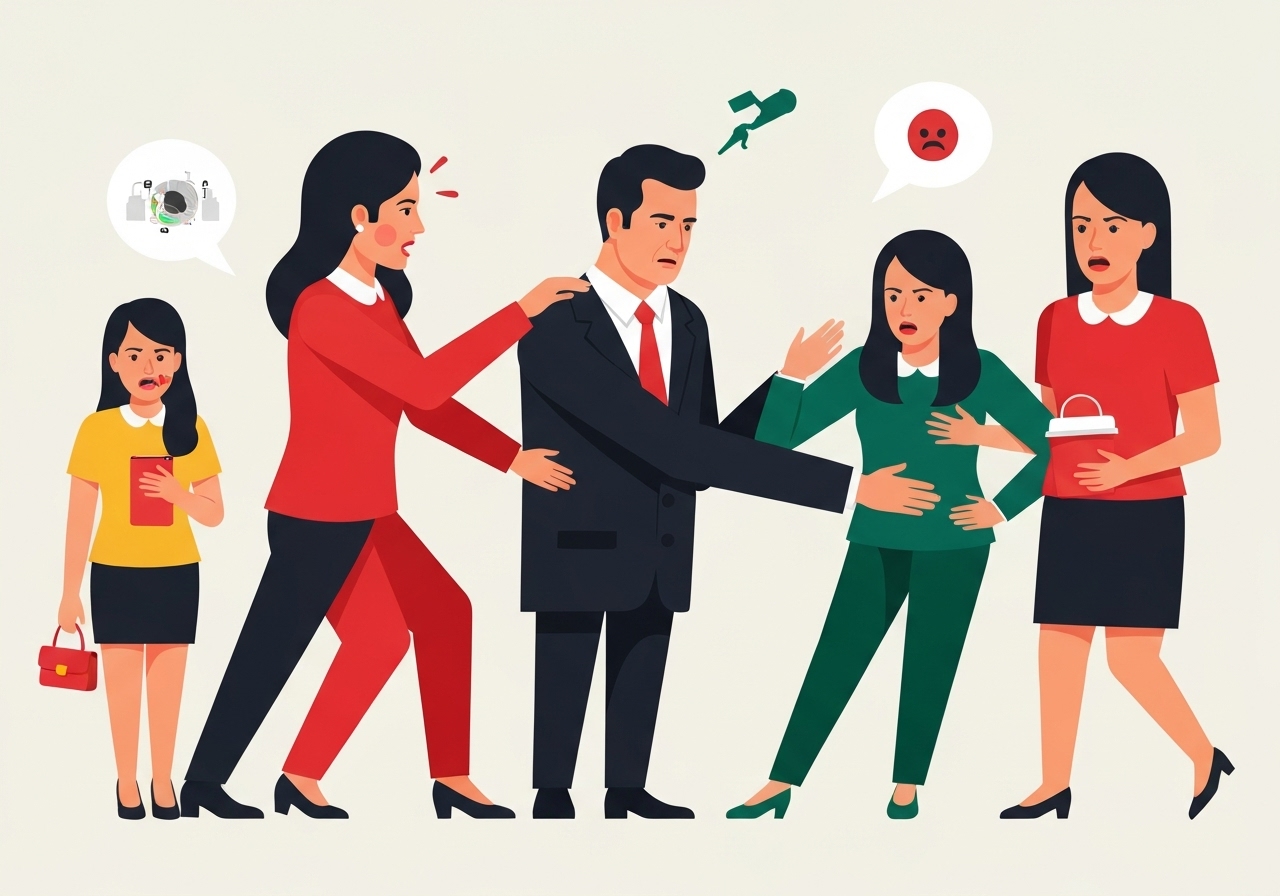
On Tuesday, Nov. 4, 2025, in Mexico City, President Claudia Sheinbaum was approached by a man while taking selfies with supporters; video shows the man slip an arm around her, press a kiss to her neck and briefly touch her chest before aides intervened. Authorities said the man was detained and described as intoxicated; Sheinbaum filed a criminal complaint and announced a government review of state laws to push for nationwide criminalization of street harassment. The incident, widely shared online, renewed public debate about the everyday sexual harassment faced by women on Mexico’s streets and public transport. The president framed her own experience as emblematic of what millions of women encounter daily and vowed a public campaign to address the problem.
Key takeaways
- The assault occurred in Mexico City on Nov. 4, 2025; bystander video captured the episode and authorities detained the suspect, whom officials said was intoxicated.
- President Claudia Sheinbaum filed a criminal complaint and announced plans to review state laws so street harassment can be prosecuted across Mexico.
- A 16-city Thomson Reuters Foundation survey found 64% of female transit riders in Mexico City reported experiencing sexual harassment, the highest rate among the cities surveyed.
- Sheinbaum, sworn in as Mexico’s first female president in 2024, routinely appears in public without heavy security, a practice that supporters praise and critics debate given threats to politicians.
- The episode prompted broad political and civil-society reaction, with lawmakers and activists framing the attack as evidence of systemic patriarchy rather than the president’s security choices.
- Officials also pointed to related high-profile violence against politicians in recent days, underlining broader public-safety concerns for public figures and ordinary citizens alike.
Background
Claudia Sheinbaum, elected in 2024 as Mexico’s first woman president, has often chosen to move through public spaces with minimal visible protection, a practice she says helps her remain accessible. That approach echoes her predecessor’s style and has been part of her public image, even as Mexico faces elevated levels of political violence and organized-crime attacks on officials. Days before the groping incident, Mexican local media reported the killing of a mayor at a public event, highlighting the contradictory pressures of accessibility and security for public servants.
Street harassment and sexual assault on public transportation have long been framed by Mexican women’s rights groups as a structural problem linked to gender norms, impunity and gaps in enforcement. Municipal responses have included women-only subway cars and public-awareness campaigns; critics say those measures treat symptoms rather than enforceable legal deterrents. The Thomson Reuters Foundation survey of female transit riders across 16 cities placed Mexico City at the top of the list, with 64% reporting harassment, a statistic that campaigners cite to push for stronger legal remedies.
Main event
Video taken by bystanders shows Sheinbaum pausing during a walk between government offices and posing for selfies with a small crowd. A man in the group approached from behind, placed his arm around her shoulder, leaned toward her neck as if to kiss it and made contact with her chest before an aide intervened and removed him. Witnesses and circulating footage brought the episode to national attention within hours.
At her regular presidential press conference the next day, Sheinbaum confirmed she had filed a criminal complaint against the assailant and said authorities had detained him; officials characterized the man as intoxicated. Sheinbaum used the moment to broaden the conversation, asking rhetorically what women who ride public transport or walk alone daily must endure if harassment can happen to the head of state.
The president pledged a twofold response: immediate legal follow-up in the specific case and a policy effort to ensure that state laws nationwide treat street harassment as a criminal offense. She also announced a forthcoming public campaign aimed at changing social norms and improving reporting mechanisms for victims. Government spokespeople indicated the review of state statutes would begin promptly, though they did not provide a legislative timetable.
Analysis & implications
The episode underscores how a single publicized incident can shift political attention. For Sheinbaum, the attack transformed a personal affront into a political imperative: leveraging her office to spotlight a pervasive social harm. If her administration succeeds in harmonizing state laws to criminalize street harassment, the change could create new investigative and prosecutorial obligations for local authorities and potentially increase reporting rates.
Legal reclassification alone, however, will not guarantee rapid change. Enforcement capacity, police training, and judicial backlog vary widely across Mexico’s states; without resources and accountability mechanisms, new statutes can remain symbolic. Campaigners warn that criminalization must be paired with prevention programs, educational efforts and improved complaint channels to be effective.
Politically, Sheinbaum’s response may consolidate support among women’s rights activists and younger voters who view the president’s public stance as authentic. At the same time, opponents could frame the episode as evidence that presidential accessibility invites risk; that debate risks shifting attention from the root causes of harassment to questions about public figures’ security choices.
Comparison & data
| Measure | Figure | Source |
|---|---|---|
| Female transit riders reporting sexual harassment (Mexico City) | 64% | Thomson Reuters Foundation survey (16-city study) |
The 64% figure comes from a Thomson Reuters Foundation survey of female transit users across 16 cities; campaigners cite it to illustrate that harassment on public transport is endemic rather than anecdotal. Municipal policies such as women-only cars have been deployed in Mexico City as short-term mitigation, but data suggest such measures have not eliminated high incidence rates.
Reactions & quotes
Public officials, legislators and commentators reacted swiftly, framing the incident in national terms and linking it to broader debates about gender, safety and law enforcement.
If this can happen to the president, imagine what daily life is like for millions of young women in Mexico who have less protection and fewer avenues for redress.
President Claudia Sheinbaum (press conference)
Sheinbaum called the act a collective problem and said she filed a criminal complaint to emphasize that street harassment is not a trivial matter but a violation requiring legal remedy.
This is the reality that millions of women and girls face every day; the incident underscores the urgency of legislative and cultural change.
Ivonne Ortega, Morena congresswoman (social post)
Opposition and civil-society voices said the attack should be read as symptomatic of structural sexism rather than attributed to security choices or isolated misconduct.
The underlying drivers are patriarchy and sexism; focusing on the president’s security distracts from systemic causes.
Writer Brenda Lozano (social commentary)
Unconfirmed
- Independent verification of the suspect’s intoxication beyond official statements has not been published; the condition was reported by authorities.
- Exact legislative language and a timeline for any national reclassification of street harassment have not been released; details of how state laws would be harmonized remain uncertain.
- Long-term effects on actual reporting rates and convictions following any new laws are speculative until enforcement practices and resources are specified.
Bottom line
The assault on President Sheinbaum has elevated a widespread, long-running problem into the national policy spotlight and created political momentum for legal change. Her decision to file a complaint and push for criminalization shifts part of the debate from symbolic mitigation to potential statutory reform.
Whether legal adjustments will produce measurable improvements in women’s safety depends on implementation: resources for investigations, police and judicial training, and preventive education. The coming weeks will reveal whether Mexico’s states adopt enforceable changes or whether the episode results mainly in renewed public conversation without sustained structural reform.
Sources
- Los Angeles Times — coverage of the incident and presidential response (U.S. news organization)
- Thomson Reuters Foundation — survey of female transit riders (16-city study) (research/NGO)