
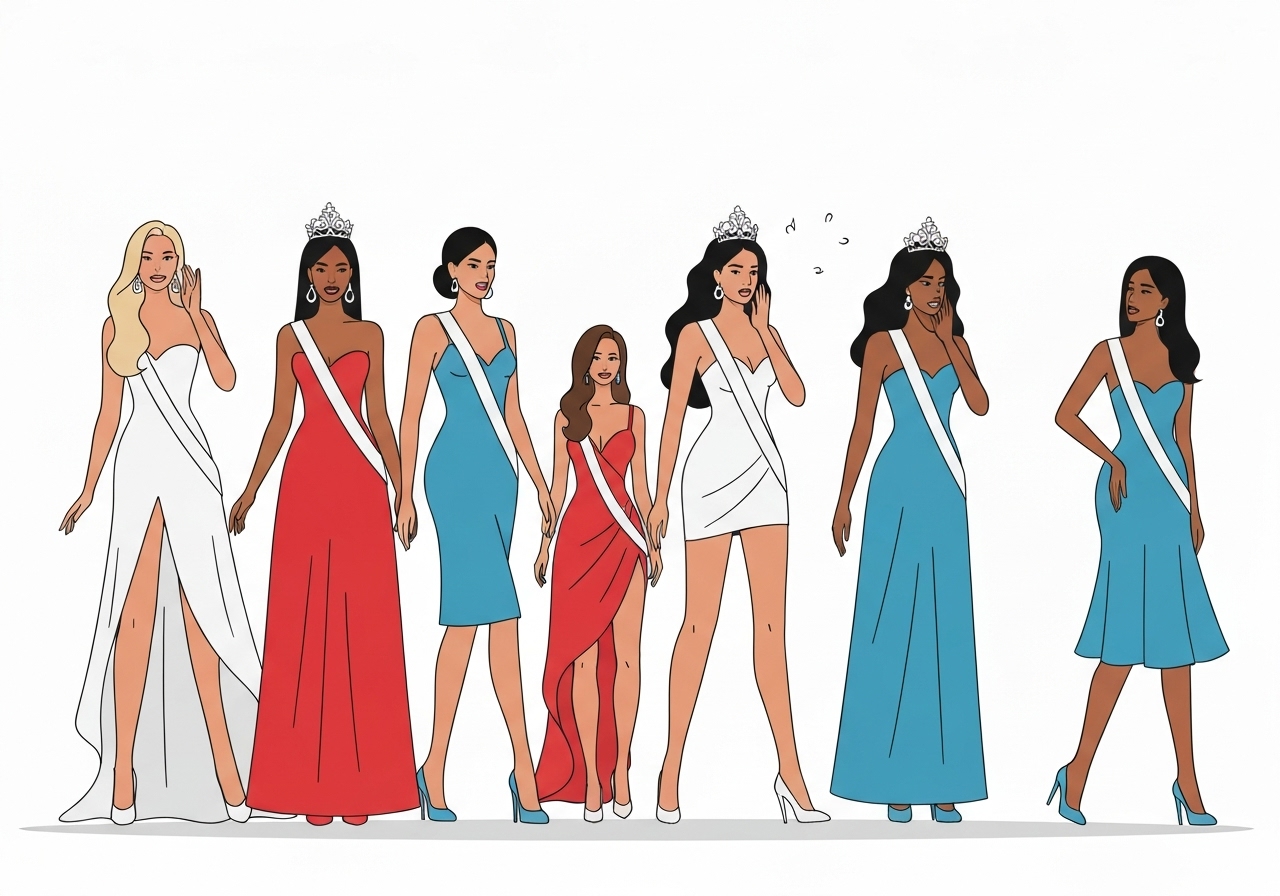
At a pre-pageant ceremony in Bangkok on Tuesday, dozens of Miss Universe contestants walked out after a confrontation in which Thailand’s national director publicly scolded Miss Mexico, Fatima Bosch. The exchange, which was live-streamed and later circulated online, escalated after Mr Nawat Itsaragrisil called security and threatened disqualification of anyone who sided with Bosch. The Miss Universe Organization (MUO) condemned the host’s conduct, dispatched international executives to assume control of event operations and said it would pursue legal measures. Despite the controversy, the competition proceeded with a welcome event on Wednesday and the final remains scheduled for 21 November.
Key Takeaways
- Incident occurred at a pre-pageant function in Bangkok on Tuesday and was livestreamed; video shows dozens of contestants present and many standing in solidarity.
- Miss Mexico, Fatima Bosch, is 25 years old and was reprimanded by 60-year-old Miss Universe Thailand director Nawat Itsaragrisil for allegedly not posting promotional material.
- The MUO called the behaviour “malicious,” limited Itsaragrisil’s role and sent an international delegation to take over event operations.
- Itsaragrisil apologised on video to “around 75” contestants; the MUO said it would pursue legal action and restrict his participation.
- Reigning Miss Universe Victoria Kjaer Theilvig of Denmark was among those who left, framing her exit as a statement about women’s rights.
- The pageant continued with a welcome event the following day; the Miss Universe final is set for 21 November.
Background
Miss Universe is an annual international pageant in which national titleholders represent their countries; this year’s events took place in Thailand. National directors play a prominent role in organizing local contingents and coordinating contestants’ promotional activities, putting them frequently in visible, authoritative positions at pre-pageant events. Tensions over social-media obligations and sponsorship-related promotional duties are not uncommon in modern pageants, where contestants often balance advocacy platforms with contractual promotional commitments.
Historically, controversies at beauty pageants have prompted swift responses from organizers when incidents threaten contestants’ safety or the brand’s reputation. The MUO has in recent years emphasized empowerment and advocacy as central to its public message, making any public mistreatment of contestants particularly sensitive. Because the Miss Universe final is a high-profile global broadcast, organizers are under pressure to manage both operational logistics and reputational risk in real time.
Main Event
Video from the pre-pageant ceremony shows Mr Itsaragrisil confronting Ms Bosch about failing to post required promotional content; the exchange grew heated after Bosch objected to the reprimand. Witnesses and footage indicate that Itsaragrisil repeatedly told her to stop talking and, at one point, summoned security and threatened disqualification for those who supported her. Bosch left the room after the confrontation, and other contestants—many still wearing sashes and gowns—stood and walked out in a show of solidarity.
The footage captures other contestants responding vocally as the director raised his voice; some can be heard shouting back while several participants headed for the exit. After the walkout, Bosch told reporters the director had been “not respectful” and said he called her “dumb,” a characterization Itsaragrisil has disputed, asserting his remarks were misunderstood and later saying Bosch had caused “damage.”
The MUO intervened quickly, issuing a public condemnation of the director’s actions, describing them as humiliating and lacking respect, and announcing both operational and legal responses. MUO President Raul Rocha said the organization would limit or remove Itsaragrisil’s participation and had sent a delegation of international executives to oversee the competition going forward. Despite the fallout, organizers continued with scheduled events the next day.
Analysis & Implications
The incident highlights growing tension between traditional pageant management practices and the contemporary emphasis on contestants’ agency and advocacy. Pageant stakeholders now navigate not only on-stage judging but also contestants’ roles as influencers and activists, producing potential friction when organizers expect uniform promotional compliance. Public reprimands in front of peers can undermine contestants’ dignity and run counter to MUO’s stated empowerment mission, which places reputational pressure on organizers to act decisively.
MUO’s rapid escalation — dispatching international executives and threatening legal action — signals a shift toward centralized crisis management in response to behaviour perceived as abusive. That response aims to protect contestants and the brand, but it also raises questions about governance: national directors operate with varying degrees of autonomy, and the limits of that autonomy are under renewed scrutiny. How the MUO balances local authority with centralized oversight could set precedents for future editions.
For contestants, the episode may have longer-term effects on how they negotiate sponsorship and publicity obligations. Contestants who speak out or decline certain promotional tasks risk pushback from local organizers; the walkout demonstrates a collective bargaining tactic that can amplify an individual grievance into organizational consequences. International attention may lead sponsors and broadcasters to demand clearer conduct codes and dispute-resolution mechanisms before future events.
Comparison & Data
| Date | Event | Notes |
|---|---|---|
| Tuesday | Confrontation at pre-pageant ceremony | Live-streamed; contestants walked out in solidarity |
| Wednesday | Welcome event in Bangkok held | Contest moved forward amid leadership changes |
| 21 November | Miss Universe final | Winner to be crowned as scheduled |
The timeline shows that organizers maintained the overall event schedule while quickly instituting leadership changes. The MUO’s intervention within 24 hours underlines how reputational risks at major events are managed on compressed timelines, balancing contestant safety, broadcast commitments and sponsor expectations.
Reactions & Quotes
MUO leadership framed the conduct as inconsistent with the organization’s stated values and outlined immediate curbs on the Thai director’s role. The following remarks summarize official and participant responses and the context in which they were delivered.
“He has forgotten the true meaning of what it means to be a genuine host; he humiliated, insulted and showed a lack of respect.”
Raul Rocha, MUO President (official statement)
This statement accompanied the MUO’s announcement that it would send an international delegation to assume control and consider legal measures. The comment was used to justify restricting the director’s involvement and to reassure contestants and stakeholders that the organization would act to protect participants.
“This is about women’s rights… To trash another girl is beyond disrespectful. That’s why I’m taking my coat and I’m walking out.”
Victoria Kjaer Theilvig, reigning Miss Universe (participant)
Theilvig’s exit framed the walkout as a principled stand rather than a logistical protest. Her remarks helped galvanize other contestants and drew attention to the event as a matter of dignity and treatment of women, not merely an internal management dispute.
“If anyone feels bad, uncomfortable, or affected, I apologise to everyone. I especially apologised to the girls who were present, around 75 of them.”
Nawat Itsaragrisil (apology video)
Itsaragrisil’s apology sought to de-escalate the situation but did not resolve disputes over the exact wording he used or whether security was deployed in an intimidating manner. The MUO nevertheless elected to limit his role while investigating further.
Unconfirmed
- Exact wording of insults is disputed: some reports say the director called Miss Mexico a “dumbhead,” while he later said his words were misunderstood.
- Details of any formal legal actions MUO will take have not been publicly disclosed and remain pending.
- The broader impact on sponsorship terms and any contractual penalties for national organisers is not yet confirmed.
Bottom Line
The incident in Bangkok crystallizes a broader cultural shift: international pageants are increasingly judged not only on spectacle but on how they treat contestants and uphold stated values of empowerment. The MUO’s quick intervention underscores the reputational stakes and the need for clearer governance when national organisers clash with contestants’ expectations and rights.
In the short term, the competition is continuing with expanded MUO oversight and potential legal reviews of the Thai director’s behaviour. Observers should watch for any formal sanctions, revisions to national-director authority, and whether this episode prompts contract or policy changes that better protect contestants at future events.