
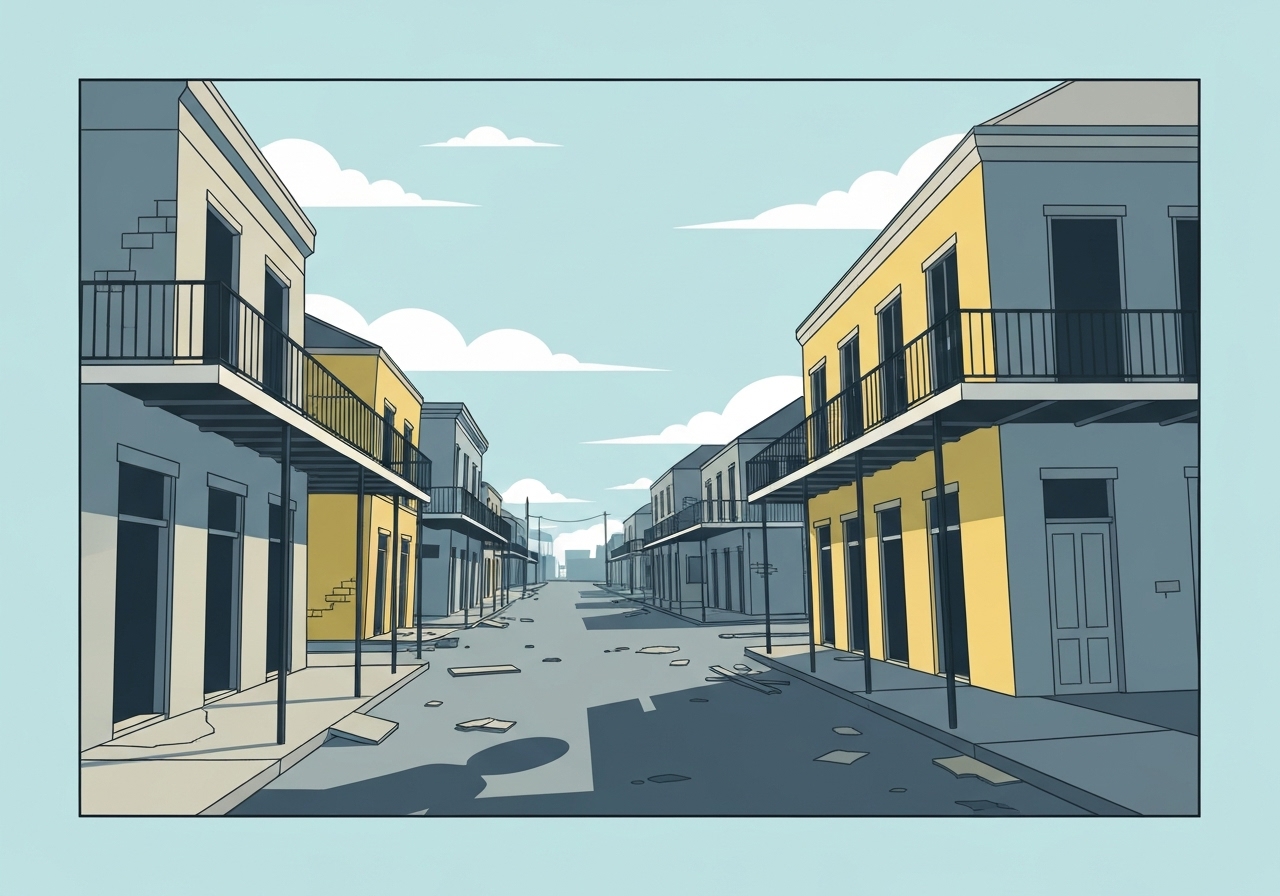
On Aug. 30, 2025, twenty years after Hurricane Katrina upended New Orleans, a veteran New York Times reporter reflected on the city’s breakdown through one indelible image: the body of an unnamed Black man left for days on Union Street—an emblem of a disaster that flooded four-fifths of the city, caused an estimated $125 billion in damage across the Gulf Coast, and claimed around 1,400 lives.
Key Takeaways
- A Times reporter and photographer encountered a man’s body on Union Street days after the levees failed, partially covered by a tarp and marked off by traffic cones.
- A state trooper said the body had remained for days and might have been a homicide victim; six National Guardsmen briefly examined the scene and left.
- The body was still there the next morning; it was later collected when the reporter’s account appeared on the front page.
- Remains were transferred by refrigerated truck to a temporary morgue roughly 70 miles from New Orleans for identification.
- Forensic teams identified hundreds of victims, but scores remained unidentified or unclaimed and were ultimately interred near the Hurricane Katrina Memorial at Charity Hospital Cemetery.
- Katrina flooded about 80% of New Orleans, caused about $125 billion in damage, and disrupted millions of lives along the Gulf Coast.
- Spray-painted X markings on buildings recorded search results; a “0” indicated no bodies found inside.
- The episode underscored questions of race, dignity, and institutional failure in the early days after the storm.
Verified Facts
In the immediate aftermath of the levee failures, a New York Times team documented a city adrift: abandoned buses, vehicles traveling the wrong way on empty one-way streets, and armed men in pickup trucks asserting unclear authority. The standard fleur-de-lis was replaced by spray-painted X codes on homes and storefronts, signaling that search teams had entered. A “0” beneath an X meant no bodies were found; other numerals indicated casualties or hazards.
One evening downtown, the team came upon a man’s body lying on Union Street, stiff with rigor mortis, partly covered by a blue tarp, guarded only by two orange traffic cones. A trooper nearby said the dead man was Black and had been there for days, possibly a homicide victim. When six National Guardsmen approached minutes later, some crossed themselves, one snapped a photograph, and then they moved on.
The next morning, the body remained. Later, after the account ran on the New York Times front page, the remains were collected, loaded into a refrigerated truck, and transported to a temporary morgue in a rural town about 70 miles from New Orleans. There, pathologists, investigators, and counselors undertook a large-scale disaster victim identification effort using methods such as fingerprints, dental records, and DNA where possible.
Many victims were identified and returned to families for memorials and burial. Others were never named or remained unclaimed. Those individuals were interred near the Hurricane Katrina Memorial at Charity Hospital Cemetery in New Orleans.
Hurricane Katrina stands among the costliest and deadliest U.S. hurricanes: roughly four-fifths of New Orleans flooded, damages reached an estimated $125 billion across the region, and approximately 1,400 people died, with millions more displaced or otherwise affected along the Gulf Coast.
Context & Impact
The uncollected body on a major downtown street became, for one reporter, a stark shorthand for governmental paralysis and cascading systems failure. It also sharpened enduring questions about inequity—who receives protection and dignity in crisis, and how race may influence that response.
Across the city, the X-code system and the constant presence of search boats on receding floodwaters conveyed a duality: organized rescue amid pervasive breakdown. In the years that followed, New Orleans moved through a halting recovery—marked by the return of cultural life, from Mardi Gras to late-night zydeco—while still carrying the memory of losses that could not be fully accounted for.
The Katrina fatality identification mission remains a pivotal chapter in U.S. disaster forensics, demonstrating what coordinated teams can achieve—and the limits they face when time, evidence, and records are washed away.
Official Statements
State health officials have documented that unidentified or unclaimed victims of Hurricane Katrina were laid to rest near the Hurricane Katrina Memorial at Charity Hospital Cemetery in New Orleans.
Louisiana Department of Health
Unconfirmed
- The exact cause of death of the man found on Union Street.
- The man’s identity and whether he was ultimately named.
- Whether race influenced how quickly the scene was addressed.
- The precise number of unidentified or unclaimed victims interred at the memorial.
Bottom Line
Two decades on, one anonymous victim still personifies the human cost of Katrina and the early breakdown of basic civic functions. New Orleans has regained much, but the memory of those lost—and those never named—continues to shape how the city understands its past and prepares for future disasters.