
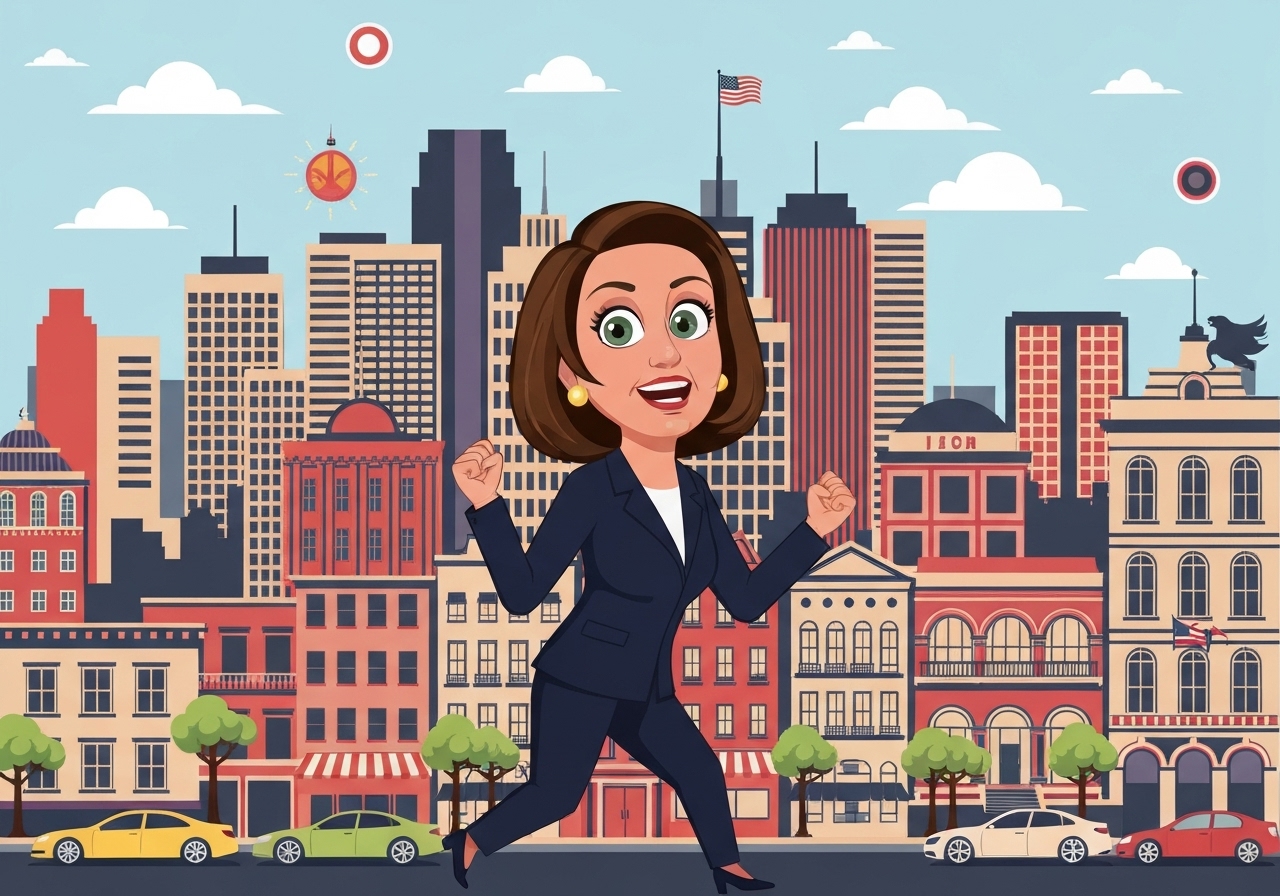
Nancy Pelosi announced her retirement early on Thursday, Nov. 6, 2025, prompting wide reflection in San Francisco where she spent decades securing federal support and preserving civic spaces. Local leaders and longtime residents praised her as a persistent, hands-on advocate for the city even as some critics said she could have been bolder on certain progressive causes. Pelosi’s record in Washington — including serving as the first female Speaker of the House and shepherding major legislation — is well known; San Franciscans remember, too, the projects and protections she helped bring home. The result is a portrait of a national figure who was, for many in the city, also a practical city-builder and public steward.
Key Takeaways
- Nancy Pelosi announced plans to retire on Nov. 6, 2025, after more than three decades representing San Francisco in Congress and serving twice as House Speaker.
- She was instrumental in preserving the Presidio as public land and later backing the Tunnel Tops Park project that opened new public views over the Golden Gate.
- Pelosi is credited with helping create the National AIDS Memorial Grove in Golden Gate Park and with raising federal funds for AIDS research and care early in her congressional career.
- Her office frequently secured federal dollars for Bay Area infrastructure, including repeated support for BART and local hospitals.
- Local officials and institutions say Pelosi intervened in pivotal local decisions: persuading federal and league figures to keep the San Francisco Giants in the city in 1992 and supporting the removal of the Embarcadero Freeway after the 1989 earthquake.
- The San Francisco Giants drew nearly three million fans to Oracle Park this season, a statistic cited amid reflections on Pelosi’s civic influence along the waterfront.
- Voices in the city were mixed: many celebrated her record of civic preservation; some progressives wished she had been more vocal on issues like the war in Gaza.
Background
San Francisco has a long history of large personalities shaping its public life — from artists and activists to mayors and business leaders. Pelosi, a devout Catholic and mother of five who did not run for office until age 47, rose from that local political soil to become the first woman to serve as Speaker of the U.S. House of Representatives. Her national profile included leading the fight for the Affordable Care Act and acting as a key congressional opponent to President Donald J. Trump during his presidency.
At the same time, Pelosi maintained an unusually local orientation for a national political figure: she habitually attended community events, supported cultural institutions and cultivated relationships with city leaders. Many San Franciscans came to see her less as a celebrity and more as a municipal problem-solver, someone who moved federal levers to protect parks, transit and hospitals. That dual role — national strategist and local broker — shaped how different constituencies judged her tenure.
Main Event
Pelosi’s retirement announcement arrived in a nearly six-minute video addressed “Dear San Francisco,” in which she called the city “the most beautiful, remarkable place on earth.” Local officials watched and responded quickly; Mayor Daniel Lurie described her imprint on “every block” of the city. Her record of concrete projects provided the basis for those assertions, from long-term battles over federal land to smaller, symbolic interventions at parades and memorials.
One enduring example is the Presidio. When federal plans once aimed to decommission the former military post and allow private development on prime waterfront real estate, Pelosi helped clinch its preservation as parkland managed by a federal trust. Years later she supported the creation of Tunnel Tops Park — a publicly accessible green space above a roadway — which added a new recreational perch with bay views.
Pelosi also made early public appeals about the AIDS crisis and championed funding and memorialization for the community. The National AIDS Memorial Grove in Golden Gate Park, which contains names of people lost to the epidemic, is cited repeatedly by local supporters as part of her civic legacy. In public life she was frequently visible at cultural events, from Pride parades to symphony galas, and she maintained a longtime affinity for the San Francisco Giants.
On infrastructure and development, colleagues recall Pelosi’s role in key moments: encouraging the removal of the Embarcadero Freeway after the 1989 earthquake and persuading influential figures in baseball in 1992 to keep the Giants in San Francisco. Those interventions reinforced perceptions that she combined national stature with a readiness to protect local interests.
Analysis & Implications
Pelosi’s retirement crystallizes a transition point for San Francisco politics and its relationship to federal power. For decades she was a conduit for money and federal attention; her absence will test how effectively other local leaders can secure the same level of influence in Washington. Short-term implications include potential shifts in grant flows and advocacy patterns for projects that relied on her networks.
Politically, Pelosi’s exit may accelerate generational and ideological changes both locally and nationally. Some progressives in San Francisco view the moment as an opportunity for newer voices to claim space, while institutional actors — hospitals, transit agencies, parks — will need to diversify their federal partnerships. The departure of a high-profile broker often produces both short-term uncertainty and longer-term rebalancing as coalitions re-form around new leaders.
Economically, Pelosi’s history of nudging federal dollars toward the Bay Area helped underwrite infrastructure and cultural institutions that support tourism and local quality of life. That pipeline will now depend more on collective advocacy from city officials, regional leaders and private partners. International and national perceptions of San Francisco as a well-connected city may erode slowly if federal visibility declines.
Comparison & Data
| Year / Event | Pelosi-linked local outcome |
|---|---|
| 1987 | Pelosi elected to Congress representing San Francisco |
| 1989 | Embarcadero Freeway damaged in earthquake; removal later supported |
| 1992 | Giants remain in San Francisco after local lobbying |
| 2000s–2020s | Presidio preserved; Tunnel Tops Park developed; National AIDS Memorial Grove supported |
| 2025 | Giants draw ~3 million fans to Oracle Park this season |
The table highlights moments frequently linked to Pelosi by local leaders and institutions. While direct causal lines vary in clarity, the pattern shows repeated interventions at critical junctures: land preservation after federal review, infrastructure decisions following disaster, and local economic anchors like professional sports. Those outcomes underpin many residents’ view of Pelosi as a municipal steward rather than only a national partisan figure.
Reactions & Quotes
City leaders, longtime advocates and everyday residents offered varied responses on the day of the announcement. Several offered short, pointed reflections that capture how her role was interpreted locally.
“You can’t really look around the city and not see her influence on every block.”
Mayor Daniel Lurie
Lurie made the remark after watching Pelosi’s farewell video, framing her legacy in terms of physical projects and long-term civic investments rather than only legislative headlines. Other local voices combined personal remembrance with institutional gratitude.
“In everything she does, she has always represented San Francisco values.”
David Perry, longtime publicist and gay-community organizer
Perry recalled early skepticism from the AIDS community in the late 1980s and early 1990s and said Pelosi won trust by speaking about AIDS on the House floor and pushing funding for patients. Institutional leaders emphasized her behind-the-scenes advocacy.
“Because she’s Nancy Pelosi, that’s why! She knows what it takes to motivate people politically, personally and socially.”
Art Agnos, former mayor of San Francisco
Agnos credited Pelosi with making possible the dismantling of the Embarcadero Freeway and other waterfront improvements, a point often repeated by local preservationists and civic planners.
Unconfirmed
- Plans to rename San Francisco International Airport for Pelosi were described as an effort a publicist said he would start; that initiative had not been formally announced or authorized as of publication.
- Local comments referenced the election of Zohran Mamdani as mayor of New York City in the same week as Pelosi’s retirement; independent verification of that specific electoral claim is pending in the public record cited by residents.
- Some attributions of direct intervention (for example, specific phone calls or meetings that alone determined outcomes in 1992 or 1989) come from personal recollections and institutional memory and are not always documented in contemporaneous public records.
Bottom Line
Nancy Pelosi’s retirement marks the end of a distinctive chapter in which a national political figure also acted repeatedly as a local steward for San Francisco. For many residents and leaders, her legacy will be measured less by Washington headlines than by preserved parks, hospital funding, transit support and cultural visibility — concrete outcomes that shape daily life and the city’s skyline.
As the city adjusts to her absence, attention will turn to who can replicate the mix of national clout and local focus she deployed. The immediate task for San Francisco institutions will be to build broader, more distributed advocacy networks in Washington and to cultivate a next generation of leaders who can translate local priorities into federal action.