
Lead
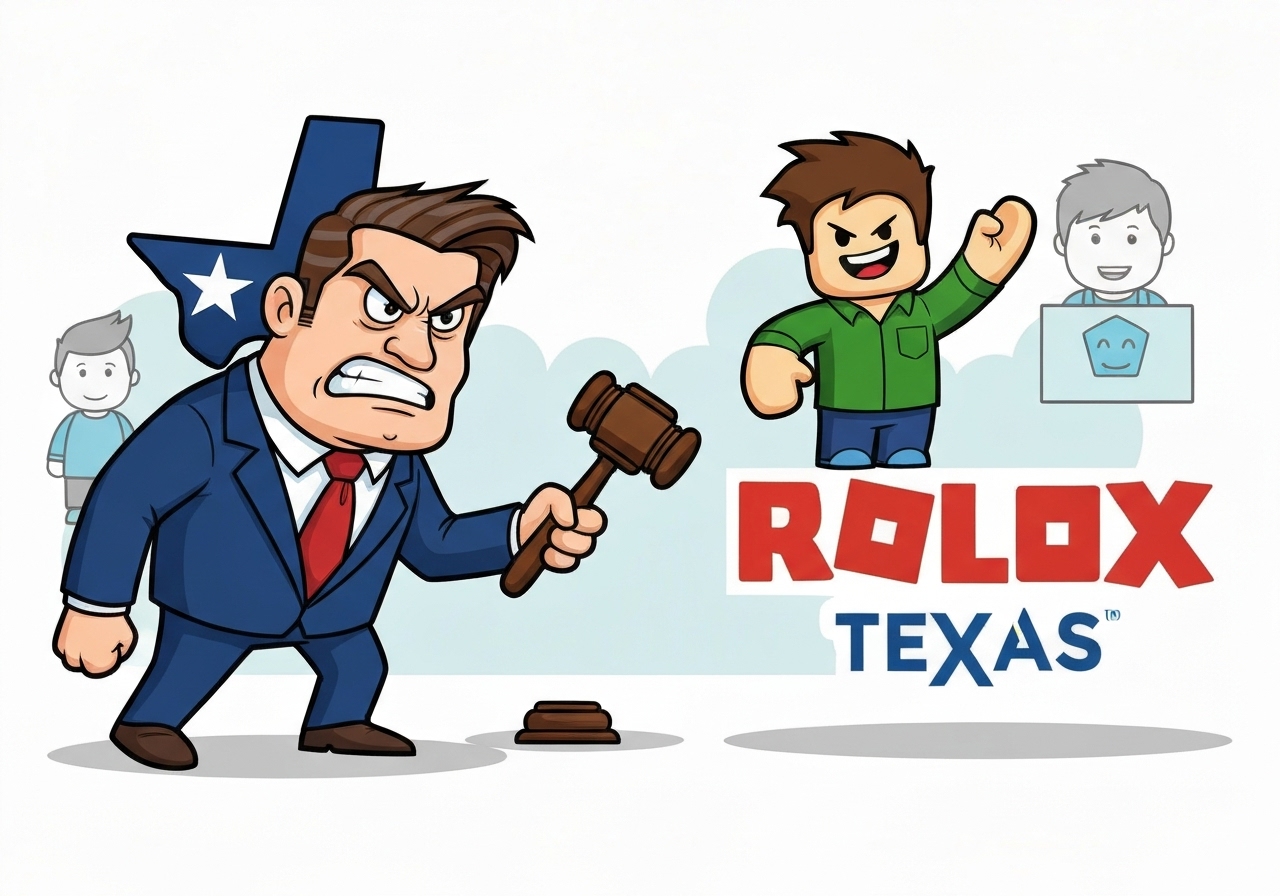
Texas Attorney General Ken Paxton has filed a lawsuit against Roblox, saying the gaming platform has “flagrantly ignored” safety rules and misled parents about risks to young users. The complaint, announced on social media, accuses Roblox of putting “pixel paedophiles and corporate profit” ahead of children’s safety. The suit joins similar actions from Kentucky and Louisiana and targets a platform with tens of millions of daily active users. Roblox responded that it is “disappointed” and highlighted recent safety measures aimed at protecting minors.
Key Takeaways
- Texas Attorney General Ken Paxton filed suit this week alleging Roblox failed to protect children and misrepresented its safety practices; the filing specifically cites deceptive conduct and violations of state law.
- Roblox serves tens of millions of daily active users worldwide and is particularly popular with children, making potential harms to minors a central concern for regulators and parents.
- The complaint accuses the company of prioritising profit over safety using stark language such as “breeding ground for predators” and “pixel paedophiles and corporate profit.”
- Roblox says it has rolled out tools including age-estimation technology using video selfies and measures that block under-13s from messaging without parental consent.
- Kentucky and Louisiana have filed related lawsuits, creating a multi-state legal challenge to the company’s practices.
- Parents and advocacy groups have reported instances of sexual and violent content and contact between strangers and children on the platform.
- Roblox executives have previously said parents should choose whether their children use the platform and the company points to ongoing investments in moderation and safety technology.
Background
Roblox operates a massive, user-generated gaming environment where players can join servers, play games created by other users, and use developer tools to build experiences. Its mix of social interaction and creative tools has made it a popular destination for children learning coding and game design. That same openness has created moderation challenges: user-created content and chat interactions can expose young players to inappropriate or exploitative material.
Over recent years, online safety has become a major regulatory and political focus in the United States and globally, with lawmakers scrutinising platforms that attract minors. Several states have pursued litigation or regulatory actions against social-media and gaming companies for alleged failures to prevent harm to children. Roblox has faced prior scrutiny, including bans in some countries and concern after reported incidents such as Singapore’s 2023 case involving extremist-themed servers.
Main Event
The Texas lawsuit, announced by Attorney General Paxton, alleges Roblox violated state consumer-protection and safety laws by downplaying the risks children face on its platform and by not taking adequate steps to prevent abuse. In posts accompanying the filing, Paxton characterised Roblox as a “breeding ground for predators” and said the company had placed financial interests above child safety. The complaint seeks legal remedies under Texas statutes and aims to hold the company accountable for alleged systemic failures.
Roblox issued a statement saying it was “disappointed” to be sued over what it called misrepresentations and sensationalised claims. A company spokesperson emphasised Roblox’s stated commitment to child safety and pointed to features introduced to remove bad actors, tighten account controls and limit messaging for younger users. The company has publicly described investments in moderation, automated detection systems and partnerships to improve safety.
The lawsuit arrives amid related litigation from Kentucky and Louisiana, signalling a broader, multi-jurisdictional probe into platform safety practices for children. Plaintiffs in these actions point to similar concerns about how platforms handle age verification, content moderation and supervision of interactions between adults and minors. The coordinated legal pressure increases the potential legal and financial stakes for Roblox.
Analysis & Implications
If courts accept the states’ claims, Roblox could face injunctions requiring procedural and product changes, statutory penalties, or financial damages depending on the remedies sought and the specific legal theories advanced. Multi-state litigation often exerts pressure that leads to negotiated settlements or industry-wide policy shifts, even when cases are not ultimately decided in court. For Roblox, the reputational cost among families could be significant, affecting user growth and developer engagement.
Technically, the company points to measures like age-estimation via video selfies and restricted messaging for under-13s as evidence of active mitigation. Those measures raise complex questions: biometric or AI-driven age estimation can reduce some risks but carries accuracy, privacy and fairness trade-offs. Courts and regulators will likely probe whether those systems are reliable, sufficiently implemented and adequately disclosed to parents.
The case also underscores a persistent accountability gap in platform governance. User-generated ecosystems make pre-publication moderation of all content infeasible; enforcement relies on a mix of automated tools, human review and user reporting. Plaintiffs will argue that Roblox’s design choices—server-based interactions, open creation tools, and broad discovery mechanisms—create foreseeable risks to minors that the company was obligated to address more aggressively.
Comparison & Data
| Metric | Roblox (platform-wide) |
|---|---|
| Daily active users | Tens of millions |
| States suing | Texas, Kentucky, Louisiana (so far) |
| Recent safety measures | Age-estimation tech, restricted messaging for under-13s, moderation tools |
These data points show the tension between large user scale and the operational challenge of keeping minors safe. Tens-of-millions user counts amplify the potential reach of harmful interactions; multiple state suits indicate growing regulatory coordination. The company’s list of technical measures provides context but does not, by itself, answer questions about deployment, effectiveness or transparency.
Reactions & Quotes
Officials, company spokespeople and the platform CEO have offered sharply different frames for the dispute. Below are brief excerpts placed in context.
“Roblox is a breeding ground for predators,”
Ken Paxton, Texas Attorney General (social media statement)
Paxton used forceful language in his public posts announcing the suit and in the complaint, arguing that the company has not done enough to stop adults seeking contact with minors. The attorney general framed the litigation as an enforcement action to apply state law to online platforms frequented by children.
“We are disappointed to be sued based on misrepresentations and sensationalised claims,”
Roblox spokesperson (company statement)
Roblox’s public response disputed the characterisation in the lawsuit and highlighted investments in safety. The company stressed ongoing efforts to remove bad actors and to develop technical controls aimed at protecting younger users.
“Parents who are uncomfortable with their children playing games on the platform should not let them use it,”
Dave Baszucki, Roblox CEO (previous BBC interview)
CEO Dave Baszucki has previously emphasised parental choice and controls, a position that some critics say shifts responsibility from the platform to families. Regulators may challenge whether parental controls alone are sufficient in the face of systemic risks.
Unconfirmed
- Exact number of incidents involving sexual predators on Roblox is not provided in the lawsuit and remains unverified in public filings.
- The practical accuracy and deployment coverage of Roblox’s age-estimation selfie technology have not been independently validated in public disclosures.
- Whether specific moderation failures cited in social posts are representative of systemic policy failures or isolated incidents remains subject to further court discovery.
Bottom Line
The Texas lawsuit escalates scrutiny of Roblox at a moment when regulators are increasingly focused on online risks to children. The combination of a large child user base, open creation tools and social features creates both educational benefits and safety vulnerabilities that are now the subject of legal scrutiny across multiple states.
The outcome will matter beyond Roblox: rulings or settlements could shape obligations for other platforms that host young users, influence the design of age-verification and moderation systems, and prompt clearer rules on corporate responsibility for child safety online. For parents and policymakers, the case highlights the continuing need to evaluate both technical safeguards and governance practices across popular digital platforms.
Sources
- BBC News (national public broadcaster) — original reporting summarising the lawsuit and company responses.
- Roblox Corporation (company official) — corporate site with safety and policy statements.
- Office of the Texas Attorney General (official) — state attorney general website for press releases and filings.