
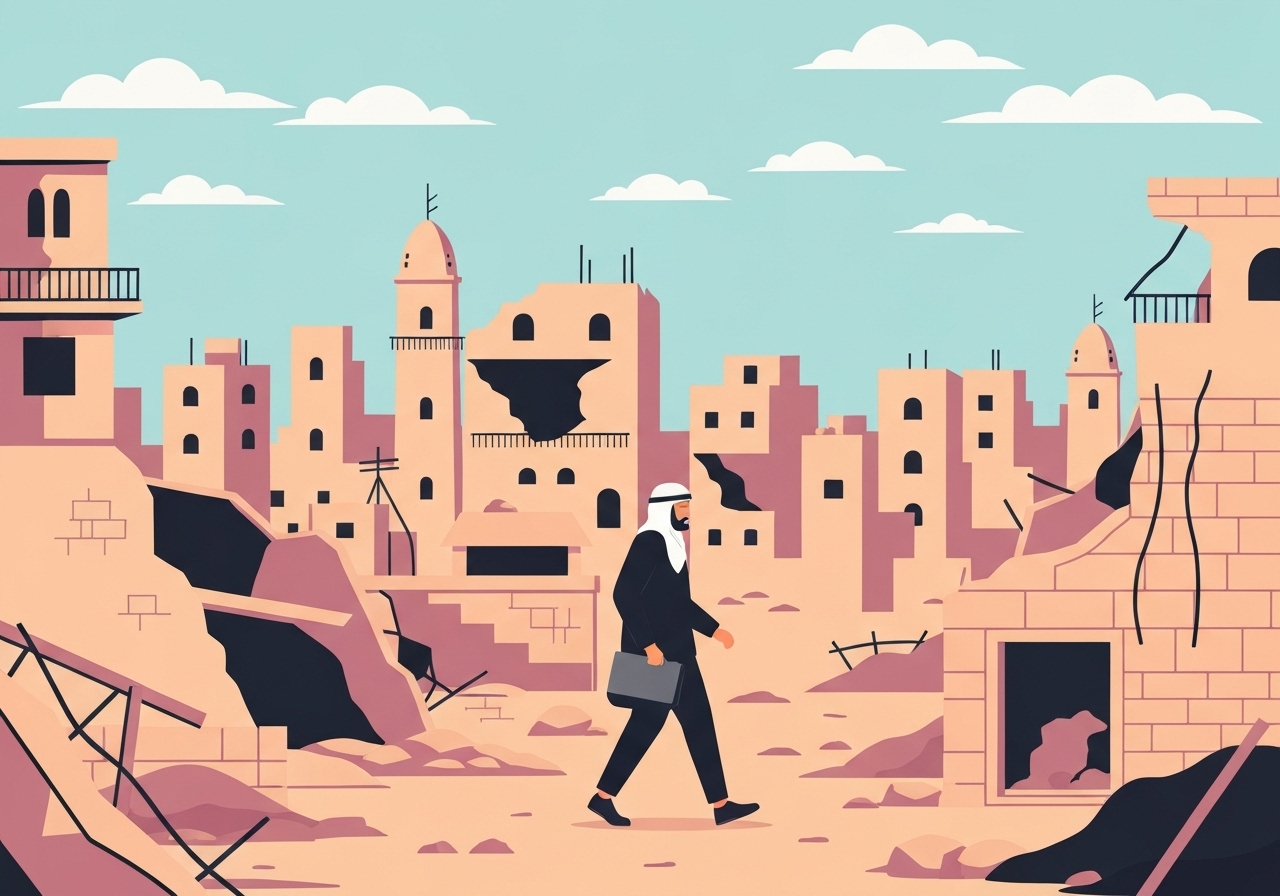
Lead: An NPR team entered northern Gaza on Wednesday, nearly one month into the ceasefire, marking the reporter’s first return after two years of conflict. They toured an Israeli military outpost overlooking the Shujaiya neighborhood outside Gaza City and found widespread destruction where dense residential blocks once stood. The visit highlighted a temporary division of Gaza under the ceasefire and raised questions about whether the arrangement will hold or harden into a longer-term occupation. Journalists were escorted, access to Palestinians was limited, and the military reviewed raw material before publication.
Key Takeaways
- The visit occurred on Wednesday, roughly one month after the ceasefire began, and was the reporter’s first entry into Gaza since the two-year war started.
- Shujaiya, once densely populated, is now a landscape of collapsed buildings, ruined schools and piles of concrete visible from an Israeli outpost.
- Gaza is effectively split by a “yellow line” under the ceasefire; one half is under Israeli military control and the other under Hamas authority.
- Israel has established infrastructure — communications towers, power poles and fortifications — in the sector it controls, signaling preparations for long-term presence.
- Israel permitted the ICRC and Hamas limited access to recover bodies of hostages taken on Oct. 7, 2023, but civilians cannot return to Israeli-held areas.
- Journalists were admitted only on an escorted, time-limited basis; the military reviewed NPR’s raw audio and video and restricted some materials.
- The Foreign Press Association has petitioned Israel’s Supreme Court; the government must respond by Nov. 23 on independent press access to Gaza.
Background
The journalist’s trip took place in the wake of heavy fighting that began in October 2023 after a Hamas-led attack on southern Israel. Over two years, the hostilities produced intense urban combat in and around Gaza City, with neighborhoods such as Shujaiya suffering severe damage. A negotiated ceasefire created a temporary division of the territory, marked by a contested demarcation often called the “yellow line,” which separates areas now controlled by Israeli forces from those under Hamas administration.
Under the current arrangement, Israel says that withdrawal from the sector it occupies will occur only after a multinational peacekeeping force deploys and Hamas disarms, according to Israeli officials. Humanitarian organizations like the International Committee of the Red Cross have been allowed limited access to specific sites for recovery operations related to hostages taken on Oct. 7, 2023. Journalists’ access has been tightly managed: visits are escorted, interviews are limited, and military censorship of raw material has been applied in some cases.
Main Event
The delegation was taken to an Israeli military emplacement near the yellow line overlooking Shujaiya, once one of the Gaza Strip’s most crowded neighborhoods. From the outpost the team saw a vast, monochrome expanse of rubble, skeletal building frames and toppled concrete where families, shops and schools once stood. High-rise structures that remain in Gaza City appear as distant silhouettes above the flattened perimeter.
Israeli troops displayed a map showing tunnel routes they say are being uncovered and demolished in the area. The military also showed elements of the infrastructure it has erected in the controlled sector — a cellular tower, electricity poles and concrete barriers — which, soldiers said, are part of preparing the position for an extended presence. Access to that zone by Palestinian civilians is prohibited under the ceasefire terms as implemented on the ground.
Visits by foreign reporters are tightly staged: journalists must be escorted by soldiers, face restrictions on who they may interview or film among military personnel, and are often kept from encountering Palestinian residents. NPR reported that its raw audiovisual material was reviewed by the Israeli military censor; publication of an Israeli military map was blocked while other material was permitted. Independent entry by the press is the subject of an ongoing legal challenge to Israel’s Supreme Court.
Analysis & Implications
The visible fortification of the Israeli-controlled half of Gaza suggests planning for a prolonged presence rather than an immediate full withdrawal. If Israel maintains infrastructure and forces there, the ceasefire’s temporary division could calcify into a de facto boundary, complicating future governance, reconstruction and humanitarian access. Long-term military control over populated areas tends to impede returns of displaced civilians and delays rebuilding of essential services.
Deployment of a multinational peacekeeping force and disarmament of Hamas are central to the ceasefire’s roadmap, but both carry significant political and logistical hurdles. International contributors to any force would need clear mandates, rules of engagement and supply lines, and Israel, regional states and donor countries would have to agree on oversight and timelines. Failure to implement those steps could increase the risk of renewed hostilities when patience and resources run thin.
Tightly managed press access undermines transparency at a moment when independent reporting is crucial to assessing humanitarian needs and verifying compliance with ceasefire terms. The Supreme Court petition by the Foreign Press Association underscores the tension between security controls and the public interest in open reporting. Restricted visibility also affects international aid planning: accurate assessments of damage, population displacement and infrastructure needs depend on independent verification.
Comparison & Data
| Feature | Israeli-controlled half | Hamas-controlled half |
|---|---|---|
| Civilian access | Closed to residents; controlled access for select organizations | Residents remain; governance by Hamas |
| Military posture | Fortified outposts, communications, power lines | Consolidation and regrouping by local armed groups |
| Humanitarian operations | Limited access for ICRC and specific recovery tasks | Primary locus for civilian services and aid distribution |
The table summarizes the operational differences observed during the visit. These distinctions shape who can return, where aid is delivered, and how reconstruction might proceed. They also frame diplomatic discussions about peacekeepers, disarmament and the legal status of occupied areas.
Reactions & Quotes
“We have established infrastructure to sustain forces in this sector as part of post‑ceasefire planning,” a military representative said when explaining fortifications at the outpost.
Israeli military (official statement)
“We have filed a petition with the Supreme Court seeking the right for journalists to enter Gaza independently,” a representative of the press association said about the legal challenge.
Foreign Press Association in Israel and the Palestinian territories (press group)
“Humanitarian access to specific sites has been permitted for recovery operations,” said an ICRC spokesperson referring to limited work to recover hostages’ remains.
International Committee of the Red Cross (humanitarian organization)
Unconfirmed
- Whether a multinational peacekeeping force will be deployed on the timeline envisioned in the ceasefire remains uncertain; talks are ongoing and formal commitments are not public.
- It is unclear how and when Palestinians will be allowed to return to areas currently occupied by Israeli forces; no formal, detailed return plan has been published.
Bottom Line
The reporter’s escorted tour of northern Gaza offered a rare, controlled window into the immediate aftermath of intense urban combat: large swaths of Shujaiya are flattened, and military fortifications indicate preparation for an extended presence. The ceasefire arrangement that divides Gaza has eased active large‑scale fighting, but it also creates practical and political challenges for reconstruction, civilian returns and long‑term stability.
Key decisions — whether peacekeepers deploy, whether armed groups disarm, and whether independent journalists gain full access — will shape whether this pause becomes a durable settlement or a fragile interlude before further conflict. Independent verification, transparent humanitarian access and a clear international role will be essential to keep the ceasefire from unraveling and to begin recovery for Gaza’s civilians.