
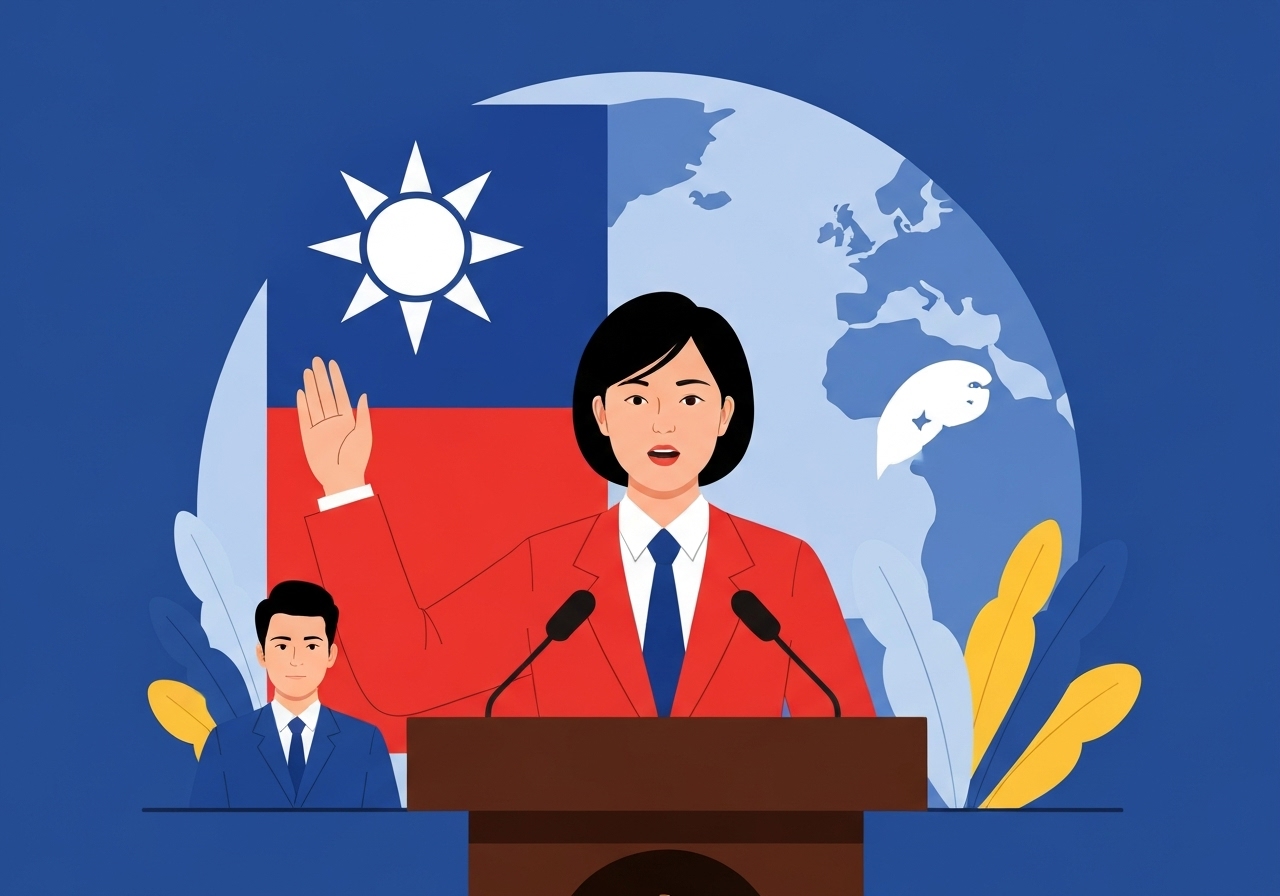
On Nov. 7, 2025, Taiwan Vice President Hsiao Bi-khim delivered a rare address to a European parliamentary grouping in Brussels, appealing for stronger international backing and wider recognition for the self-governed island. Speaking at the Inter-Parliamentary Alliance on China’s Annual Summit, Hsiao framed Taiwan’s security and global economic resilience as interconnected. Her visit and remarks reflected Taiwan’s intensified push to deepen ties with European lawmakers amid rising regional tensions. No immediate policy shifts from the European Union were announced after the speech.
Key takeaways
- Who and where: Vice President Hsiao Bi-khim spoke to the Inter-Parliamentary Alliance on China in Brussels on Nov. 7, 2025.
- Main ask: Hsiao requested increased political support and international recognition for Taiwan’s status and security.
- Argument: She linked Taiwan’s freedom to the integrity of the global system and economic prosperity.
- Diplomatic context: The address was described as a rare high-level appearance before European lawmakers by Taiwan’s second-highest official.
- Immediate outcome: There was no immediate change in formal EU policy or new recognition announced following the speech.
- Strategic timing: The remarks come amid ongoing cross-strait tensions and growing European interest in supply-chain and security issues involving Taiwan.
Background
Taiwan has long navigated a constrained diplomatic environment, maintaining de facto sovereignty while formal recognition by many states remains limited. Beijing regards Taiwan as part of China and opposes official exchanges that suggest sovereign status, a stance that complicates third-party engagements. Over recent years, Taipei has sought to expand informal ties and parliamentary diplomacy with Europe, aiming to build political support without provoking escalation. European parliaments and some national governments have increased scrutiny of China’s posture, opening new channels for Taiwan to make its case.
Inter-parliamentary forums such as the Inter-Parliamentary Alliance on China provide a venue for cross-national lawmakers to discuss China-related policy and human-rights concerns, and they have become a regular platform for Taiwanese officials. Brussels is a focal point because it hosts both the European Parliament and numerous diplomatic missions, making it symbolically important for signaling. Against the backdrop of intensified U.S.-China competition and concerns about semiconductor supply chains, Taipei’s outreach to European audiences has taken on added strategic weight.
Main event
Hsiao’s remarks at the Annual Summit emphasized Taiwan’s appeal for recognition and support without presenting Taiwan as a passive victim. She argued that protecting Taiwan’s democratic institutions and maritime security is integral to upholding international rules and sustaining global economic prosperity. Attendees included MPs from multiple European countries who have increasingly engaged on China and Taiwan questions in recent years. Hsiao outlined practical areas for cooperation, including trade, technology, and de-risking critical supply chains.
The vice president also underscored Taiwan’s willingness to contribute to regional stability and to deepen people-to-people and legislative ties with Europe. She framed the request not as a unilateral demand but as an invitation for partnership that benefits both Taiwan and European interests. Several lawmakers raised questions about concrete measures Europe might take, from parliamentary declarations to targeted trade and research cooperation. After the session, participants described the address as substantive, though some urged cautious, calibrated responses to avoid immediate diplomatic escalation.
No formal EU-wide statement followed the speech; rather, reactions came in the form of parliamentary discussions and individual lawmakers’ comments. Brussels-based diplomats noted the political sensitivity: while many European politicians express solidarity with democratic values, member-state governments balance that with broader bilateral and economic ties to Beijing. The event nonetheless added to the accumulation of high-level exchanges between Taiwan and European legislative actors in 2025.
Analysis & implications
Hsiao’s appeal signals a deliberate push by Taipei to internationalize Taiwan’s security narrative beyond the U.S.-Taiwan relationship. By addressing a Europe-focused parliamentary grouping, Taiwan aims to diversify its diplomatic support and to embed concerns about Taiwan’s status into European policy discussions. If sustained, such outreach could increase parliamentary pressure on national governments to consider more explicit language or targeted cooperative measures, though formal recognition by EU states remains unlikely in the near term given existing diplomatic constraints.
For Beijing, increased European engagement with Taipei presents a diplomatic challenge: Chinese authorities typically react strongly to official-level contacts that imply statehood. A measured European response will therefore be crucial to avoid abrupt escalatory moves while still addressing parliamentary calls for action. Economically, deeper EU–Taiwan ties could accelerate collaboration on semiconductors, green tech, and supply-chain resilience—areas where Taipei and Brussels share mutual interests.
Strategically, the speech may influence allied coordination on deterrence and crisis management planning. European parliamentary momentum can translate into national policy debates, parliamentary motions, or funding for research and resilience projects tied to Taiwan’s industries. However, converting parliamentary sympathy into binding diplomatic commitments requires sustained political will across capitals and careful management of Sino-European relations.
Comparison & data
| Item | Detail |
|---|---|
| Date | Nov. 7, 2025 |
| Venue | Inter-Parliamentary Alliance on China Annual Summit, Brussels |
| Speaker | Vice President Hsiao Bi-khim (Taiwan) |
| Main ask | Greater political support and international recognition |
This table summarizes the core facts of the event to provide quick reference. While single speeches do not immediately change state policy, repeated high-level exchanges contribute to normalization of contact and can shift legislative and public opinion over time. Observers will watch subsequent parliamentary motions and national statements for signs of substantive policy movement.
Reactions & quotes
European lawmakers who attended described the address as a clear appeal to align democratic values with concrete policy steps. Some participants said Hsiao’s emphasis on economic interdependence resonated with audiences concerned about supply-chain vulnerabilities and trade exposure.
“A free Taiwan is essential to the integrity of the international system and global prosperity,”
Hsiao Bi-khim, Vice President of Taiwan
Shortly after the speech, organizers for the Inter-Parliamentary Alliance on China noted the session underscored why legislators across Europe are raising Taiwan policy in their national assemblies. They framed the event as part of broader parliamentary scrutiny of China-related risks and opportunities.
“Parliamentary engagement with Taiwan helps lawmakers assess shared risks and practical cooperation,”
Inter-Parliamentary Alliance on China (organizer)
Attendees and Brussels-based analysts pointed to mixed signals from executive branches: parliamentary support is growing, but member-state governments face a complex diplomatic calculus. Observers cautioned that parliamentary sympathy does not automatically translate into executive-level recognition or new treaties.
“Lawmakers can push the agenda, but formal diplomatic shifts require coordinated executive action across capitals,”
Brussels-based policy analyst
Unconfirmed
- Whether the European Commission or any EU member state will adopt new formal measures specifically in response to Hsiao’s speech remains unconfirmed.
- Any near-term reaction from Beijing directly tied to this particular address had not been publicly confirmed at the time of reporting.
Bottom line
Vice President Hsiao’s Brussels address on Nov. 7, 2025, was a strategic effort to broaden Taiwan’s international support by appealing to European lawmakers and linking Taiwan’s security to global economic stability. The speech reinforced Taiwan’s campaign to internationalize its diplomatic relationships while stopping short of prompting immediate policy changes from the European Union or its member states.
Going forward, the most significant effects will likely be cumulative: repeated high-level visits, parliamentary motions, and sustained engagement could nudge national debates in Europe and lead to more concrete cooperation on trade, technology, and resilience measures. Policymakers and analysts will watch follow-on parliamentary activity and any shifts in national government statements for signs of longer-term impact.
Sources
- Bloomberg (news)