
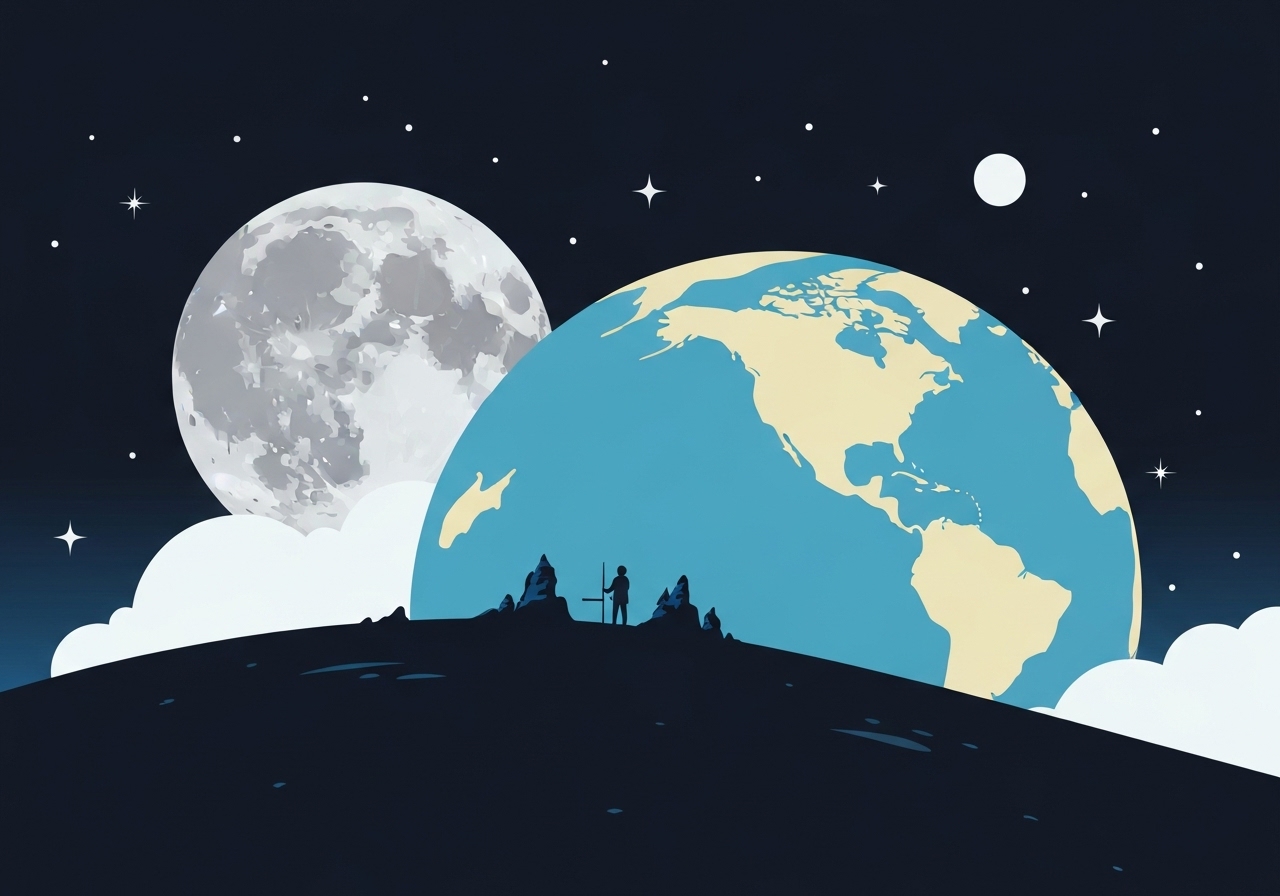
A sweeping total lunar eclipse will darken and redden the Moon on the evening of into (local time), with up to 60 percent of the world’s population positioned to watch totality and as much as 87 percent able to see at least a partial phase, weather permitting. The full sequence from first partial bite to last will span 3 hours, 29 minutes, and 24 seconds.
Key Takeaways
- When: Evening of Sep 7–8, 2025, depending on your time zone.
- Duration: Entire event lasts 3h 29m 24s from partial onset to final partial exit.
- Where: Totality across most of Asia, a slice of East Africa, and Western Australia.
- Also visible: At least partial phases for the rest of Africa, much of Europe, additional parts of Australia, and Brazil’s east coast.
- Reach: Up to ~7 billion people can see totality; ~87% of humanity can view at least part of the eclipse.
- Appearance: The Moon will turn a coppery red at maximum eclipse (“blood Moon”).
- Access: No special equipment or eye protection is required to observe a lunar eclipse.
- Check local timing: Use authoritative tools for location-specific start, maximum, and end times.
Verified Facts
The total lunar eclipse occurs overnight between and , with the exact clock times varying by longitude. Observers within the totality zone will see the Moon fully immersed in Earth’s umbra, turning shades of red as sunlight filters through our atmosphere.
According to event visibility estimates, roughly 60 percent of the global population is situated to view totality if skies are clear, a potential audience of more than 7 billion people. When including those who can only catch the partial phases, the share rises to about 87 percent of humanity.
Geographically, most of Asia, a narrow band of East Africa, and Western Australia fall within the path of totality for the entire show. The remainder of Africa, much of Europe, additional areas of Australia, and the eastern coast of Brazil are expected to see at least portions of totality and the partial phases.
The full observable sequence—from the Moon’s first entry into the umbra to its exit—will last 3 hours, 29 minutes, and 24 seconds. The penumbral dimming is subtle and may be hard to notice compared with the dramatic onset of the partial and total phases.
Context & Impact
This eclipse stands out for its extraordinary reach, making it one of the most widely accessible celestial events of the decade. With so many major population centers located in the visibility footprint, it offers a rare opportunity for shared, naked-eye skywatching across continents.
Cloud cover remains the main wildcard. Regional weather forecasts will determine whether viewers see the reddened lunar disk or only a bright glow behind overcast skies. Public observatories and astronomy clubs are likely to host viewing nights and live streams to mitigate local weather risks.
The Americas will largely miss this show, a reversal of fortunes from the March 2025 eclipse that favored that hemisphere. Nevertheless, comprehensive webcasts and photography from the rest of the world should make the event easy to follow online.
How to Watch
- Find a clear view of the sky with minimal light pollution; the Moon will be comfortably bright even during totality.
- No filters or eye protection are needed for lunar eclipses.
- Photographers: Use a tripod; start around ISO 400–1600, f/4–f/8, and bracket exposures during totality.
- Confirm local start, maximum, and end times for your city using a reputable eclipse calculator.
Lunar eclipses are safe to view without eye protection.
NASA
Unconfirmed
- Reports that Firefly’s Blue Ghost lander captured the March 2025 event as a solar eclipse seen from the Moon are noted by some outlets; independent verification is pending.
- Local cloud cover and seeing conditions for specific cities will only be known close to the event.
Bottom Line
If you live across Asia, much of Africa, Europe, Australia, or eastern Brazil, plan for a memorable skywatch on Sep 7–8. With an unusually wide visibility footprint and a total duration of 3h 29m 24s, this lunar eclipse is poised to be one of the most widely seen of the decade—provided the weather cooperates.