
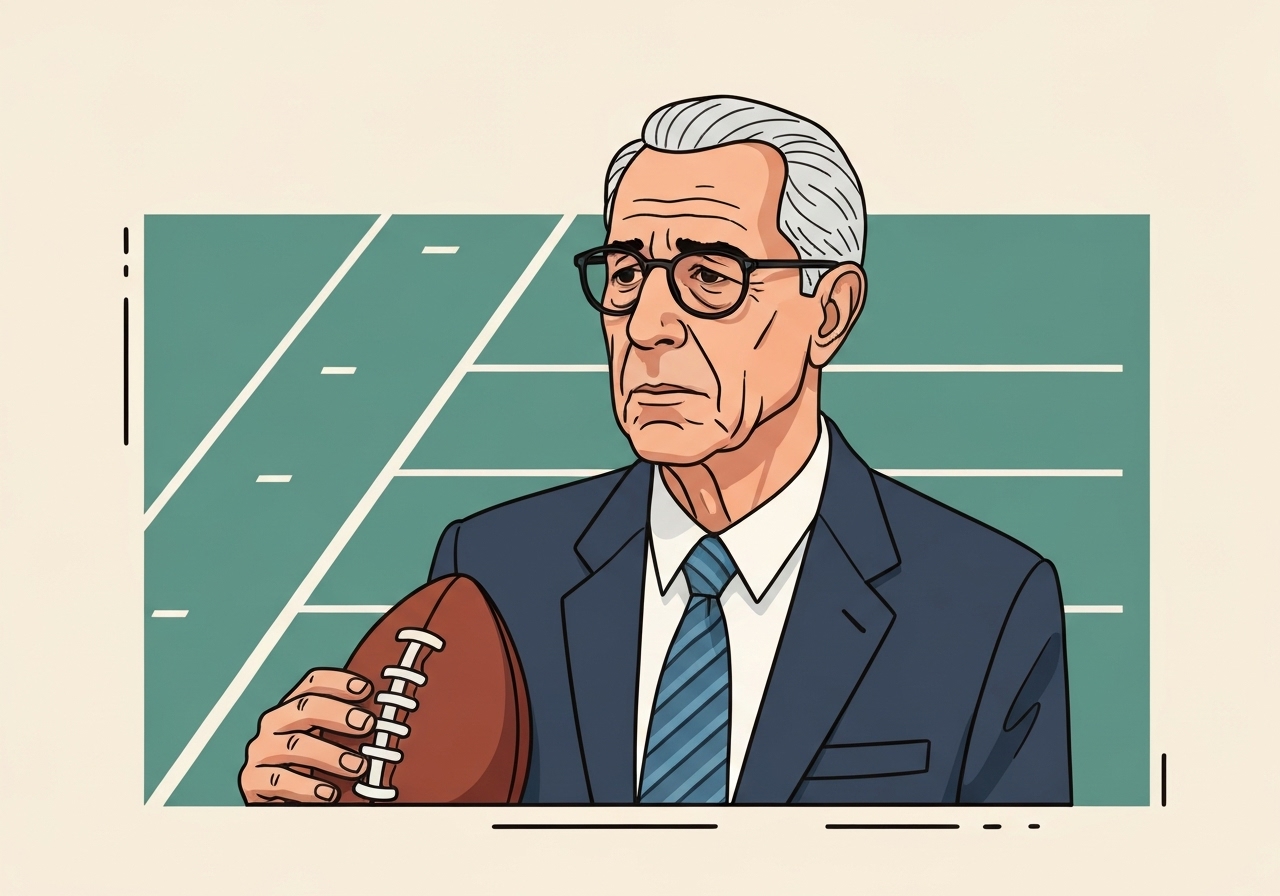
Paul Tagliabue, who led the National Football League as commissioner from 1989 to 2006, died on Sunday at age 84, his family announced. The family said the apparent cause was heart failure complicated by Parkinson’s disease. Tagliabue presided over a period of dramatic league growth that included four expansion franchises, major stadium projects and television deals. His death was confirmed by a family statement and public responses from current commissioner Roger Goodell and other NFL figures.
Key Takeaways
- Paul Tagliabue served as NFL commissioner for 17 seasons, from 1989 through 2006, and died Nov. 9, 2025, at age 84.
- The family reported the apparent cause of death as heart failure complicated by Parkinson’s disease; detailed medical records have not been released publicly.
- Under Tagliabue the league expanded from 28 to 32 teams with the Carolina Panthers (1995), Jacksonville Jaguars (1995), Cleveland Browns (1999) and Houston Texans (2002).
- Franchise values rose roughly tenfold during his tenure, and more than two‑thirds of the league’s 32 teams were playing in or building stadiums that did not exist when he took office.
- Labor peace marked his time as commissioner: free agency and a salary cap were introduced, and there were no work stoppages during his 17 years.
- He canceled NFL games after the Sept. 11, 2001 attacks and oversaw the Saints’ return to New Orleans after Hurricane Katrina in 2005, decisions that framed the league’s crisis responses.
- Tagliabue was elected to the Pro Football Hall of Fame as a contributor in 2020 and later served as chair of Georgetown University’s board of directors from 2009 to 2015.
Background
Tagliabue became commissioner in 1989, succeeding Pete Rozelle at a moment when the league was transitioning into a major national business. The NFL had 28 teams at the time, broadcast partnerships that were expanding in value and recurring labor tensions following strikes in 1982 and 1987. Owners, players and the league office faced pressure to stabilize labor relations, increase revenue, and modernize stadium infrastructure to meet a growing television and sponsorship market. Tagliabue’s legal background and experience as the league’s Washington representative shaped his approach to governance, negotiation and public affairs.
During the 1990s and early 2000s Tagliabue prioritized expansion, stadium financing and media rights, objectives that aligned owners and broadcast partners around long‑term growth. He worked closely with union leaders to craft the systems—most notably free agency and a salary cap—that redistributed competitive balance and reduced the risk of labor stoppage. The league’s franchise valuations and national footprint rose substantially in those years, transforming the NFL into a dominant commercial sports enterprise. His stewardship also required crisis management skills when national emergencies and natural disasters intersected with the season calendar.
Main Event
The family announcement on Nov. 9, 2025, reported Tagliabue’s death and cited heart failure complicated by Parkinson’s disease as the apparent cause. No additional medical documents were released alongside the statement, and close family members were identified as his wife Chandler and children Drew and Emily. Current commissioner Roger Goodell promptly issued a public tribute calling Tagliabue “a steward of the game” and describing him as a mentor whose leadership shaped subsequent commissioners and league policy.
Tagliabue’s career highlights were frequently invoked in the immediate coverage: league expansion from 28 to 32 teams, landmark television contracts, stadium investment, and the introduction of free agency with a salary cap. He oversaw the arrival of the Carolina Panthers and Jacksonville Jaguars in 1995, the reactivation of the Cleveland Browns franchise in 1999, and the addition of the Houston Texans in 2002, moves that extended the NFL’s regional footprint and market reach. Financially, franchise valuations increased sharply during his tenure, reflecting growing media revenue and stadium deals.
His tenure included two defining crises. After the Sept. 11, 2001 terrorist attacks, Tagliabue canceled that weekend’s NFL slate, a decision widely noted as setting a precedent among major U.S. sports leagues. In 2005, following Hurricane Katrina, he played a role in ensuring the New Orleans Saints’ eventual return to the city after a season displaced to San Antonio. These actions are often cited as examples of how the commissioner’s office balances competitive schedules with broader national concerns and community recovery.
After retiring in 2006 and handing the office to Roger Goodell, Tagliabue remained connected to league matters. In 2012 Goodell appointed him to hear appeals in the Saints’ ‘Bountygate’ case; Tagliabue overturned several player suspensions while finding that wrongdoing had occurred, citing contamination of the investigative record. Beyond league work, he served in civic roles, including leadership at Georgetown University and public commentary on league governance.
Analysis & Implications
Tagliabue’s era reshaped the NFL from a popular sports league into an expansive media and entertainment business. The combination of expansion, stadium projects and lucrative television contracts created multiple revenue streams that now underpin franchise valuations. Owners gained tools to monetize local markets, while national broadcast agreements raised leaguewide income. Those structural changes have continued to enable annual revenue growth and global outreach long after his tenure.
Labor relations under Tagliabue offer a notable legacy: by negotiating free agency and a salary cap, the league established mechanisms to maintain competitive balance and reduce the incentive for strikes. That stability allowed television partners and sponsors to plan multi‑year investments, which in turn supported rising franchise valuations. However, the trade-offs embedded in those systems—salary distribution, franchise parity and long‑term player benefits—remain central topics in subsequent collective bargaining negotiations.
Tagliabue’s crisis decisions—halting games after Sept. 11 and prioritizing the Saints’ return to New Orleans—demonstrate the political as well as managerial dimensions of the commissioner role. Those moves reinforced the league’s public responsibilities during national emergencies and set expectations for how sport organizations coordinate with government and communities. Future commissioners operate in a media environment amplified by social platforms and global audiences, increasing the stakes of such operational calls.
His post‑retirement role in the Bountygate appeal underscored the continuing governance challenges the league faces around discipline, due process and transparency. The reversal of suspensions highlighted procedural concerns and prompted debate about investigative standards and the balance between deterrence and fair adjudication. Those tensions persist as the NFL adapts disciplinary frameworks amid evolving legal and public scrutiny.
Comparison & Data
| Metric | 1989 (When Tagliabue Took Office) | 2006 (When He Retired) |
|---|---|---|
| Number of teams | 28 | 32 |
| Expansion franchises added | 0 | 4 (Panthers, Jaguars, Browns, Texans) |
| Stadiums existing or under construction not present in 1989 | Few to none | More than two‑thirds of 32 teams (at least 22 teams) |
| Labor stoppages during tenure | Strikes in prior decades (1982, 1987) | None during Tagliabue’s 17 years |
The table highlights the structural changes that defined Tagliabue’s time as commissioner: expansion, stadium investment and the absence of labor stoppages during his 17‑year term. Those shifts helped produce the league’s modern commercial model, even as they contributed to ongoing debates about competitive fairness, stadium financing and player welfare.
Reactions & Quotes
“Paul was the ultimate steward of the game — tall in stature, humble in presence and decisive in his loyalty to the NFL,”
Roger Goodell, NFL commissioner
Goodell praised Tagliabue as a mentor and credited him with shaping both professional practice and personal leadership among league executives. The tribute emphasized continuity between Rozelle’s era and later commissioners in prioritizing the institutional interests of the sport.
“The athletes who thrive in the competitive environment of the National Football League tend to be intensely motivated individuals with clear values,”
Paul Tagliabue, Hall of Fame induction, 2020
Tagliabue’s Hall of Fame remarks underscored his public focus on players as leaders in sports and society, a theme he frequently invoked to frame league policies on competition and conduct. Local and national commentators also noted his role in expanding the league’s reach and stabilizing owner‑player relations.
Unconfirmed
- No public autopsy report or detailed medical records have been released; the family statement is the only official account of cause of death.
- Specific financial figures for the “tenfold” increase in franchise values vary by team and valuation method and have not been uniformly disclosed in a single public dataset.
Bottom Line
Paul Tagliabue’s death closes a chapter in the NFL’s evolution from a popular American league to a global commercial powerhouse. His combination of legal skill, ownership diplomacy and crisis management left structural changes—expansion, stadium deals, television contracts and labor frameworks—that continue to define the league’s business model. Those outcomes helped generate unprecedented revenue and stability but also seeded long‑running debates over stadium financing, player compensation and governance.
In the near term, expect retrospectives from teams, broadcasters and civic partners that highlight both his accomplishments and contested choices, such as team relocations. For long‑term governance the questions Tagliabue grappled with—balancing growth, competitive fairness and public responsibility—will remain central to how the NFL navigates labor talks, expansion considerations and its role in communities.
Sources
- ESPN News Services (news)
- Pro Football Hall of Fame (official institution)
- Georgetown University (institution)