
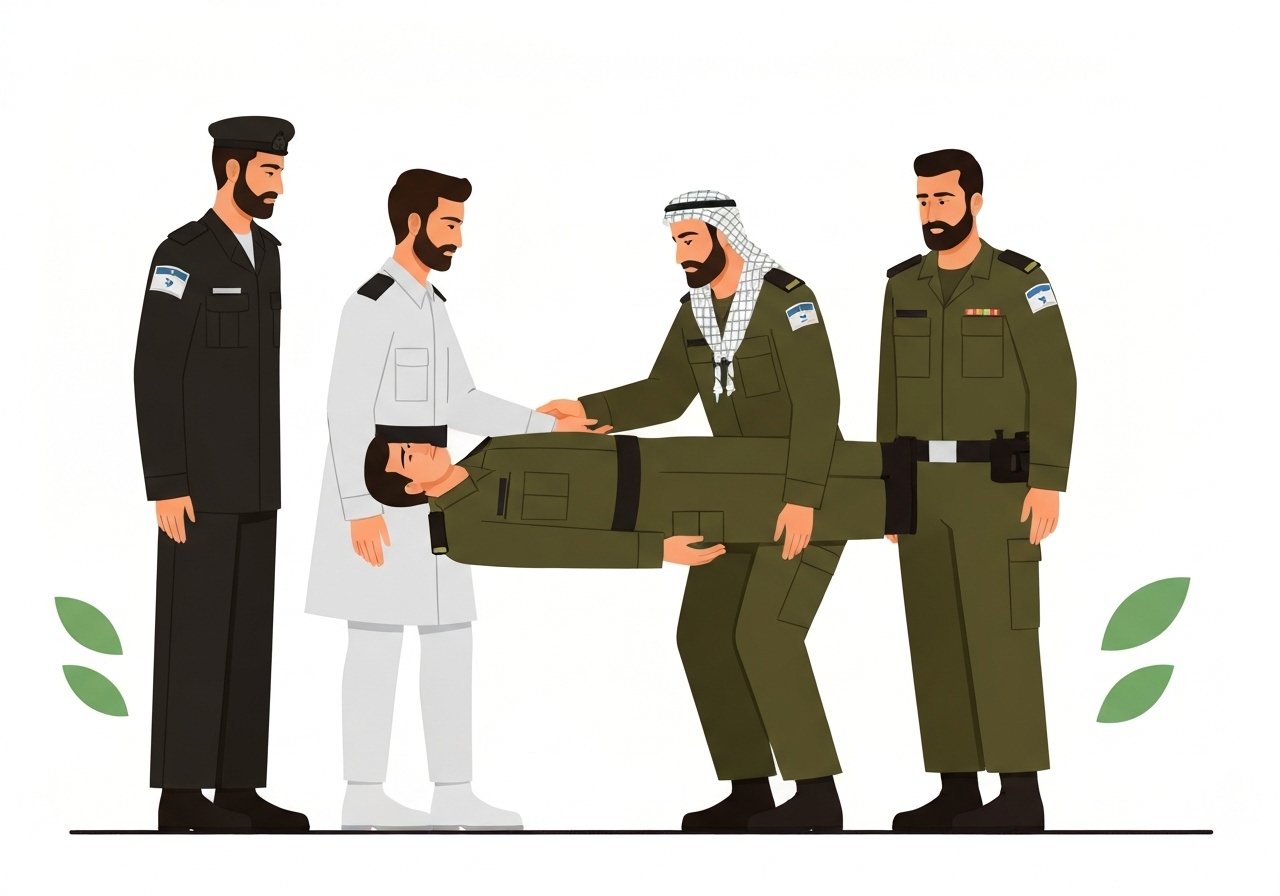
Hamas handed over the remains of Lt. Hadar Goldin to Israeli authorities on Nov. 9, 2025, ending an 11-year uncertainty for his family after he was taken during the 2014 Gaza conflict. Israeli forensic testing confirmed the identity of the 23-year-old, whose body had been held in Gaza since the Rafah skirmish in August 2014. The transfer was carried out under a U.S.-backed cease-fire deal that began in mid-October 2025 and included releases of living hostages and commitments to return dozens of sets of remains. Goldin’s family marked the handover as a painful closure and renewed criticism of officials they say did not do enough to recover him sooner.
Key Takeaways
- On Nov. 9, 2025, Hamas returned the remains of Lt. Hadar Goldin; Israeli authorities reported forensic confirmation of identity.
- Goldin was 23 when he was taken in Rafah on Aug. 1, 2014; his remains remained in Gaza for more than a decade.
- The transfer is part of a mid-October 2025, U.S.-backed truce under which Hamas released the last 20 living Israeli hostages and agreed to hand over 28 sets of remains.
- Israeli officials have accused Hamas of pacing returns to gain leverage, while Hamas cites technical obstacles and rubble removal as causes of delay.
- The 2014 clash in Rafah occurred during a 50-day war that left more than 2,000 Palestinians and about 70 Israelis dead, according to widely reported figures.
- Goldin’s family has repeatedly pushed the Israeli government for more aggressive efforts, at times proposing controversial tactics during negotiations, including linkage to aid and vaccinations.
Background
The Rafah incident in August 2014, during which Lt. Hadar Goldin was taken, became one of the most contested episodes of the 50-day Gaza war. Israel conducted intense artillery and airstrikes in Rafah after the unit’s clash with militants; Israeli forces maintain Goldin was likely killed in the initial firefight. Rights groups later documented civilian casualties linked to the bombardment, reporting at least 135 Palestinian deaths in that specific episode. Over the years the Goldin family joined the Hostages and Missing Families Forum and pressed successive governments to prioritize recovery of their son’s remains.
Interest in prisoner and remains exchanges surged again after the Oct. 7, 2023, attack, when Hamas abducted roughly 250 people into Gaza, many of whom were later held alive. The mid-October 2025 cease-fire, brokered with U.S. involvement, established a framework that included the release of remaining living hostages and a staged handover of remains. For families like the Goldins the deal offered a concrete path to burial rites, but it also reopened political disputes over Israel’s negotiating posture and the timing of concessions.
Main Event
The handover on Nov. 9 took place under terms of the truce and followed a pattern in which Hamas has returned remains one or two at a time. Israeli officials said the remains were transported to the Abu Kabir Forensic Institute in Tel Aviv, where laboratory testing matched remains to Goldin’s identity. The transfer arrived after months of intermittent deliveries and public exchanges over whether Hamas had delayed handovers for bargaining leverage.
Family members traveled to receive the coffin and issued televised remarks after burial preparations; Simha Goldin, Hadar’s father, framed the return as both relief and reproach, saying “you don’t leave soldiers behind on the battlefield.” Israeli authorities emphasized the forensic confirmation while also reiterating longstanding calls for full accounting of all missing personnel. Hamas spokespeople acknowledged the handovers but stressed the logistical difficulties of recovering remains from rubble-strewn sites damaged by heavy bombardment.
The exchange unfolded amid heightened security and diplomatic oversight, with U.S. and regional mediators monitoring compliance with the cease-fire. Israeli officials noted that most living hostages had been returned earlier in the truce sequence and that the remains transfers were a final, negotiated component. Local ceremonies and media coverage underscored the emotional weight of returning a body after more than a decade, especially for a family that had repeatedly demanded state action.
Analysis & Implications
The return of Goldin’s remains has immediate symbolic weight in Israel: the duty to recover fallen soldiers is a central public value and a recurring political litmus test for governments. Families and advocacy groups have used that moral claim to shape public opinion and policy, increasing pressure on leaders to prioritize retrieval even at diplomatic cost. The episode is likely to influence domestic debates about how far authorities should go in swapping concessions for remains or prisoners.
Strategically, the deliveries test the durability of the mid-October 2025 truce. Hamas’s staggered approach to handing over remains has been interpreted by some Israeli officials as deliberate bargaining; by contrast, Hamas points to technical and safety constraints in devastated urban areas. How both sides manage future steps — including any remaining returns or follow-on security arrangements — will affect whether the cease-fire evolves toward a longer-term de-escalation or relapses into renewed confrontation.
Internationally, the case highlights broader legal and humanitarian questions: the treatment of remains, obligations under the laws of armed conflict, and the role of third-party mediators in verifying compliance. For mediation efforts, predictable timelines and transparent verification mechanisms will be crucial to sustain confidence among families and governments. Economically and administratively, reconstruction and rubble-clearing in Gaza remain bottlenecks that complicate recovery operations and, by extension, reconciliation steps tied to them.
Comparison & Data
| Event/Metric | Figure |
|---|---|
| Goldin taken | Aug. 1, 2014 |
| Age at time | 23 |
| 2014 war fatalities (reported) | 2,000+ Palestinians; ~70 Israelis |
| Oct. 7, 2023 abducted | About 250 people |
| Cease-fire remains commitment | 28 sets of remains |
| Living hostages returned under truce | 20 (last group) |
The table places Goldin’s case within the broader timeline of two major conflicts that have shaped Israeli-Palestinian dynamics since 2014. The figures underline why remains and hostage issues have become both humanitarian matters and bargaining chips in negotiations. They also help explain why families press for fast, verifiable outcomes and why state actors emphasize forensic confirmation and chain-of-custody procedures.
Reactions & Quotes
Family reaction was immediate and emotional, with public statements expressing both relief and criticism over years of perceived inaction. Officials framed the forensic confirmation as a scientific closure while diplomats highlighted the handover as a step in the fragile truce process.
“You don’t leave soldiers behind on the battlefield,”
Simha Goldin, father of Lt. Hadar Goldin
Simha Goldin used his televised remarks to praise the return and to fault leaders he said had failed to secure it sooner, tapping into a broader national sentiment about military duty and state responsibility. His words resonated with advocacy groups that have long campaigned for more forceful government action.
“We are working to recover remains despite heavy damage and operational challenges,”
Hamas official (statement)
Hamas officials framed the operation as technically difficult, citing rubble and the need for heavy machinery; analysts note that these logistical claims are plausible but politically convenient. Israeli security spokespeople briefly reiterated that identity had been confirmed in laboratory tests at Abu Kabir.
Unconfirmed
- It is not publicly established whether Lt. Goldin was alive at the moment he was taken; official accounts differ and conclusive on-scene evidence is limited.
- Claims that Hamas intentionally delayed specific handovers to gain political leverage remain contested and lack direct documentary proof in the public record.
- Details about which other sets of remains are still unrecovered and their locations have not been fully disclosed by either side.
Bottom Line
The return of Lt. Hadar Goldin’s remains provides grieving relatives with the chance for burial and a measure of closure, even as it revives political debates about state strategy and priorities in hostage and remains negotiations. The transfer is a practical component of the mid-October 2025 truce but also a symbolic reminder of unresolved grievances on both sides.
Going forward, the durability of the cease-fire and the pace of remaining handovers will shape domestic politics in Israel and the humanitarian situation in Gaza. Observers should watch whether mediators can establish clearer timelines and verification steps to prevent future stalemates and to move from episodic exchanges to more predictable, sustained confidence-building measures.
Sources
- The New York Times — international newspaper report (primary reporting used for this article)
- Amnesty International — human rights organization (investigations and casualty reporting related to Rafah incidents)