
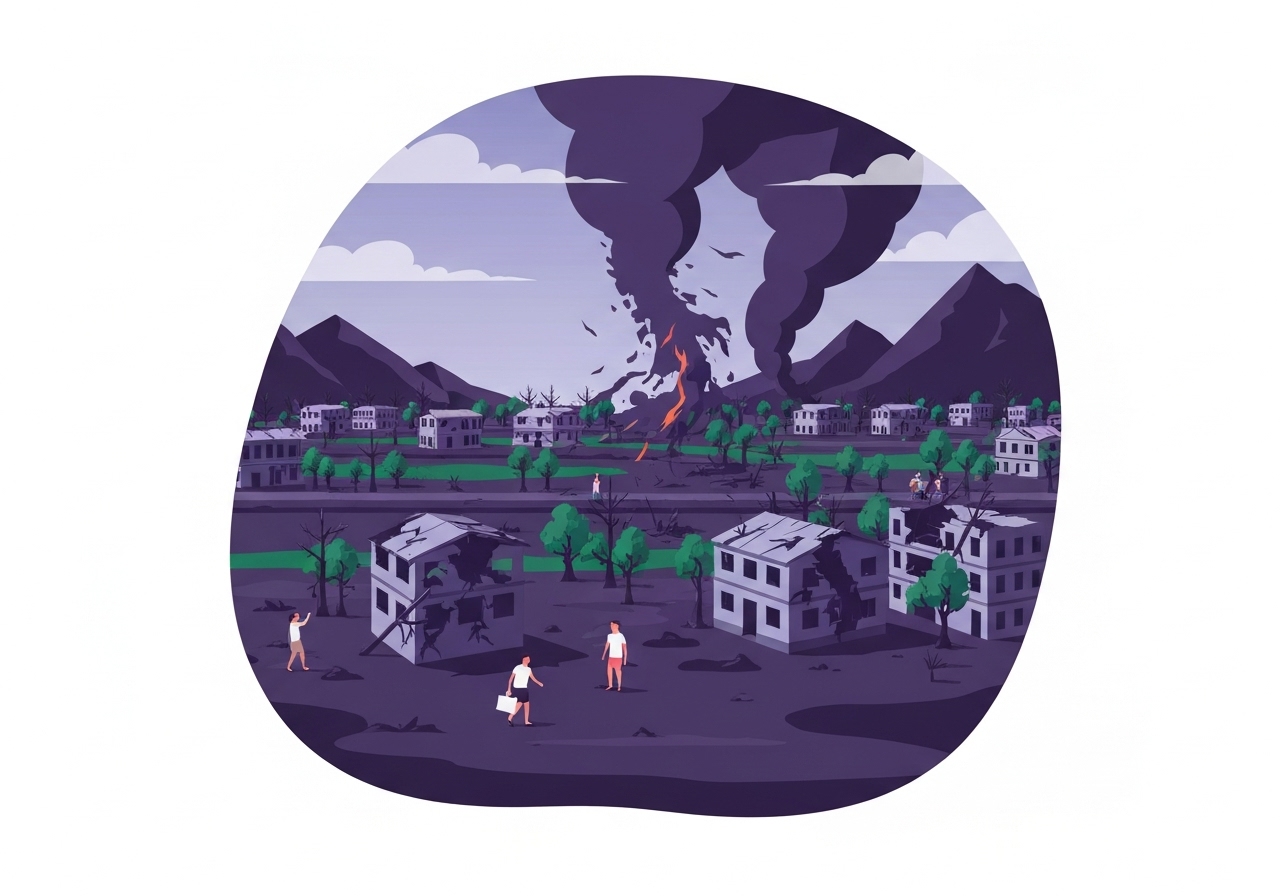
Typhoon Fung-wong moved away from the northwestern Philippines on Monday after unleashing heavy rain, floods and landslides that knocked out power across provinces, killed two people and forced more than 1.4 million residents to seek safety. The storm made landfall late Sunday in Aurora province as a super typhoon with sustained winds of 185 kph (115 mph) and gusts up to 230 kph (143 mph) before weakening over northern mountains and plains and exiting near La Union into the South China Sea. Authorities said the system was forecast to head northwest toward Taiwan while rescue and relief operations continued in northern Luzon. The impact compounded recent destruction from Typhoon Kalmaegi, which killed at least 224 people in central Philippines and later struck Vietnam.
Key Takeaways
- Two confirmed deaths: one person drowned in Catanduanes and another was killed when a house collapsed in Catbalogan, Samar.
- More than 1.4 million people evacuated to relatives’ homes or emergency shelters; about 318,000 remained in evacuation centers on Monday.
- Fung-wong made landfall in Aurora as a super typhoon with sustained winds of 185 kph (115 mph) and gusts up to 230 kph (143 mph); the storm’s diameter reached roughly 1,800 km (1,100 miles).
- At least 132 northern villages reported flooding and roughly 1,000 houses were damaged, with landslides blocking roads that authorities planned to clear as conditions improved.
- More than 325 domestic and 61 international flights were canceled; over 6,600 commuters and cargo workers were stranded in ports after shipping was suspended.
- President Ferdinand Marcos Jr. declared a state of emergency on Thursday in response to Kalmaegi and the expected effects of Fung-wong.
- The United States and Japan were reported ready to offer assistance, though the Philippine government had not formally requested international aid after Kalmaegi.
Background
The Philippines is among the world’s most disaster-prone countries, averaging about 20 tropical cyclones a year and subject to frequent earthquakes and volcanic activity. Its geography — long coastlines and mountainous interiors — concentrates risks: storms can bring extreme coastal surge, landslides in upland farming areas and widespread flooding in lowland plains. Emergency management agencies and local governments maintain regular evacuation protocols, but the scale of back-to-back storms can quickly overwhelm local capacity.
Less than a week before Fung-wong struck, Typhoon Kalmaegi ravaged central provinces, leaving at least 224 people dead in the Philippines and causing additional fatalities when it moved on to Vietnam. The proximity in timing heightened concerns about saturated soils and already weakened infrastructure, prompting preemptive mass evacuations for Fung-wong. National officials used a state of emergency declaration to mobilize resources across agencies and to coordinate logistics for shelters and relief operations.
Main Event
On Sunday night Fung-wong came ashore in northeastern Aurora province as a super typhoon with sustained winds measured at 185 kph (115 mph) and gusts up to 230 kph (143 mph). The storm’s broad circulation — about 1,800 km (1,100 miles) across — swept over mountainous northern provinces and adjacent agricultural plains, bringing intense rainfall that caused flash floods and multiple landslides overnight.
Officials reported one drowning in Catanduanes after flash floods rose rapidly, and another fatality in Catbalogan city in Samar when a collapsing house trapped a resident. Authorities said at least 132 villages in the north experienced flooding; in some locations residents were stranded on rooftops until rescue teams or water levels receded.
More than 1.4 million people had moved to shelters or stayed with relatives before landfall, a preemptive evacuation officials credited with reducing casualties. By Monday roughly 318,000 people remained in formal evacuation centers, according to civil defense figures. Rescue and relief teams focused on restoring power, clearing landslide-blocked roads and assessing structural damage to homes and public infrastructure.
Transportation disruption was widespread: authorities canceled over 325 domestic and 61 international flights across affected airports, and the coast guard barred ships from sailing, leaving more than 6,600 commuters and cargo workers stranded in ports. Schools and most government offices were ordered closed on Monday and Tuesday in affected areas to allow response teams to operate and to keep people out of harm’s way.
Analysis & Implications
The back-to-back landfalls of Kalmaegi and Fung-wong create overlapping humanitarian and recovery challenges. Saturated ground from the earlier storm increases the risk of landslides and riverine flooding, complicating immediate search-and-rescue and heightening longer-term needs such as shelter, clean water and sanitation. Local governments face logistical strain moving and supporting continued waves of evacuees while restoring damaged power and transportation links.
Economically, repeated storm damage during planting and harvest seasons could harm agricultural output in northern and central provinces; damage to roads and bridges will slow distribution of goods and relief. The surge in canceled flights and suspended maritime operations also disrupts commerce, tourism and supply chains for affected islands, with cumulative effects if repairs and assistance are delayed.
Politically, the state of emergency declaration signals the national government’s intent to centralize and accelerate the response, but it raises questions about medium-term resourcing and resilience investments. Although the government has not requested international aid after Kalmaegi, statements that allies such as the United States and Japan stand ready suggest additional support could be mobilized if needs widen beyond domestic capacity.
Comparison & Data
| Storm | Confirmed Deaths (PH) | Evacuated / In Shelters | Reported Size / Wind |
|---|---|---|---|
| Fung-wong (Uwan) | 2 | 1.4 million evacuated; ~318,000 in centers | ~1,800 km wide; 185 kph sustained, gusts 230 kph |
| Kalmaegi | at least 224 | large-scale evacuations in central provinces | severity reported high; specific sustained wind figures not provided |
The table highlights the scale of displacement from Fung-wong relative to the higher death toll from Kalmaegi in central provinces; differences reflect storm tracks, population density at landfall sites and timing relative to earlier damage. Numbers are official tallies released by national and regional authorities as response operations continue.
Reactions & Quotes
Officials warned that even after the core of the storm moved out, heavy rains would still pose localized threats and that rescue and relief operations would continue.
Bernardo Rafaelito Alejandro IV, Office of Civil Defense (official)
The president declared a state of emergency to accelerate interagency response and to free resources for areas still reeling from Kalmaegi and now Fung-wong.
President Ferdinand Marcos Jr. (official announcement)
Government sources said international partners such as the United States and Japan were ready to offer assistance if requested, while domestic agencies prioritized immediate needs and damage assessments.
Teodoro (government official)
Unconfirmed
- Some damage and casualty figures reported by local offices remain preliminary and may be revised as teams complete assessments.
- Offers of international assistance were described as available by officials, but the scope and timing of any external aid had not been formally agreed as of Monday.
Bottom Line
Fung-wong’s passage added a second major shock to a country already coping with recent catastrophic losses from Kalmaegi, producing widespread displacement, infrastructure damage and transport disruption across northern provinces. Early evacuations likely limited casualties, but extensive humanitarian and recovery needs remain as teams restore power, clear roads and assess long-term housing and agricultural losses.
Authorities and relief organizations face a race to provide sustained shelter, medical care and clean water for hundreds of thousands of evacuees while preparing for possible secondary hazards such as river flooding and landslides. Continued monitoring and transparent, regularly updated damage assessments will be essential for coordinating any expanded domestic mobilization or international assistance.
Sources
- Associated Press (news report)
- PAGASA (Philippine Atmospheric, Geophysical and Astronomical Services Administration — official forecasts)
- Office of Civil Defense (national disaster management agency — official updates)