
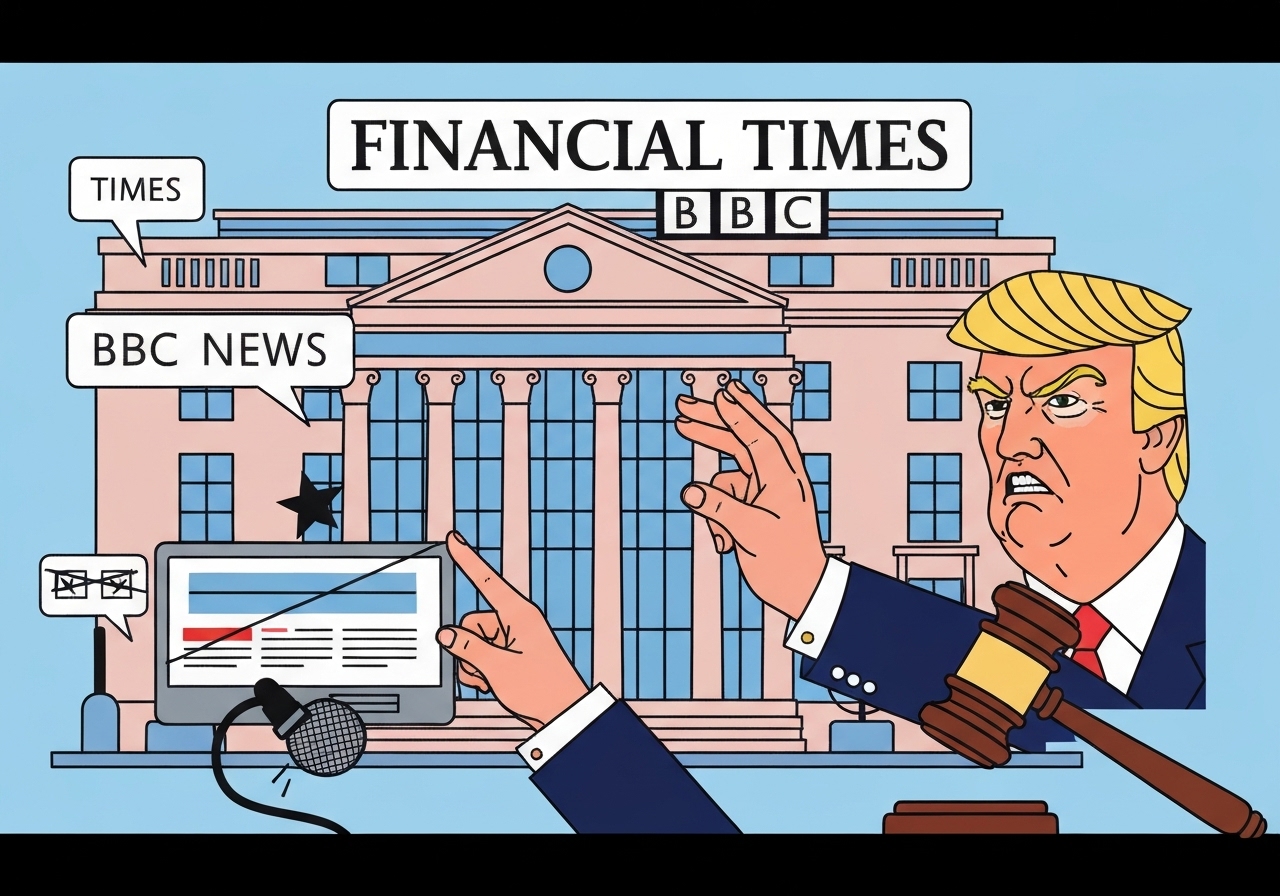
Lead: Former President Donald Trump has threatened legal action against the BBC after the broadcaster aired an edited segment of his January 6 speech that his team says changed its meaning. The dispute, raised publicly by Trump’s legal representatives this week, centers on how a short excerpt was cut and presented in a news package. The issue has prompted scrutiny of editorial practice at a major public broadcaster and raised fresh legal questions about reputation and intent.
Key Takeaways
- Donald Trump publicly warned of a lawsuit against the BBC over an edited clip of his January 6, 2021 speech; his legal team says the edit distorted context and intent.
- The dispute surfaced publicly this week after the BBC broadcast a news package containing the excerpt; both the timing and the editorial choice are under scrutiny.
- Broadcasters face heightened scrutiny over edits of archival material since January 6, with legal and reputational risks for perceived misrepresentation.
- Media-law specialists say defamation and false-light claims against large public broadcasters face high legal thresholds, including proof of falsity and, in some cases, reckless disregard for the truth.
- The episode occurs amid intense political polarization and ahead of a major election cycle, increasing the potential political impact of disputes over media coverage.
- There is no public record, as of reporting, that a formal lawsuit has been filed; the matter appears to be at the threat-and-response stage.
Background
The January 6, 2021 attack on the U.S. Capitol remains a defining moment in contemporary American politics and a persistent source of legal and reputational debate. Coverage of former President Trump’s speeches from that period has been re-examined repeatedly by news organizations, courts and commentators. Editors and producers sometimes use excerpts to summarize events; however, critics warn that selective editing can change perceived meaning.
Public broadcasters such as the BBC operate under editorial guidelines intended to ensure accuracy and impartiality, but they also face intense scrutiny from political actors who argue that editorial decisions reflect bias. Legal claims related to past speeches have been brought in several jurisdictions in recent years, though successful defamation suits by public figures against large news organizations are comparatively rare due to legal protections for news reporting and opinion.
Main Event
The current dispute centers on an edited clip of Mr. Trump’s January 6 speech that was included in a BBC news segment. According to statements from Trump’s representatives, the edit omitted surrounding material that would have altered viewers’ understanding of the remark. The BBC, which prepared the segment for broadcast, has commonly used short clips to illustrate archival reporting; the specific editorial choices in this case have prompted the former president’s legal threat.
Trump’s team publicly objected to the broadcast and suggested legal remedies, characterizing the edit as distorting the original context. The BBC was given notice of the complaint, and internal review procedures for contested editorial decisions were reportedly invoked. At the time of writing, neither side has filed court papers in a U.K. or U.S. court that would formalize the dispute as litigation.
Industry observers say the dispute escalated quickly because it touches on questions of editorial judgment and on-the-record materials connected to a highly charged political event. The BBC’s editorial safeguards and complaint mechanisms are designed to handle contested broadcasts, but a threatened lawsuit by a high-profile political figure introduces a different legal dimension.
Analysis & Implications
Editorially, this episode highlights the trade-off between concise news packaging and preserving granular context for archival material. Editors compress long speeches into short clips for audiences, but that compression carries a risk: if context is omitted and the remainder appears misleading, a broadcaster may face reputational damage or legal challenge. The reputational stakes are especially high for public-service organizations that are funded and regulated under public mandates.
Legally, bringing a successful claim against a major broadcaster typically requires showing that the publisher conveyed a false statement of fact that caused harm, and in many jurisdictions a public-figure plaintiff must also demonstrate actual malice or reckless disregard. That legal bar makes proven courtroom victories uncommon, though settlements and corrections are more frequent when editorial mistakes are acknowledged.
Politically, the dispute may deepen partisan narratives about media bias. Political actors often leverage formal complaints and legal threats to signal grievances to supporters; the practical outcome is rarely just a legal resolution but also a public relations contest. With electoral cycles approaching, disputes over how archival footage is presented can have outsized symbolic effect beyond the legal merits.
For newsrooms, the incident could prompt tighter review of archival edits, clearer on-screen context for clips, and more robust pre-broadcast checks when material involves contentious events. Broadcasters that adopt more conservative editing practices risk producing longer segments but reduce the chance of misinterpretation; those that prioritize brevity risk complaints and legal exposure.
Comparison & Data
| Case Type | Typical Outcome | Threshold to Win |
|---|---|---|
| Defamation suit vs. large broadcaster | Rare courtroom wins; occasional settlements | High — falsity, harm, and sometimes malice |
| Regulatory complaint to broadcaster | Corrections, editor review, or guidance | Moderate — editorial breach of guidelines |
Compared with regulatory complaints that often lead to internal reviews or on-air clarifications, civil litigation carries a higher evidentiary burden and longer timeline. Editors and legal teams weigh these trade-offs when responding to threats: some disputes end with a public clarification, others with pre-trial settlements, and a small fraction proceed to full trial.
Reactions & Quotes
The legal team for the former president described the edit as altering the clip’s context and said they were prepared to explore legal remedies if the broadcaster did not address the concern.
Trump legal team (public statement)
That statement framed the matter as a choice offered to the BBC: retract or face escalation. The BBC’s publicly stated procedures for handling complaints call for an internal review and, where appropriate, corrections or clarifications to be published.
Independent media-law analysts say broadcasters must balance concision with context and that proven editorial missteps can prompt both regulatory and legal responses.
Media law analyst (comment)
Analysts emphasize that how the BBC responds—whether by amending the broadcast record, issuing a clarification or defending its edit—will influence whether the dispute cools or enters a formal legal phase.
Unconfirmed
- Whether a formal lawsuit has been lodged in any court — no public filings were located at the time of reporting.
- The precise editorial rationale within the BBC for the specific cut used in the segment — internal deliberations have not been published.
- Any settlement discussions between the parties — no confirmation of private negotiations is publicly available.
Bottom Line
The threatened legal action underscores enduring tensions between powerful public figures and major news organizations over how sensitive archival material is edited and presented. While legal threats draw headlines, the path from complaint to courtroom victory is long and uncertain, especially when public-figure standards apply.
Practically, the dispute is likely to prompt a focused review of editorial processes at the broadcaster and renewed public debate about media practices. For readers and viewers, the episode is a reminder to treat short clips as potentially partial representations of longer remarks and to seek fuller context when judging contested statements.
Sources
- Financial Times — Major news outlet (reporting on the complaint and statements)