
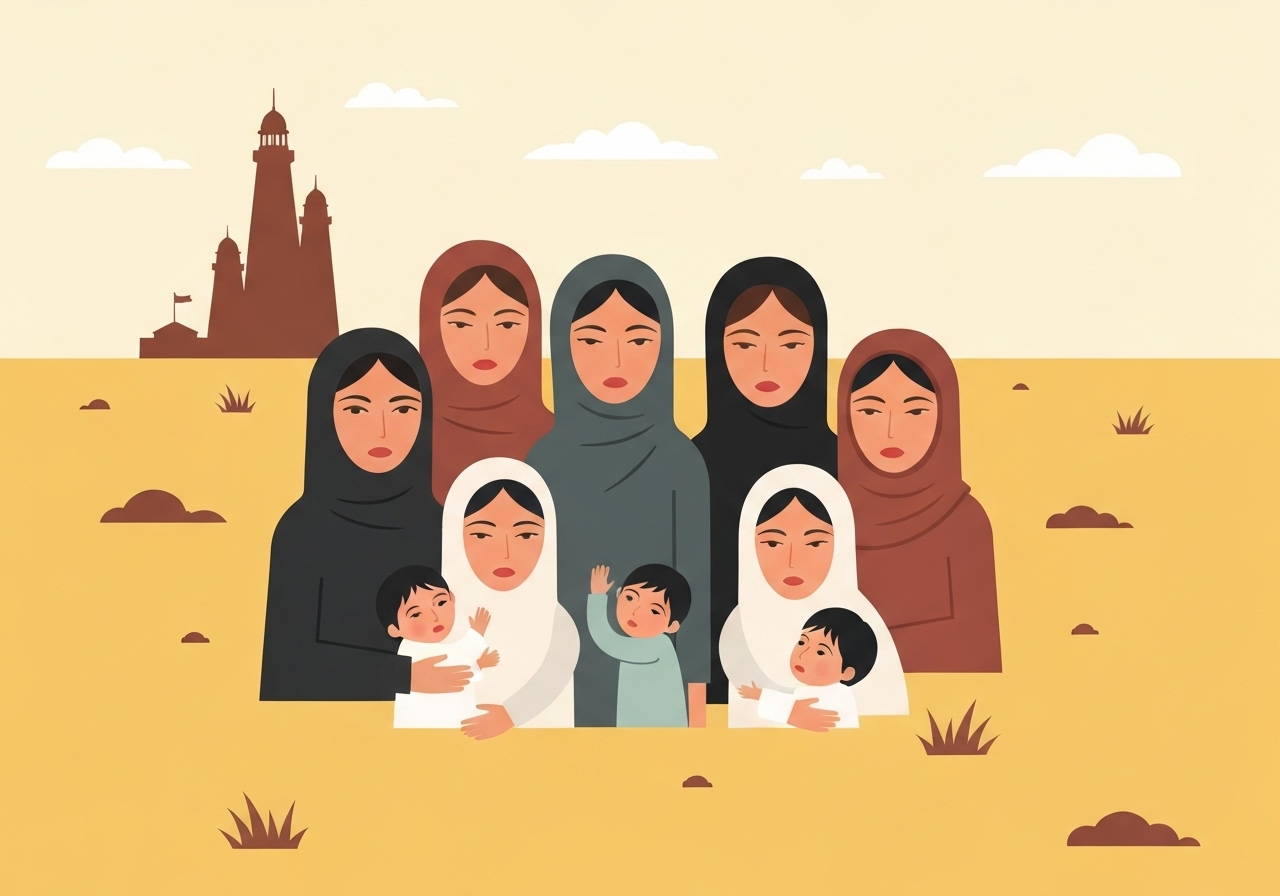
Lead: In Riyadh, in the summer heat that can reach about 110 degrees Fahrenheit, Kenyan women and their newborns are living on medians and near a city gas station after giving birth outside marriage. Police, shelter operators and diplomats repeatedly turned many away; some mothers — unable to secure birth documents for their children — say they feel they have nowhere to go. The result is a growing cohort of children who lack identification, access to school and routine health care and who are effectively stuck inside Saudi Arabia. The crisis, documented through interviews with 25 East African women and officials, exposes gaps between law on paper and how institutions act in practice.
Key Takeaways
- At least 388 children born to Kenyan mothers in Saudi Arabia were identified by Kenya’s foreign minister in April 2025, according to parliamentary remarks.
- Many mothers report being turned away by shelters, employers and embassy staff; some described being briefly jailed after childbirth.
- Children without birth certificates cannot enroll in licensed schools or obtain exit permits, leaving them unable to leave Saudi Arabia or access formal education and vaccinations.
- Some mothers live in makeshift encampments near a gas station in Manfooha, Riyadh; typical groups there number three to four children and their mothers at any time.
- Maharah Human Resources — a Saudi staffing firm with more than $650 million in market capitalization — employed one mother profiled in the reporting; the company did not respond to questions in the investigation.
- Kenyan embassy procedures have at times required DNA tests to confirm maternity; women say samples were collected in 2023 but many test results have never been delivered.
- Reports and interviews cite exploitation in recruitment pipelines that send African domestic workers to Saudi homes, including allegations of abuse, rape and fatalities.
Background
Over the past decade Saudi Arabia has loosened many social restrictions, yet sexual relations outside marriage remain socially taboo and can prompt criminal investigation; hospitals notify police when an unmarried woman gives birth. Saudi law states that a child born to a non-Saudi mother in irregular circumstances should be affiliated with the mother and issued a birth certificate, but there is no clear public pathway for unmarried mothers to register births or obtain exit documentation.
Kenya encouraged labor migration to the Gulf through outreach and placement in the late 2010s and early 2020s as domestic unemployment rose. Recruitment agencies and private firms — some with ties to officials and private investors — expanded hiring. Human rights groups and the women interviewed describe persistent patterns of abuse and exploitation in private homes and workplaces, and say that the combination of restrictive immigration rules and weak consular support has left some women trapped.
Main Event
The New York Times reporting documents how groups of Kenyan mothers and their young children have come to inhabit a median near a Riyadh gas station after being rejected by employers, shelters and sometimes their own embassies. Mothers say they pursued many channels — employer offices, shelters run by NGOs or companies, police stations and the Kenyan Embassy — and were repeatedly denied assistance or told the process would take months.
Specific cases illustrate the mechanics. Esther, 39, gave birth to her son Abudy in September 2025 after a relationship with an Egyptian driver; she was briefly detained, released and then sent between employer offices and the Kenyan Embassy before being turned away from a shelter that would not admit mothers with infants. Exhausted and with no other options, she arrived at the gas station camp where other Kenyan mothers were staying.
Other mothers describe delivering at home with unlicensed midwives, or being refused care at public hospitals for lack of paperwork. Informal day‑care operators have arisen to look after toddlers for weeks at a time while their mothers work as freelance domestic workers, but these arrangements do not produce the official documents required for formal schooling or travel.
Attempts to secure Kenyan documentation have been inconsistent. Some women received Kenyan birth certificates or were able to return after DNA tests confirmed maternity; others said embassy staff dismissed or shamed them, requested DNA tests that never produced results, or imposed additional bureaucratic hurdles that prevented children from leaving the kingdom.
Analysis & Implications
The situation exposes a tension between law and enforcement. On paper Saudi authorities say children are entitled to identity, health care and education regardless of status; in practice, social stigma and administrative friction — including police involvement in births outside marriage — create obstacles that effectively bar many children from accessing those rights. That gap creates a vulnerable population whose lack of documentation has lifelong consequences.
For Kenya, the problem raises both humanitarian and diplomatic questions. Parliamentary acknowledgement of hundreds of cases suggests the issue is widespread; yet inconsistent embassy responses — from offering DNA tests once to accusations of neglect by mothers — point to weak consular capacity or unclear procedures for cross-border child documentation and repatriation. This can strain bilateral relations and prompt criticism at home about protection of citizens abroad.
Economically, the pipeline that recruits domestic workers to Gulf households generates remittances but also creates asymmetric power that can enable abuse. When women who give birth outside marriage cannot return with their children, they face a stark choice: separate from their child, leave the child in the kingdom without papers, or remain in precarious conditions indefinitely. Any policy solution will need to coordinate labor, immigration and consular services across two national systems and within Saudi administrative practice.
Internationally, the cases raise concerns under human-rights norms about statelessness and children’s rights. Denying birth registration or access to basic services can violate both Saudi law as stated and international obligations; sustained advocacy and clearer administrative pathways would reduce risk of long-term harm to children denied identity documents.
Comparison & Data
| Metric | Reported Figure |
|---|---|
| Children identified by Kenya’s foreign minister (April 2025) | 388 |
| Maharah Human Resources market capitalization (approx.) | >$650 million |
The table highlights two concrete figures used throughout reporting: one parliamentary tally identifying hundreds of children, and the scale of a recruitment firm that employed at least one of the mothers. These numbers underscore both the human scope of the problem and the corporate infrastructure tied to labor migration.
Reactions & Quotes
“This baby is innocent,”
Esther, Kenyan mother interviewed in Riyadh
Esther’s remark came after describing detention following childbirth and repeated refusals by shelters and embassy staff. Her plea crystallizes the mothers’ central argument that children should not be penalized for mothers’ legal or social status.
“By the end, she can get it. But I’m not sure how,”
Dr. Mufareh Asiri, medical director, King Saud Medical City
Dr. Asiri summarized how hospital procedures can involve social workers and the police; his comment underlines administrative uncertainty about the practical steps for registering children born to unmarried foreign mothers.
“Our government is aware of cases and has collected DNA samples to protect children,”
Musalia Mudavadi, Kenya’s foreign minister (parliamentary remarks)
Kenyan authorities have publicly acknowledged hundreds of cases and said they have sought to verify maternity, but mothers interviewed described long delays and inconsistent follow-through on tests and repatriation assistance.
Unconfirmed
- Why a handful of Kenyan children have been issued Kenyan certificates while others have not — specific administrative rationales for case-by-case variance remain unclear.
- The origin and persistence of the rumor that a gas station in Manfooha is a reliable point for deportation with children; multiple mothers cited it but no official policy supports it.
Bottom Line
The reporting paints a picture of systemic friction: laws and official statements that protect children collide with practices that leave many without papers, medical continuity or education. The practical outcome is a group of children effectively barred from mobility and basic social services, and mothers forced into impossible choices.
Resolving the problem will require coordinated steps: clearer Saudi administrative pathways for registering births of children born to unmarried foreign mothers; faster, transparent consular procedures from sending states such as Kenya (including timely DNA verification or alternative verification methods); and better shelter and social-care options that do not require mothers to abandon their children. Without changes, hundreds more children risk growing up in legal limbo.
Sources
- The New York Times (investigative reporting, Nov. 10, 2025)
- Center for International Communication, Saudi government (official statement on children’s rights)
- Kenya Ministry of Foreign and Diaspora Affairs (official government source; parliamentary remarks by the foreign minister)