
Lead
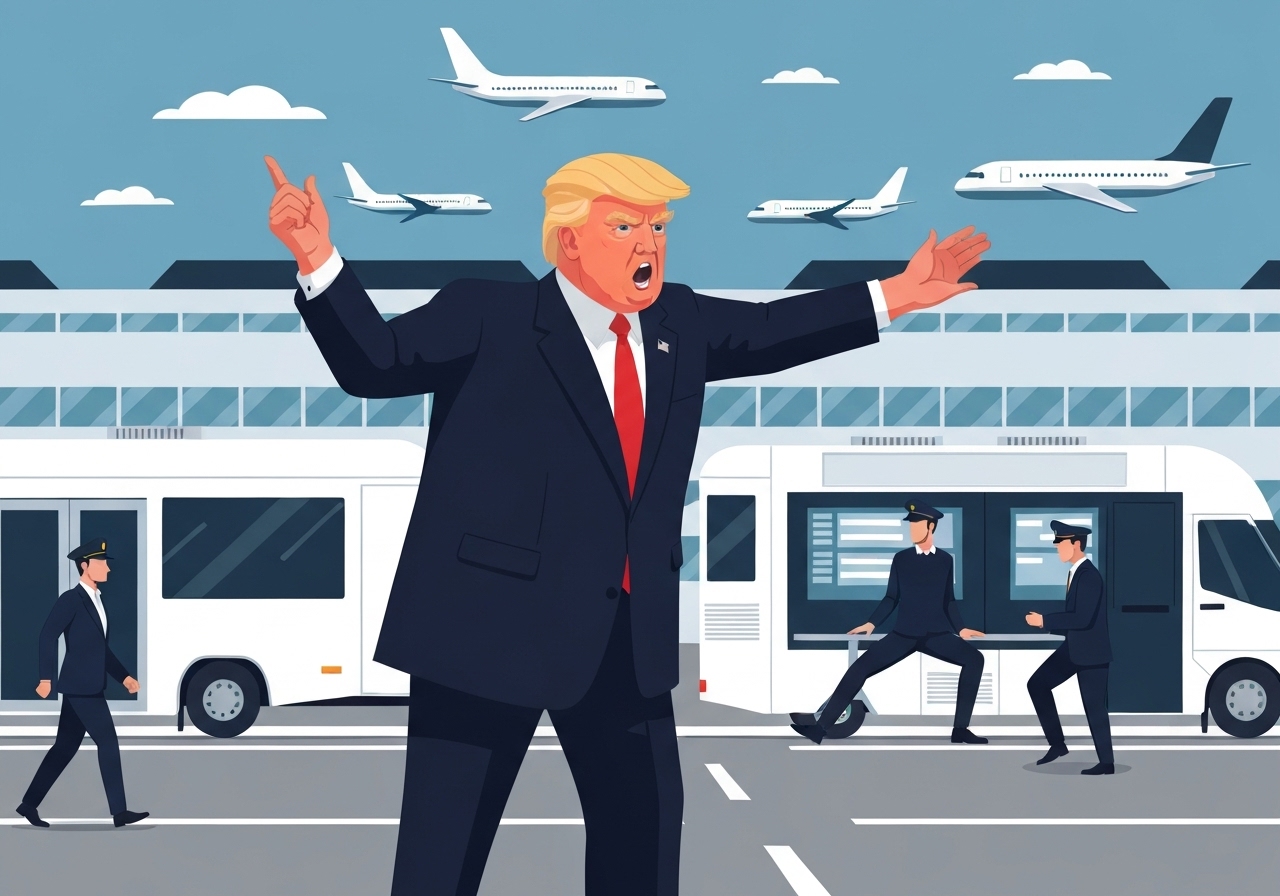
On 10 November, as the US government shutdown entered its 41st day, President Donald Trump publicly urged air traffic controllers to “get back to work,” after widespread cancellations and delays disrupted airports nationwide. Federal Aviation Administration (FAA) limits have already reduced flight capacity at major hubs, contributing to thousands of delays and nearly two thousand cancellations. Lawmakers in the Senate advanced a short-term funding proposal that would reopen the government for roughly 80 days, while the House and the White House consider next steps. The standoff has left many federal workers unpaid and travel plans uncertain as the Thanksgiving season approaches.
Key takeaways
- More than 6,000 US flights were delayed and nearly 2,000 cancelled on the day of reporting, according to aviation trackers and industry statements.
- The FAA began capping domestic flights at 40 busy airports, cutting capacity from 4% initially and planning increases to 6%, 8% and up to 10% under its schedule.
- The shutdown began on 1 October; about 1.4 million federal employees are affected, with many — including many air traffic controllers — working without pay or furloughed.
- A short-term Senate-backed funding measure cleared a 60-vote procedural hurdle and would reopen the government for approximately 80 days, with automatic back pay for federal workers.
- Transportation Secretary Sean Duffy publicly supported the president’s call for controllers to report to duty and said he would work with Congress to “reward” those who continued working.
- NATCA union members and frontline controllers have described acute financial strain and staffing attrition, with some reports of rapid retirements and increased sick calls.
- The proposed stopgap deal includes a December vote on extending health insurance subsidies tied to the Affordable Care Act, a key point for some Democrats.
Background
The current funding impasse began on 1 October when Congress failed to pass a spending bill to keep the federal government operating past that date. Republicans control both chambers but lacked the 60 Senate votes needed to pass a full-year spending package, giving Democrats leverage in negotiations. Democrats sought protections and funding tied to healthcare programs, including restoring Medicaid cuts and extending Affordable Care Act subsidies for lower-income Americans.
As the shutdown stretched into its sixth week, consequences rippled across federal services: agencies furloughed staff, some essential workers remained on duty without pay, and programs such as SNAP food benefits faced funding uncertainty. The FAA, citing a thinning roster of controllers and safety considerations, moved to limit flights at the nation’s busiest airports — a policy that has direct, measurable impacts on airlines and passengers.
Main event
At a White House exchange on 10 November, President Trump was asked whether he approved a bipartisan Senate deal to reopen government. He said, “If it is the deal I have heard about … I would say so,” and asserted the deal would lead to reopening the country. Earlier the same day he admonished air traffic controllers on social media to “get back to work, now!” and suggested pay consequences for those who did not report.
The Senate moved a Republican-backed short-term funding measure forward after it attained the 60 votes required to overcome a filibuster. Senators anticipated additional votes on amendments — including an agriculture-related hemp provision — before a final passage vote hoped for that evening. If passed by the House and signed by the president, the measure would restore government operations for about 80 days and provide back pay to affected federal employees.
On the ground at airports, the strain has been acute. The FAA’s directive to reduce flights at 40 major airports coincided with higher-than-usual sick callouts and retirements among controllers. Airlines reported widespread disruptions: one carrier logged roughly 1,400 cancellations and more than 57,000 minutes of delay tied to air traffic control issues, affecting nearly a quarter-million customers. Transportation officials warned disruptions could worsen in the run-up to Thanksgiving.
Analysis & implications
Operationally, trimming flights by single-digit percentages at major hubs cascades through the network, amplifying delays and increasing cancellations far beyond the nominal cut. Airlines operate tight schedules and limited slack; removing even a few flights forces rebookings, crew reassignments and gate congestion that persist for days. For passengers, the immediate effect is missed connections and longer travel times; for carriers it is increased costs and reputational damage.
From a safety perspective, controllers and industry experts stress that fatigue and financial stress are distractions that can degrade performance. Unpaid, stressed workforces facing childcare and mortgage pressures create conditions that unions warn are incompatible with optimal safety margins. The FAA’s caps are explicitly framed as a safety-preserving measure to match traffic to available staffing.
Politically, the episode heightens pressure on both parties. The short-term nature of the Senate proposal — an approximately 80-day reopening — means the underlying disputes, particularly over healthcare subsidies, remain unresolved. If the measure becomes law, lawmakers will face renewed deadlines in January, making this a postponement rather than a solution. Public frustration over travel disruptions, shuttered services and unpaid employees could reshape messaging and bargaining leverage on both sides.
Comparison & data
| Date/Period | FAA flight-cap reduction | Reported US delays/cancellations (sample day) |
|---|---|---|
| Initial week | 4% cap | ~5,000 delays / ~1,400 cancellations |
| Following days | 6% → 8% → up to 10% | Growth toward >6,000 delays and ~1,800–2,000 cancellations |
The FAA announced staged reductions intended to keep traffic within the capacity of available controllers, rising from an initial 4% cut to as much as 10% at peak. Aviation trackers logged several thousand delays and well under two thousand cancellations on successive days as these limits took effect; airline operational reports show millions of cumulative delay minutes attributable to air-traffic-control constraints. These figures underscore how modest percentage cuts at busy airports translate into substantial passenger disruption.
Reactions & quotes
Union and industry responses have been sharply critical about the human impact of unpaid work and staffing losses, while administration figures emphasized duty and continuity.
“That uncertainty and that financial strain is becoming unbearable … That fear creates a distraction that no air traffic controller should have to carry when we’re ensuring the safety of the flying public.”
Amy Lark, air traffic controller (NATCA)
Context: NATCA representatives and frontline controllers described missed paychecks, childcare and mortgage worries that contribute to higher sick-call rates and retirements, which the FAA cites as reasons for capacity limits.
“This is simply unacceptable, and everyone deserves better,”
David Seymour, Chief Operating Officer (American Airlines)
Context: Airline executives reported thousands of cancellations and tens of thousands of delay minutes tied to air-traffic-control shortages, urging a prompt resolution to restore normal operations.
“Air traffic controllers NEED to show up for work … I will work with Congress to reward your commitment.”
Sean Duffy, US Transportation Secretary
Context: The transportation secretary backed the president’s public admonition and signaled intent to seek legislative remedies for controllers who continued to work without pay.
Unconfirmed
- Whether the administration can legally impose immediate pay docking for air traffic controllers without formal rulemaking or contract processes is not established here and may require legal review.
- Daily retirement and sick-call rates cited by officials (for example, claims of 15–20 retirements per day) are derived from administration statements and have not been independently audited in this report.
- Projections that flight cuts will escalate exactly to 10% by a specified Friday follow FAA guidance but are contingent on staffing trends and possible policy changes by regulators or Congress.
Bottom line
The immediate driver of airport chaos is a staffing shortfall among air traffic controllers made acute by the shutdown: unpaid essential workers, rising retirements and increased sick calls forced the FAA to reduce flight schedules, producing thousands of passenger disruptions. A short-term Senate deal that reached procedural support would reopen government for roughly 80 days and guarantee back pay, but it delays rather than resolves core disputes over healthcare subsidies and longer-term appropriations.
Travelers should expect continued disruption into the busy Thanksgiving window unless Congress finalizes and the president signs funding quickly; airlines will bear both the operational and reputational costs of rolling cancellations. For policymakers, the episode highlights how funding lapses quickly ripple into transportation safety, critical services and everyday economic activity — making a temporary fix politically costly and a long-term agreement urgent.
Sources
- BBC Live: coverage of airport disruption and shutdown negotiations — (news live blog)
- Federal Aviation Administration — (official regulator)
- NATCA (National Air Traffic Controllers Association) — (labor union/official statements)
- FlightAware — (aviation tracking service)