
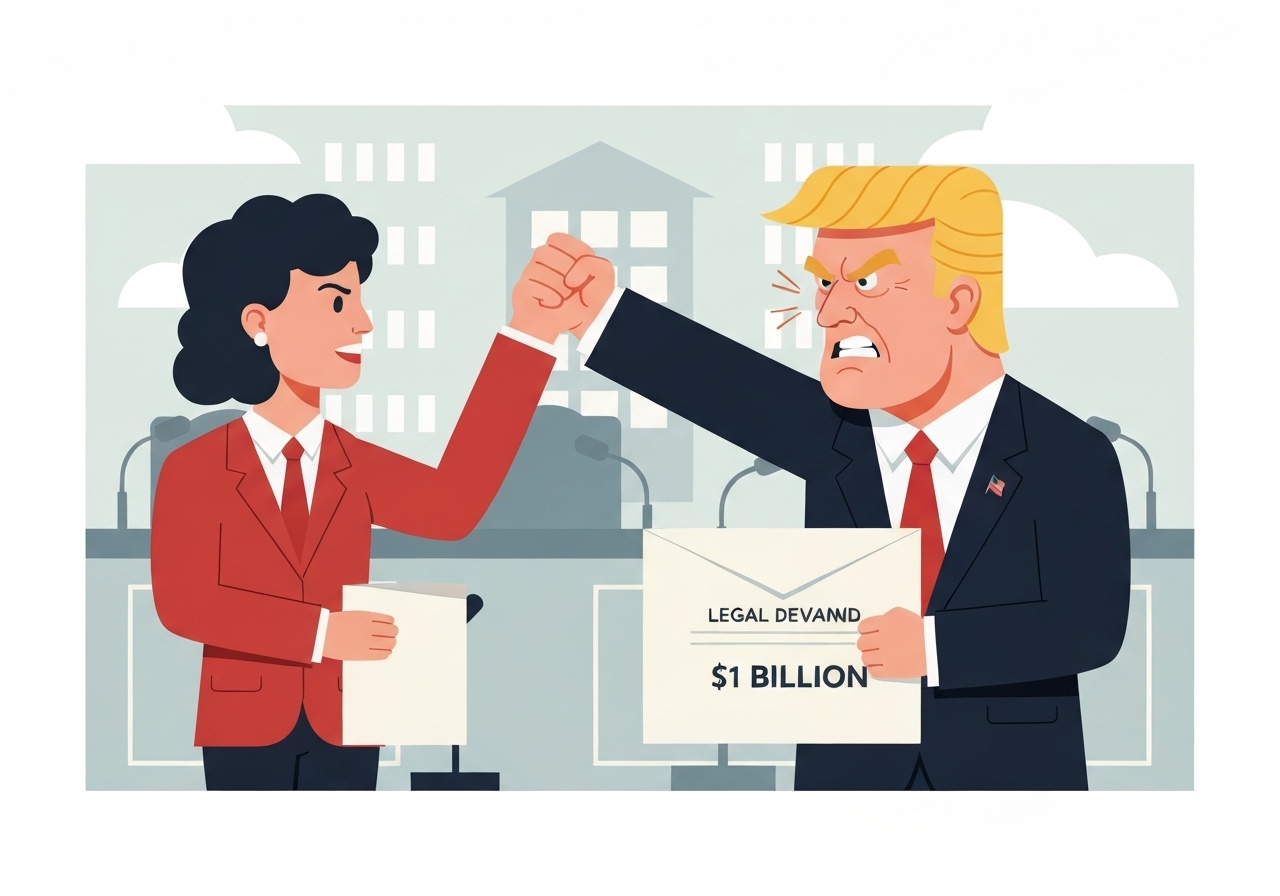
On , lawyers for former President Donald J. Trump delivered a legal warning to the BBC, saying edits in a Jan. 6 documentary were defamatory and demanding retraction, apology and compensation. The letter, sent by attorney Alejandro Brito, set a deadline of Friday at 5 p.m. Eastern and threatened at least $1,000,000,000 in damages if the broadcaster did not comply. The BBC removed the programme, titled “Trump: A Second Chance?”, from its online player and issued an apology for an “error in judgment,” while senior executives resigned amid the fallout. The threatened suit and high-profile resignations have intensified scrutiny of editorial practice and accountability at public broadcasters.
Key Takeaways
- A lawyer for Mr. Trump, Alejandro Brito, sent a letter on Nov. 10, 2025 demanding a full retraction, apology and compensation for edits in a Jan. 6 documentary.
- The letter set a response deadline of Friday at 5 p.m. Eastern and warned of a lawsuit seeking no less than $1,000,000,000 in damages.
- The documentary, “Trump: A Second Chance?”, was removed from the BBC’s online player after critics flagged allegedly misleading edits.
- BBC director-general Tim Davie and BBC News chief Deborah Turness resigned amid mounting pressure over the film’s editing decisions.
- The BBC posted an apology describing an “error in judgment” and acknowledged receiving a legal threat, saying it would respond in due course.
Background
The programme at the center of the dispute was broadcast by the BBC ahead of the U.S. presidential election in 2024 and later made available online. Critics alleged that the documentary included edits that altered the context of a speech Mr. Trump gave on Jan. 6, 2021, prompting questions about editorial oversight. The BBC is the United Kingdom’s public broadcaster, funded in part by a statutory licence fee and governed by editorial guidelines intended to protect impartiality. Accusations of misediting in politically sensitive coverage strike at those rules and risk reputational damage that can lead to leadership changes, as seen in this case.
Defamation claims by high-profile figures against news organisations are not new; they often hinge on whether an outlet acted with negligence or malicious intent when presenting contested material. In the U.K., libel and defamation law includes nuanced standards and potential defenses for broadcasters that can prolong disputes. The combination of a high-stakes U.S. political subject, a multibillion-dollar damages figure, and recent resignations has elevated the matter beyond a routine editorial correction to an event with institutional and diplomatic resonance.
Main Event
On Nov. 10, 2025, Mr. Trump’s legal team forwarded a written demand to the BBC asserting that the documentary contained “malicious, disparaging” edits to his Jan. 6 remarks and seeking remediation. The letter requested a full retraction, an apology and monetary payment described as appropriate compensation, and warned that failure to satisfy these demands would lead to litigation for at least $1 billion. The letter used emphatic language to set a firm deadline for a response by Friday at 5 p.m. Eastern.
Shortly after the controversy intensified, the BBC removed the programme from its online player. The broadcaster published an apology acknowledging an “error in judgment” in the film’s editing and said it had received the legal letter and would reply in due course. The sequence of events culminated in the resignations of Tim Davie, the BBC’s director-general, and Deborah Turness, chief executive of BBC News, who stepped down amid criticism of the corporation’s handling of the programme.
Those internal changes reflect both external political pressure and internal governance questions. Critics from multiple sides — including politicians, media analysts and participants in the film — called for accountability. The BBC’s actions and the lawyer’s legal threat mark opposing responses: one framed as corrective and managerial, the other as legal redress for reputational harm.
Analysis & Implications
The threatened $1 billion claim is as much a strategic lever as a valuation of damages. Large headline figures in demand letters can be intended to extract apologies, retractions or negotiated settlements without a full trial. In this instance, the leverage is amplified by the timing: the film addressed Jan. 6, a subject already politically volatile in both the U.S. and the U.K. The BBC now faces choices about whether to pursue settlement talks, litigate, or seek alternative dispute resolution.
For the BBC, the reputational cost may outlast any single legal outcome. As a publicly funded institution, the corporation answers to viewers and parliamentarians; resignations at senior levels suggest the affair has created political headaches in Westminster as well as reputational risk internationally. Longer-term consequences could include tighter editorial controls, external reviews of production processes, or even revisions to oversight mechanisms for politically sensitive programming.
For U.S.-U.K. relations the incident is unlikely to cause formal diplomatic rupture but it does risk creating friction in public discourse. A prolonged legal fight or high-profile settlement would attract global media attention, potentially prompting debate about press freedoms, responsibility in covering foreign political figures, and the limits of editorial interpretation. Other broadcasters and outlets may reassess how they handle archival footage and montage techniques in political documentaries.
Comparison & Data
| Item | Detail |
|---|---|
| Letter sent | Nov. 10, 2025 (Alejandro Brito) |
| Legal demand | Minimum $1,000,000,000 in damages |
| Programme | “Trump: A Second Chance?” — removed from online player |
| Resignations | Tim Davie (Director-General), Deborah Turness (BBC News CEO) |
The table summarises the key, confirmed data points available publicly. These items show the rapid sequence from legal threat to organisational change and the monetary scale of the claim, which is unusually large for editorial disputes involving individual programme edits.
Reactions & Quotes
Officials on both sides framed the dispute differently: Mr. Trump’s camp portrayed the edits as intentionally damaging to his reputation, while the BBC acknowledged a mistake and signalled an internal reckoning. Public commentary has ranged from calls for swift correction to defenses of editorial independence.
“PLEASE GOVERN YOURSELF ACCORDINGLY.”
Alejandro Brito, Attorney for Donald J. Trump (legal letter)
The lawyer’s forceful phrasing in the letter underscores the urgency and seriousness of the demand. The phrasing was presented in a formal demand letter obtained by news organisations and was paired with the $1 billion floor for claimed damages.
“An error in judgment”
BBC (public statement on programme)
The BBC’s short apology used the phrase above while the corporation removed the programme from its online player and acknowledged receipt of the legal notice. The statement prompted immediate questions about who authorized the final edit and how editorial safeguards were bypassed.
Unconfirmed
- Whether Mr. Trump’s team will actually file a lawsuit if the BBC issues a retraction or apology remains unclear.
- The precise internal decision-making trail that led to the contested edits has not been publicly documented or independently verified.
- No public timetable has been confirmed for any independent review of the BBC newsroom procedures beyond internal statements.
Bottom Line
This dispute combines editorial error claims with a high-stakes legal posture: a $1 billion demand, a firm deadline, and senior resignations at a major public broadcaster. The immediate practical outcomes will depend on whether the BBC pursues settlement, issues a fuller retraction, or defends its editorial choices in court.
For media organisations, the episode is a reminder that editorial shortcuts in politically charged stories can have consequences far beyond immediate criticism, triggering legal exposure, institutional upheaval, and sustained public debate about the standards that govern news and documentary production.
Sources
- The New York Times (news report)
- BBC News (broadcaster — official website / statements)