
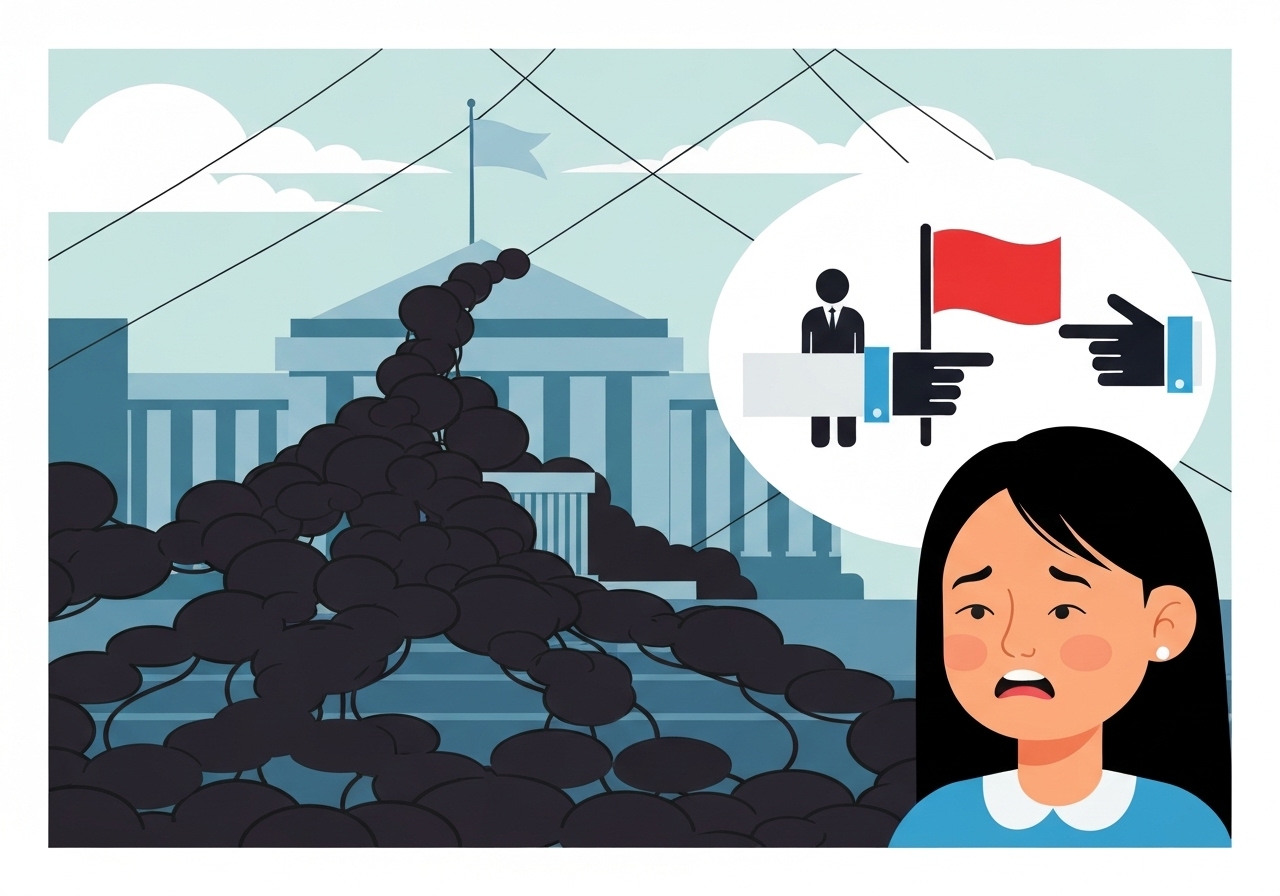
Over the past year the multinational pop group Katseye says it has been subject to a sustained campaign of online harassment, including thousands of death threats and one allegation that a member was reported to U.S. immigration authorities. The six-member act — formed through Geffen Records and HYBE’s The Debut: Dream Academy and launched publicly in 2023 — told the BBC the abuse escalated after several high-profile successes. Members say the volume and intensity of messages have required professional support: the group hired a group therapist in the summer to help cope with stress. One member, Lara Raj, who is of Tamil Indian background and an American citizen, says she was reported to Immigration and Customs Enforcement over claims about her residency status.
Key Takeaways
- Katseye say they have received thousands of threatening messages online since debuting in 2023; members describe the volume as psychologically overwhelming.
- One member, Lara Raj, reports being flagged to Immigration and Customs Enforcement for allegedly working and residing without authorization; the claim is underreported by authorities.
- The six-person group was assembled via Geffen Records and HYBE’s survival competition and documented on Netflix’s Pop Star Academy: Katseye.
- Since launching, the group earned a TikTok hit with “Touch,” performed at Lollapalooza, won an MTV Video Music Award, starred in a viral Gap ad set to Kelis’ “Milkshake,” and are on their first tour.
- Katseye is shortlisted for a Best New Artist Grammy next year, amplifying their exposure and the scrutiny they face.
- Members say online harassment includes ranking, appearance-based attacks, and organized waves of negative messages from fans and critics.
- To address mental-health impacts the group retained a group therapist over the summer; members stress fame’s emotional toll despite professional success.
Background
Katseye emerged from a cross-border talent pipeline run by Geffen Records and HYBE, with the final lineup revealed in 2023 after a televised survival contest. The group’s formation and early days were shown on Netflix’s Pop Star Academy: Katseye, a series that heightened audience attention and accelerated their rise. Their multinational composition — members from the U.S., South Korea, the Philippines, and Switzerland — was part of the group’s public identity and a selling point for global promotion. Rapid mainstream milestones followed: a viral track on TikTok, high-profile festival bookings, a commercial tie-in with Gap, and industry awards recognition that positioned them as a breakout act heading into the next awards season.
At the same time, the group’s visibility exposed them to new forms of online engagement and vitriol. Social platforms enabled fans to mobilize praise and criticism alike, but also opened channels for malicious behavior ranging from body-shaming to explicit threats. Members describe a culture of numerical judgement — fans assigning scores for looks and skill — that feeds sustained negative commentary. Management and members have publicly acknowledged both the benefits of wide exposure and the mental-health burdens that followed.
Main Event
In a recent BBC interview the six members described a series of harassment incidents that escalated after their public breakthrough. They reported receiving organized waves of hostile messages and direct threats; while the group did not publish a precise verified count, members said the volume reached thousands. Singer Lara Raj recounts being contacted by someone who filed a tip alleging she lacked legal work authorization; Raj said that report was sent to ICE. Rolling Stone and this report have sought comment from the Department of Homeland Security; at the time of publication DHS has not issued a public response.
The members emphasized the personal toll of the threats. One member said that even when a threat is unlikely to be acted on, the sheer number of messages creates constant anxiety and disrupts sleep and concentration. The group highlighted how social-media dynamics allow harassment to persist and amplify quickly, sometimes coordinated across platforms. They also described an experience of being publicly graded on appearance and talent in ways they find dehumanizing.
Management has taken steps to protect the group and respond to harassment, including legal review and hiring a therapist to support the members’ mental health. The group’s public schedule has continued — they remain on tour and are promoting singles and partnerships — but members say they are more cautious about engagement online. Public statements from Katseye emphasize that while they accept public exposure as part of their career, the severity of threats crossed a line into criminality and sustained psychological harm.
The alleged ICE report added a new dimension to concerns because it merged online harassment with possible official scrutiny. Raj, who is a U.S. citizen of Tamil Indian heritage, said the report accused her of working and residing in the United States without authorization. That claim, if acted upon by authorities, could have legal and reputational consequences; the group’s team says they are monitoring the situation and seeking clarification from authorities.
Analysis & Implications
Katseye’s experience illustrates a broader pattern where high-profile performers face amplified risks from social-media ecosystems. Viral success raises stakes: award nominations, festival slots, and commercial deals increase audience size and diversify the base of both supporters and detractors. For a multinational lineup, that exposure can intersect with xenophobia, nationality-based attacks, or targeted campaigns intended to intimidate particular members. The alleged ICE report exemplifies how harassment can attempt to trigger institutional mechanisms rather than only harrowing the individuals online.
The psychological and operational costs for artists are significant. Hiring a group therapist is a mitigation measure, but long-term resilience requires structural changes: stronger platform moderation, clearer reporting channels, and legal recourse when threats cross into intimidation or false reporting. Industry stakeholders — labels, promoters, and platforms — may be pushed to adopt proactive protections for emerging acts, especially those representing diverse backgrounds who may attract identity-based abuse.
There are also reputational and commercial implications. Brands and festivals that work with artists can face backlash when those artists become targets, and they may be pressured to take visible stances on safety and inclusion. Meanwhile, the publicity generated by harassment can be double-edged: it raises awareness of abuse but can also entrench harmful attention cycles. For Katseye specifically, the group’s future trajectory — Grammy campaigning, touring, and partnerships — will depend in part on how effectively management, platforms, and authorities respond to credible threats and false reports.
Comparison & Data
| Metric | Status / Year |
|---|---|
| Formation / Final lineup announced | 2023 |
| Members | 6 (U.S., South Korea, Philippines, Switzerland) |
| Notable milestones | TikTok hit “Touch,” Lollapalooza slot, MTV VMA win, Gap ad |
| Tour | First headline tour underway (2024) |
| Grammy | Best New Artist nominee for next year |
The table places recent milestones alongside the group’s formation timeline to show how quickly public exposure expanded after 2023. Rapid successes can translate into accelerated scrutiny; within roughly a year Katseye moved from televised competition contestants to mainstream festival stages and brand partnerships. That compresses development cycles and shortens the window for building protective infrastructure around new acts.
Reactions & Quotes
Members and observers framed the situation as both predictable in the age of social media and uniquely damaging in its intensity. Management described the group’s steps to document harassment and engage legal and mental-health support. Fans and artists have publicly expressed concern while advocacy groups point to the need for better platform enforcement.
“When thousands of people are sending violent messages, it stops being hypothetical — it becomes a daily weight on your mind,”
Lara Raj / Katseye, BBC interview
Raj’s comment, as relayed to the BBC, stressed the cumulative impact of repeated threats even when an individual message lacks immediate credibility. The group has not provided a public, platform-verified tally of every message but has described the pattern as sustained and targeted.
“It’s very terrorizing on the mind,”
Manon Bannerman / Katseye, BBC interview
Manon highlighted the mental-health consequences and the difficulty of performing under constant online pressure. The comment underscores members’ argument that fame’s psychological toll can outpace the tools available to address it.
“We knew being public came with scrutiny, but that doesn’t erase that we’re human,”
Sophia Laforteza / Katseye, BBC interview
Sophia’s remark was used to frame the group’s request for empathy and for platforms to treat harassment reports as serious. The members consistently call for accountability while acknowledging some level of public critique as inherent to celebrity.
Unconfirmed
- The precise number and contents of the death threats claimed by the group have not been independently verified with platform logs or law-enforcement releases.
- Whether the ICE referral concerning Lara Raj resulted in any formal investigation or action by DHS has not been confirmed by the agency.
- The degree to which harassment was coordinated across specific online communities or platforms has not been publicly documented.
Bottom Line
Katseye’s case is a clear example of how rapid fame in the streaming and social-media era can produce severe personal risks alongside commercial success. The group’s milestones — festival slots, awards, brand deals, and a Grammy shortlisting — increased their visibility but also exposed members to pronounced harassment patterns that have required mental-health and legal responses. Industry actors and platforms face renewed pressure to develop better safeguards for artists, especially acts with diverse, multinational rosters who may attract identity-based abuse.
For readers following the story, the key questions are whether platforms and authorities will provide timely remedies and whether the industry will standardize protections for emerging acts. The allegations about an ICE report highlight the potential for online harassment to spill into institutional channels, a development that merits careful verification and, if substantiated, swift remedial steps by the agencies and the group’s counsel.
Sources
- Rolling Stone (news report summarizing interviews and developments)
- BBC (news outlet; original interview with Katseye cited by rolling coverage)
- Associated Press (news agency; reporting on group’s diversity and public comments)
- U.S. Department of Homeland Security (official agency; sought for comment)