
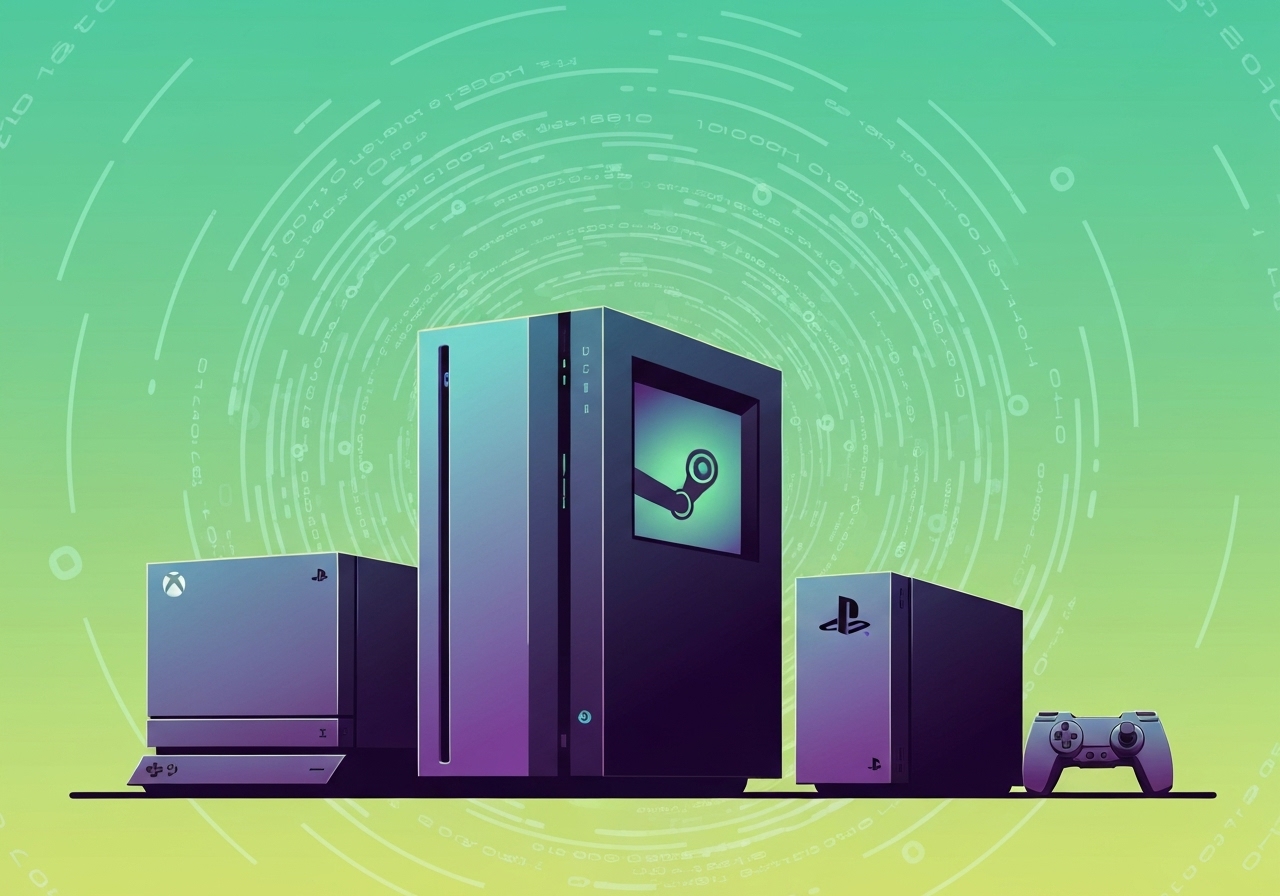
Valve has announced a new Steam Machine and a wireless Steam Frame VR headset, aiming to bring PC-grade gaming to the living room. The console, described as a compact 6-inch cube running Linux-based SteamOS and AMD graphics, is due on sale in early 2026; price and exact launch date have not been disclosed. Valve says the unit will support 4K resolution at 60 frames per second and will be marketed as a gaming-optimised PC for TV play. The company also framed the VR headset as a “streaming-first,” fully wireless device that applies high-quality rendering to the portions of the display the user is looking at.
Key Takeaways
- Valve revealed a new Steam Machine console and a wireless Steam Frame VR headset in a video announcement; both products are set for early 2026 release windows.
- The Steam Machine is a compact 6-inch cube powered by SteamOS (Linux-based) and AMD graphics, and Valve says it will run games at up to 4K/60fps.
- Valve positions the device as a PC optimized for living-room gaming, promising storefront compatibility checks so buyers know which Steam library titles will run.
- The Steam Frame headset is wireless, described as “streaming-first,” and uses selective high-fidelity rendering for where the user is looking (foveated-type approach).
- Valve previously released a 2014 Steam Machine lineup with base prices starting at $499 (£300); that generation failed to displace Nintendo, Xbox or PlayStation.
- Analysts say the new products target an enthusiast segment similar to the Steam Deck’s four-to-five million niche audience, rather than the mass market.
- Steam remains the world’s largest PC-game distribution platform; Valve reports about 25 million users online and six million playing concurrently at the time of the announcement.
Background
Valve introduced Steam in 2003 and over two decades has grown the platform into the dominant digital storefront for PC gaming. The firm first tried a console push with a 2014 Steam Machine initiative that offered several partner-made boxes; those devices aimed to bring PC games to TVs but failed to break the dominance of Nintendo, Microsoft and Sony. Early Steam Machine systems in 2014 started at roughly $499 (about £300), and the fragmented hardware approaches and unclear value proposition limited broad consumer uptake.
Console makers have shifted strategy since then. Microsoft has emphasised subscription and cloud services such as Game Pass, while Sony’s PlayStation 5 has maintained strong hardware sales despite questions about the timing of a next-generation follow-up. At the same time, Valve’s Steam Deck handheld demonstrated a viable enthusiast route for bringing PC libraries to different play environments—in that case, portable play—creating a precedent for a living-room orientated PC-console hybrid.
Main Event
In a video reveal, Valve described the new Steam Machine as “a powerful gaming PC in a small but mighty package,” highlighting the 6-inch cube form factor and internal AMD graphics. The company said the unit runs SteamOS, a Linux-based platform the firm controls, and that it will be able to certify which Steam storefront titles are compatible before purchase. Valve indicated support for 4K resolution at 60 frames per second, presenting the device as capable of matching living-room console performance while retaining a PC ecosystem.
The Steam Frame headset was unveiled alongside the console. Valve characterised it as a fully wireless, streaming-first headset that itself runs SteamOS; the firm emphasised a rendering approach that produces the highest graphical fidelity only in the part of the display the user is looking at, a technique intended to reduce bandwidth and processing needs while improving perceived quality. Valve framed the pair of devices as part of an effort to offer a seamless PC-to-TV experience without forcing users into traditional desktop hardware.
Valve did not announce pricing or precise regional availability, saying only that more details would come closer to the planned early-2026 on-sale timeframe. The company noted that further technical specifications and compatibility lists would be published nearer launch. Valve also pointed to its advantage in being able to validate title compatibility on its own digital storefront, arguing this reduces buyer uncertainty compared with general-purpose PCs.
Analysis & Implications
The new Steam Machine represents Valve’s attempt to occupy the middle ground between living-room consoles and traditional desktop PCs. By using SteamOS and controlling compatibility checks, Valve can present a curated PC experience tuned for TV play—potentially removing a common friction point for players who own large Steam libraries but find configuring PC-to-TV setups difficult. For existing Steam users, the device offers a way to bring familiar PC libraries to the couch without buying a separate gaming PC.
For the wider market the challenge is scale. Sony and Microsoft have entrenched hardware ecosystems, first-party titles and distribution channels; Valve lacks a large slate of must-have platform exclusives. As a result, industry observers expect the Steam Machine to appeal primarily to enthusiasts and current Steam customers rather than to convert mainstream console buyers. However, Valve’s close integration with its storefront and emphasis on certifying game compatibility could make the offering more practical for non-technical buyers than prior PC-to-TV attempts.
Economics will be decisive. The 2014 Steam Machine effort struggled in part because of inconsistent hardware and pricing that did not clearly undercut or outclass consoles. Valve’s new unit is described as delivering substantially more performance than the 2014 generation, and that likely means a higher price. If Valve prices the unit too high it may limit adoption to a lucrative niche; if it prices aggressively, it risks compressing margins and inviting direct competition from console makers and PC vendors alike.
Comparison & Data
| Product | Year | Notable Specs | Market position |
|---|---|---|---|
| Steam Machine (first wave) | 2014 | Partner boxes; base price ~$499 (≈£300) | Fragmented; limited uptake |
| Steam Machine (2026 model) | 2026 | 6-inch cube, SteamOS, AMD graphics, 4K/60fps (price TBA) | Target: living-room PC gamers / enthusiasts |
| Steam Deck | 2021 | Handheld PC, niche audience ~4–5m players (industry est.) | Strong among existing Steam customers |
The table compares the 2014 Steam Machine initiative, the new 2026 device, and Valve’s Steam Deck handheld. Valve’s current strategy appears to mirror the Deck’s focus on an enthusiast base while leveraging Steam’s large user population: Valve reports around 25 million Steam users online and roughly six million concurrent players at the time of the announcement. That installed base gives Valve an addressable audience for a premium living-room PC, though that audience is only a fraction of total console owners worldwide.
Reactions & Quotes
Industry analysts offered cautious endorsement of Valve’s timing and positioning, noting market trends such as diminished first-party exclusivity and the growth of game streaming.
“This launch shows Valve understands where gaming is heading and what players want,”
Brandon Sutton, Midia Research (industry analyst)
Sutton framed the device as complementary to trends like subscription services and streaming, which have loosened the historical link between exclusive titles and hardware sales. Another analyst compared potential uptake to the Steam Deck’s niche but lucrative audience.
“Expect a similar enthusiast-focused audience to the Deck—valuable but not mass-market,”
Christopher Dring, Industry Expert
Valve emphasised compatibility and user experience in its own messaging, arguing that being able to declare which Steam titles will run on the box reduces buyer risk compared with general-purpose PCs.
“A small but mighty PC for the living room — we will say which games on Steam are supported,”
Valve (official video announcement)
Unconfirmed
- Exact retail price for the Steam Machine has not been announced; any suggested figures remain speculative until Valve publishes pricing.
- Precise global availability and regional launch dates are unconfirmed; Valve has only specified an early-2026 on-sale window.
- Details on controller options, accessory pricing, and whether major triple-A publishers will certify titles for the device have not been released.
Bottom Line
Valve’s 2026 Steam Machine and Steam Frame headset mark a deliberate push to make PC libraries more accessible in the living room and to advance VR with wireless, streaming-centric hardware. The products lean on Valve’s control of SteamOS and its enormous user base to offer a tuned experience that reduces buyer uncertainty about game compatibility. However, without platform-exclusive franchises and with potential premium pricing, the new Steam Machine is most likely to appeal initially to current Steam customers and enthusiast gamers rather than to unseat Xbox or PlayStation in the mainstream console market.
Investors, developers and consumers should watch pricing, regional availability and third-party developer support as the clearest signals of whether Valve can expand beyond a lucrative niche into a broader market presence. Valve has preserved the timeline to early 2026 for sale, and it will publish further technical and commercial details before that date.