
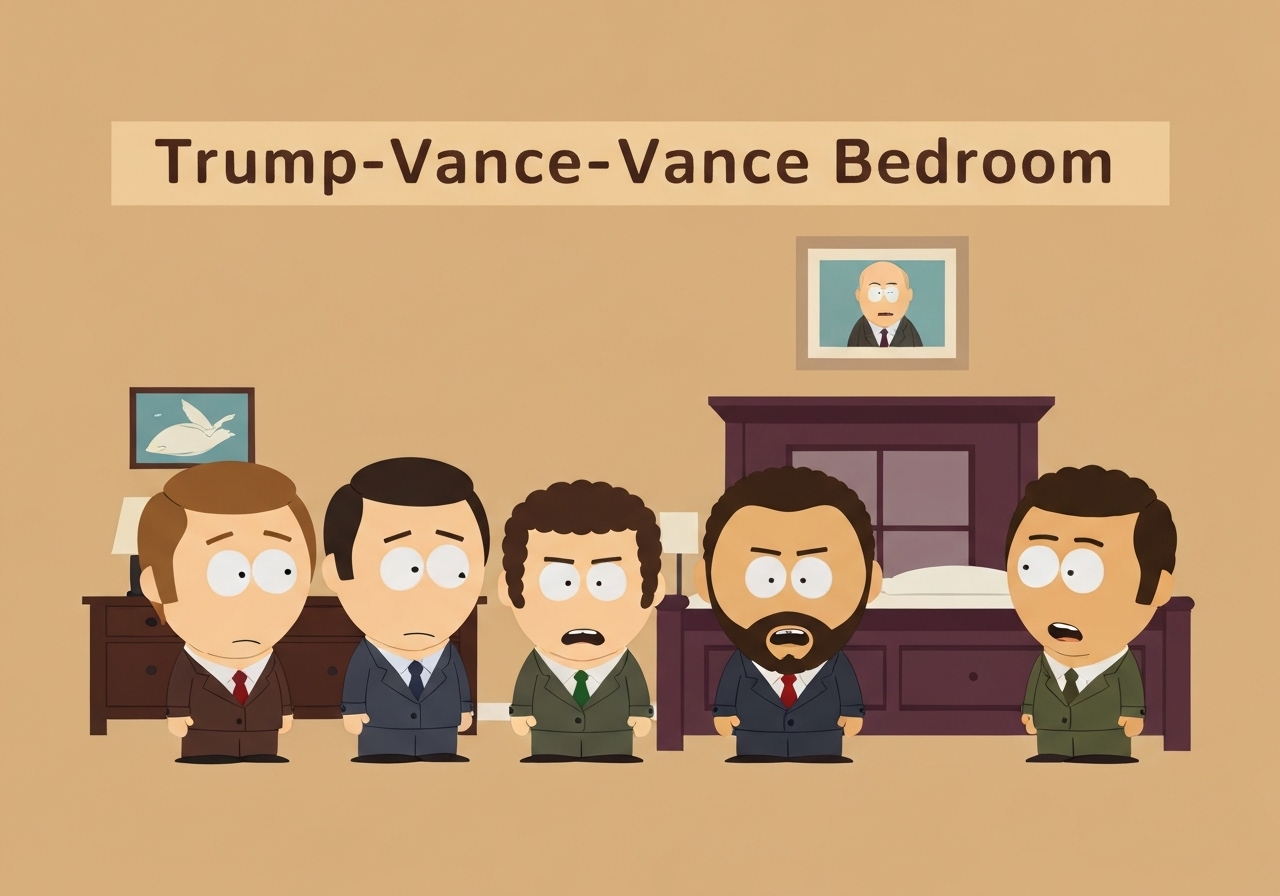
— South Park’s latest episode, “Sora Not Sorry,” prompted a wave of online shock after depicting a graphic bedroom sequence involving a cartoon President Donald Trump and Vice President JD Vance. The episode, which also threads a deepfake/AI plotline through South Park Elementary, cut from a hot-tub gag into an explicit bedroom bit set to Foreigner’s “I Want to Know What Love Is.” Fans on X reacted with horror and incredulity, while commentators and the show’s creators have framed the segment as part of South Park’s broader turn toward political satire this season.
- Episode and date: “Sora Not Sorry,” aired in November 2025; the segment showing Trump and JD Vance moving from a hot tub to a bedroom generated the largest social buzz of the episode.
- Soundtrack: The bedroom scene is scored with Foreigner’s “I Want to Know What Love Is,” which many viewers cited as heightening the surreal tone.
- Parallel plot: A separate storyline in the episode centers on an AI deepfake crisis at South Park Elementary involving Butters and Detective Harris.
- Social reaction: Multiple X users posted shocked responses such as “Thanks for the nightmares,” and “I can’t unsee that,” producing a rapid cascade of shares and reaction GIFs.
- Creators’ stance: Trey Parker and Matt Stone recently discussed rising political themes and new taboos in an interview with The New York Times, saying politics has become pop culture and that they follow taboos where they find them.
- Comparative note: Some viewers compared the sequence to past controversial satirical moments—one commenter said it upstaged the puppet-sex gag in Team America.
- Platform visibility: A screenshot shared by South Park’s official account amplified responses and drew renewed attention on X.
Background
South Park has long blended crude humor with topical satire, and the show’s current season has leaned more visibly into political targets aligned with the MAGA movement. The creators, Trey Parker and Matt Stone, have publicly acknowledged that their interest follows cultural taboos; they recently told The New York Times that they are drawn to areas where speech is treated as forbidden or risky. That stance helps explain why the series is doubling down on high-risk political parody as part of its storytelling strategy.
The new episode pairs two threads: a tech-focused story about AI-driven deepfakes at the local elementary school and a Washington-centered plotline lampooning national figures. The dual narrative is consistent with South Park’s long habit of intersecting small-town antics and national satire, using exaggerated set pieces to force viewers to confront the underlying topics—here, emergent AI harms and the theatricality of contemporary politics.
Main Event
In “Sora Not Sorry,” the Washington storyline follows a cartoon President Trump and Vice President JD Vance as they confront a bizarre household problem tied to Trump’s mythicized relationship with Satan in the show’s continuity. The pair are first shown in a hot tub gag before the sequence shifts to the bedroom, where explicit sound design and an emblematic power-ballad cue the scene’s intent to shock and unsettle viewers. The episode does not depict real sexual content but uses animated exaggeration and suggestive audio to create an intentionally grotesque image.
Concurrent to that, the Colorado subplot shows students and faculty at South Park Elementary grappling with a deepfake epidemic that distorts identities and fuels social panic. Butters and Detective Harris drive much of that plotline, which the episode uses to comment on the fragility of trust in an AI-saturated media environment. The juxtaposition—personal bodily-humiliation in Washington and technological identity-humiliation in Colorado—is a deliberate storytelling choice to link individual and societal anxieties.
Social reactions accelerated after South Park’s official account posted a screenshot from the hot-tub-to-bedroom sequence. On X, several users shared short-form reactions and GIFs; one comment directly compared the gag to the explicit puppet-sex punchline in the 2004 film Team America. The immediate online response mixed dismay, amusement, and debate over whether the scene crossed a line or fulfilled South Park’s role as boundary-pushing satire.
Analysis & Implications
Satire that targets real political figures has long walked the line between provocation and backlash. South Park’s explicit depiction of elected officials in compromising, absurdist scenes is in keeping with its longstanding aesthetic, but optics matter: the scene’s vividness and musical underscoring intensified emotional responses and heightened the likelihood of viral spread. For media platforms, that virality raises questions about moderation thresholds, advertiser sensitivity, and the calculus of hosting provocative content.
The episode’s pairing of a political ribaldry set piece with a storyline about AI deepfakes also points to a larger cultural anxiogenesis—audiences are simultaneously worried about powerful actors and about technological manipulation of reality. By combining those anxieties into adjacent plot threads, the show amplifies a broader social conversation about accountability, misinformation, and the ethical limits of satire when deepfakes can now create convincing false images at scale.
From a commercial standpoint, the segment could invite scrutiny from streaming platforms, corporate partners, or parent companies sensitive to brand risk. Historically, South Park has weathered advertiser discomfort and platform friction by leaning on free-speech and creative-defense arguments, but evolving corporate standards—especially around depictions of public figures and AI—may alter the balance. Politically, the scene is likely to be absorbed into ongoing culture-war narratives about decency, media responsibility, and the role of comedy in confronting power.
Comparison & Data
| Work | Year | Notable Reaction |
|---|---|---|
| “Cartoon Wars” (South Park) | 2006 | High-profile controversy over depiction of religious figures and network decisions |
| Team America: World Police | 2004 | Noted for explicit puppet-sex gag that remains a cultural reference |
| “Sora Not Sorry” (South Park) | 2025 | Viral social reaction focused on an explicit Trump–Vance bedroom sequence and AI deepfake subplot |
The table above situates the new episode within a lineage of satirical works that provoked public debate. While the nature of controversy shifts—religious sensitivity in 2006, broader shock humor in 2004, and now AI-age political parody in 2025—the pattern is consistent: boundary-pushing satire generates intense public conversation and tests platform and corporate tolerance.
Reactions & Quotes
Public reaction on social platforms was swift and visceral; many users posted brief, outraged takes and reaction GIFs. The tone ranged from humor to disgust, with some viewers praising the creators’ audacity and others calling the imagery unnecessary.
“Thanks for the nightmares I’m gonna have tonight South Park.”
X user (public reaction)
The quote above exemplifies the shock-and-humor responses circulating on X immediately after the episode aired; such short-form posts helped the scene trend quickly. Another common response was directness about the image’s permanence in memory.
“OMG I can’t unsee that.”
X user (public reaction)
On the creators’ perspective, Parker and Stone framed their approach as following cultural taboos. In a recent interview referenced by multiple outlets, they described politics as an increasingly dominant source of material.
“It’s not that we got all political… It’s that politics became pop culture.”
Trey Parker, interview with The New York Times
Stone also commented on the allure of taboo subjects as content fodder.
“New taboos emerged amid a fear of speaking out… That’s where the taboo is? Over there? OK, then we’re over there.”
Matt Stone, interview with The New York Times
Unconfirmed
- Whether corporate executives have formally warned the creators about this episode’s content is not publicly confirmed and remains speculative.
- Claims of advertiser pullouts tied specifically to the bedroom scene have not been substantiated at the time of writing.
- Any private takedown requests or legal challenges related to the episode have not been reported publicly.
Bottom Line
South Park’s “Sora Not Sorry” is a deliberate provocation that ties explicit physical satire to a contemporaneous AI deepfake storyline. The Trump–Vance bedroom sequence did not occur in isolation; it is part of the show’s broader strategy of courting controversy to spark discussion about power, taboo, and technology. For viewers, the episode functions both as a shock gag and as a prompt to consider the intersections between media spectacle and emerging technological harms.
Going forward, expect continued debate over the boundaries of satire in an era when image manipulation is both more accessible and more believable. Platforms, advertisers, and audiences will all play roles in shaping how much latitude creators retain for such depictions—and whether similar sequences provoke policy responses or shifts in distribution practices.