
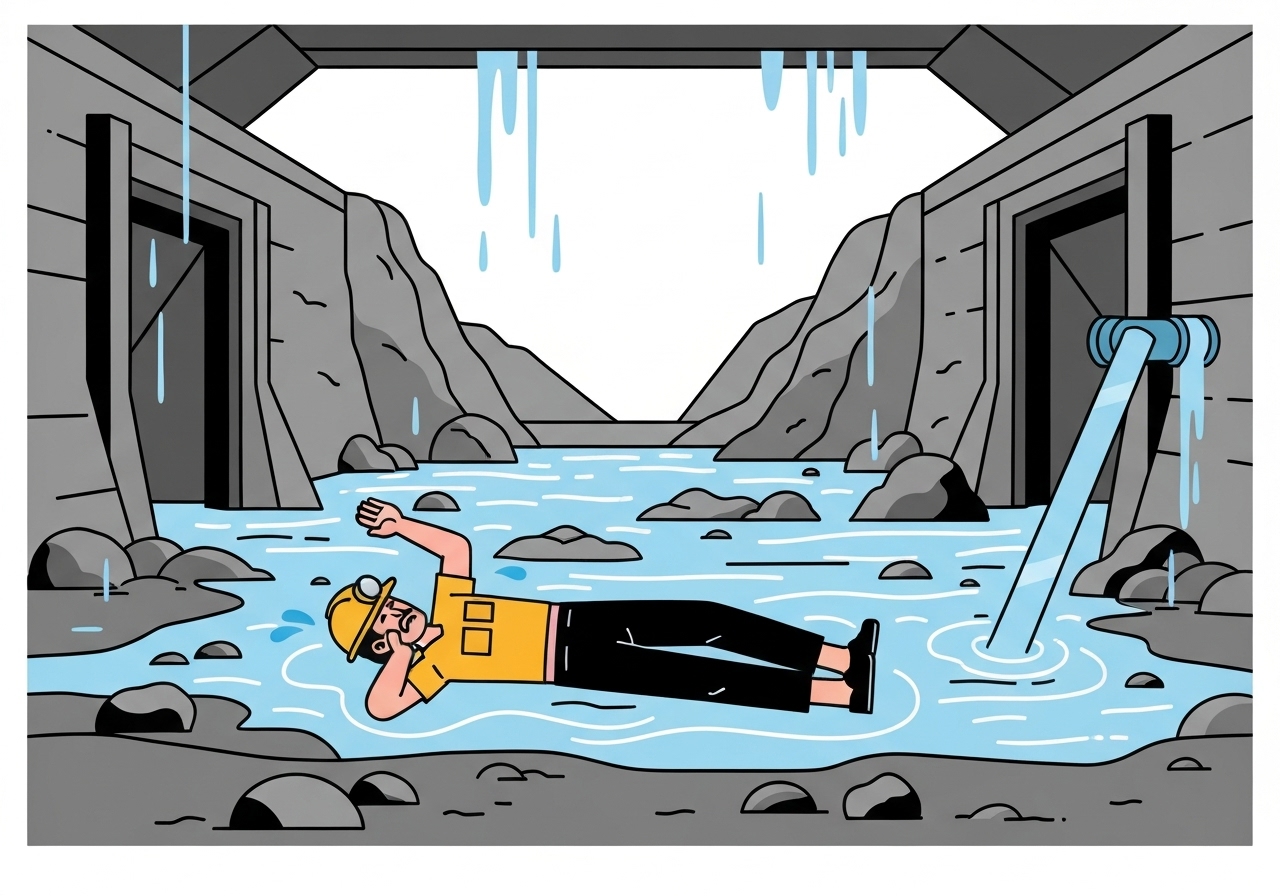
Lead: A miner who went missing after a sudden inundation at the Rolling Thunder Mine in Nicholas County, West Virginia, was found dead on Thursday, Nov. 13, 2025, Gov. Patrick Morissey announced. The man was identified by state and company officials as 42-year-old foreman Steve Lipscomb of Elkview. Crews reached his body shortly after 7:30 a.m. local time once water levels receded enough to allow safe entry. The discovery ends a multiday, around-the-clock recovery effort that followed a massive inflow of water on Saturday.
Key Takeaways
- Missing miner identified as Steve Lipscomb, 42, from Elkview, West Virginia; found deceased on Nov. 13, 2025, at about 7:30 a.m. local time.
- Incident occurred at Rolling Thunder Mine in Nicholas County during routine operations on Saturday; Lipscomb was part of a 17-person crew.
- Company and officials report a sudden, substantial inflow of water after the crew struck a pocket of water; all other miners escaped and were accounted for.
- Rescue operations included dive teams, heavy pumping and tunneling; by Tuesday crews were pumping about 6,000 gallons per minute and had removed millions of gallons overall.
- Authorities say Lipscomb was believed to have prioritized helping co-workers escape and became trapped roughly three-quarters of a mile into the mine complex.
- Alpha Metallurgical Resources (the mine operator) and state officials praised the search teams’ efforts and offered condolences to the family.
- Safety and investigation steps are expected to follow; immediate causes of the water pocket and whether equipment or procedural failures contributed remain under review.
Background
The Rolling Thunder Mine, located in Nicholas County, operates under Alpha Metallurgical Resources, which employs local crews including foremen like Steve Lipscomb, who joined the company in 2006. Underground coal mining carries known hazards including sudden water inflows when operations intersect old works, aquifers or voids. Mines generally maintain pumps, seals and emergency evacuation protocols, but unexpected hydrogeologic conditions can overwhelm systems in minutes.
Federal and state regulators have long monitored West Virginia coal operations for safety compliance after a history of fatal incidents and flooding events in the industry. Local mining communities depend on the sector for jobs while also pressing for stricter safety measures; foremen are often responsible both for production targets and for crew safety underground. That tension can shape both routine operations and responses when emergencies occur.
Main Event
Officials say the flood began Saturday afternoon when the crew struck a hidden pocket of water inside the mine. The resulting rush of water forced an immediate evacuation; all other miners exited the tunnels and were accounted for, but Lipscomb did not emerge. Company and local officials launched a search-and-rescue operation that continued for days.
Search efforts combined multiple strategies: dive teams entered flooded sections when feasible, pumps evacuated water from accessible passages, and crews drilled and tunneled toward suspected locations. Harsh underground conditions and the scale of inundation limited safe on-foot searches for several days, officials said.
By Tuesday, authorities reported pumping at roughly 6,000 gallons per minute while noting that millions of gallons had already been removed from the complex. As water levels fell, teams were able to access previously submerged sections; early Thursday morning the recovery teams entered and located Lipscomb’s body shortly after 7:30 a.m.
Governor Patrick Morissey and Alpha Metallurgical Resources released statements expressing devastation and sympathy. Company officials said Lipscomb had been a dedicated employee and that he was last seen attempting to ensure his crew’s safety. Local rescuers and specialized contractors worked 12-hour shifts around the clock during the operation.
Analysis & Implications
The finding of Lipscomb’s body concludes the immediate search phase but raises questions about geologic risk assessment and emergency preparedness at the Rolling Thunder Mine. Sudden inflows typically prompt regulatory review to determine whether mapping of old workings, water management plans or hydrologic monitoring were adequate. Investigators will examine logs, sensors, and crew reports to understand what allowed the pocket of water to remain unrecognized.
For the operator, Alpha Metallurgical Resources, the human loss will bring scrutiny from both regulators and the public. The company’s response — speed of rescue mobilization, transparency in reporting and cooperation with state investigators — will shape short-term reputational and regulatory outcomes. Potential civil and administrative actions could follow depending on findings.
At the community level, the death of a long-serving foreman may renew calls for improved safety investments and for broader oversight of mining practices. Economically, mines are vital to local employment, which complicates policy debates: stronger safeguards can entail higher operating costs but also reduce catastrophic risk to workers.
Internationally or across U.S. mining jurisdictions, this incident reinforces persistent vulnerabilities in underground coal operations where water hazards exist. Industry groups may revisit guidance, and insurers and lenders could reassess exposures tied to mines with complex hydrogeology.
Comparison & Data
| Timeline | Action | Noted Rate/Detail |
|---|---|---|
| Saturday, initial incident | Sudden inflow of water encountered during routine operations | 17-person crew; Lipscomb missing |
| By Tuesday | Continuous pumping and dewatering | ~6,000 gallons per minute; millions of gallons removed |
| Thursday, Nov. 13, 2025 | Teams accessed receded tunnels and located missing miner | Body discovered just after 7:30 a.m. local time |
The table above condenses reported milestones and operational metrics from the multi-day response. Pumping rates and total volumes removed are key indicators of the scale of dewatering needed to render sections safe for entry; investigators will compare these figures to design capacities and response plans.
Reactions & Quotes
State leadership framed the discovery as a heartbreaking end to a strenuous search effort, praising rescue crews and offering condolences to the family. Officials emphasized continuing investigations while recognizing the toll on the community.
“This morning’s news is absolutely heartbreaking… Denise and I are devastated to learn of the loss of Mr. Lipscomb, and we are praying for his family, friends, and co-workers during this difficult time.”
Gov. Patrick Morissey (statement)
Alpha Metallurgical Resources highlighted Lipscomb’s long service and said his actions to help others were heroic, while promising support for the family and cooperation with authorities. Company leaders also commended the search teams’ professionalism.
“Steve joined our company in 2006 and was a dedicated employee, respected leader and friend to many… His actions to ensure the safety of his crew members were heroic.”
Andy Eidson, CEO, Alpha Metallurgical Resources (company statement)
Local officials described the technical and human challenges of navigating flooded, unstable tunnels and noted the coordinated multi-agency response. Emergency teams and contractors worked extended shifts to lower water and reach submerged sections.
Unconfirmed
- Precise geologic cause of the water pocket (whether from an old worked-out seam, natural aquifer, or other source) remains under investigation and has not been publicly confirmed.
- Whether any specific equipment failure or procedural lapse directly contributed to the inflow has not been established pending regulatory review.
- The exact position of Lipscomb relative to recorded mine plans (beyond the reported estimate of roughly three-quarters of a mile into the complex) awaits confirmation from formal incident mapping.
Bottom Line
The recovery of Steve Lipscomb ends a multi-day search but begins a new phase of investigation and community reckoning. Authorities and the operator have signaled cooperation and sympathy, but technical inquiries will be necessary to determine how an avoidable or previously unrecognized hazard led to the deadly inflow.
For local stakeholders and the wider mining sector, the incident underscores the persistent risk posed by underground water and the importance of conservative planning, robust monitoring, and rapid emergency response. Observers should watch for regulator findings and any operational changes at Rolling Thunder Mine that follow.