
Lead
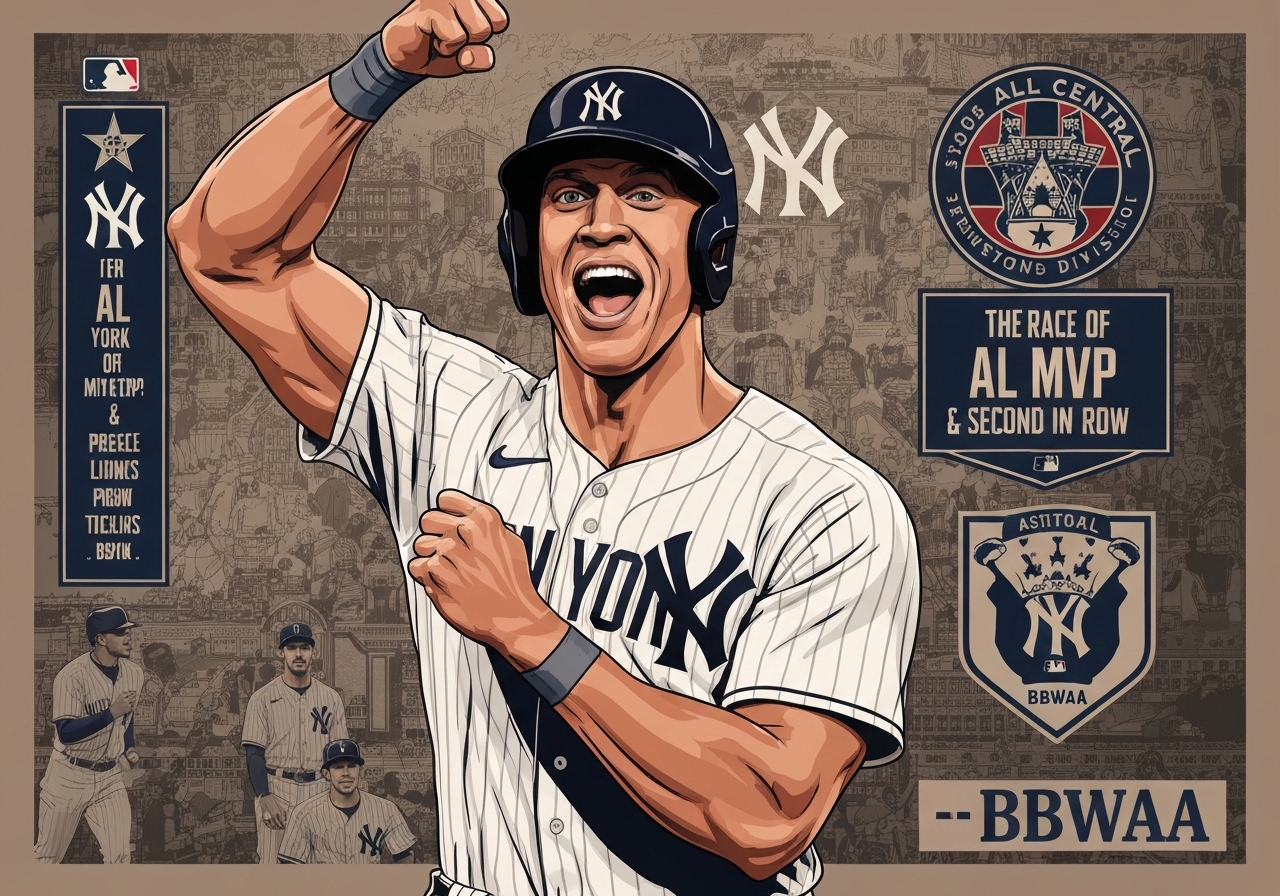
Aaron Judge of the New York Yankees has been named the 2025 American League Most Valuable Player, claiming his third career AL MVP and his second consecutive award after a razor-thin vote against Seattle Mariners catcher Cal Raleigh. Judge received 17 first-place votes to Raleigh’s 13, the smallest margin in an AL race since 2019. The balloting was conducted by the Baseball Writers’ Association of America and completed before the postseason, using the established point system for ranked ballots. The result cements Judge among the small group of players with three or more MVP trophies.
Key takeaways
- Aaron Judge won the 2025 AL MVP with a 17‑to‑13 advantage in first‑place votes over Cal Raleigh.
- This is Judge’s second straight AL MVP and his third overall, making him the 13th player with at least three MVPs.
- The margin was the closest since 2019 (Mike Trout over Alex Bregman by the same first‑place margin).
- Judge, Raleigh, José Ramírez and Bobby Witt Jr. appeared on every BBWAA ballot this year.
- The Yankees now have 23 BBWAA MVP winners — the most of any franchise dating to 1931.
- Ballots were cast by two writers in each league city and tallied with a points system that gives 14 points for a first‑place vote, 9 for second, 8 for third down to 1 for tenth.
- Judge’s 2025 award marks the 20th instance of back‑to‑back MVP winners in BBWAA history.
Background
The BBWAA MVP has been awarded since the 1930s and is decided by local beat writers representing each league city. In 2025, voting again followed the longtime BBWAA format: two voters per city submit ranked ballots prior to postseason play, and a weighted points system converts those rankings into the final standings. That method produces outcomes that reward both dominance on individual ballots and widespread placement across ballots.
Aaron Judge first won the AL MVP in 2022 and added another in 2024; his 2025 victory places him among elite multiple‑winner company. Historically, only a handful of players have reached three or more MVPs — names listed across both leagues include Jimmie Foxx, Joe DiMaggio, Yogi Berra, Mickey Mantle, Alex Rodriguez, Mike Trout in the AL, and Stan Musial, Mike Schmidt and Albert Pujols in the NL, among others. Barry Bonds holds the overall record with seven MVPs in the National League.
Main event
The vote concluded with Judge earning 17 first‑place votes and Cal Raleigh taking 13. That first‑place margin made this the tightest AL MVP decision since the 2019 race, which also finished with a 17‑13 split for firsts. Although first‑place tallies were narrow, the overall points tabulation under the BBWAA system produced the official ranking that awarded Judge the trophy.
Judge’s third MVP is also notable for positional context: he has been primarily a right fielder in 2025 after winning earlier awards while listed largely as a center fielder. The award is the 23rd MVP in franchise history for the New York Yankees, the highest total for any single club in BBWAA voting since 1931. For the Mariners, Raleigh’s runner‑up finish is the third time a Seattle player finished second in BBWAA MVP voting.
José Ramírez of Cleveland finished third in the voting, mirroring his third‑place showings from 2017 and 2018; he was previously the runner‑up in 2020. Bobby Witt Jr. and other regulars rounded out the top tier and, like Judge and Raleigh, appeared on every ballot. Ballots were submitted ahead of postseason play and compiled according to the points scheme that assigns 14 points for first place, 9 for second and then 8 through 1 for third through tenth.
Analysis & implications
Judge’s consecutive awards strengthen his case for long‑term recognition — Hall of Fame consideration and legacy discussion will now factor in three MVPs and multiple peak seasons. Historically, getting three MVPs places a player in a distinct elite category; while Hall voting considers more than awards alone, repeated MVP honors are a major credential. For the Yankees, the trophy underscores the club’s continued ability to feature marquee, award‑winning performers.
For the Mariners and Cal Raleigh, the runner‑up finish highlights Seattle’s rising profile in individual awards voting and the value of Raleigh’s season behind the plate. A close second in MVP voting can raise a player’s market stature and solidify his standing within the franchise, even if it does not carry the same historical cachet as winning.
At the league level, the narrow result illustrates how voter preferences and ballot placement shape outcomes more than a single statistic. The BBWAA system balances concentrated first‑place support with broad multi‑ballot recognition; as a result, marginal differences in where players land on many ballots can determine the winner in tight races. That dynamic repeatedly surfaces in modern MVP debates and will shape how candidates are presented to voters in coming seasons.
Comparison & data
| Player | First‑place votes |
|---|---|
| Aaron Judge (Yankees) | 17 |
| Cal Raleigh (Mariners) | 13 |
| Other notable multi‑ballot players (Ramírez, Witt Jr.) | Named on every ballot |
This summary table focuses on the clearest numeric takeaway from the release: the 17–13 split in first‑place votes. The BBWAA point conversion (14 for first, 9 for second, 8–1 for subsequent places) produces the final point totals but can mask how close first‑place votes were between top candidates.
Reactions & quotes
Official and public reactions were immediate in the hours after the BBWAA published results. The BBWAA release spelled out the balloting process and timing, underscoring the procedural basis for the outcome.
“Ballots, submitted before the postseason, were cast by two writers in each league city.”
BBWAA (official release)
“They are tabulated on a system that rewards 14 points for first place, nine for second, eight for third on down to one for 10th.”
BBWAA (official release)
Unconfirmed
- Any immediate effect of Judge’s award on contract negotiations or team payroll plans has not been confirmed by the Yankees and remains speculative.
- Claims that the close margin will prompt a change in BBWAA voting rules are unverified; no formal proposals have been announced.
Bottom line
Aaron Judge’s 2025 AL MVP — his third overall and second straight — is both a personal milestone and a reminder of how narrow modern award races can be. The 17‑to‑13 first‑place split showed that elite seasons can be judged differently by voters, and that small differences in ballot placement can determine a trophy.
For the Yankees, the award reinforces the franchise’s long history of MVP winners and keeps Judge in the conversation among the era’s most decorated position players. For the Mariners and Cal Raleigh, the runner‑up nod signals growing recognition for Seattle players in national awards voting. Fans and analysts will be watching whether this momentum influences offseason decisions, Hall‑of‑Fame narratives and future BBWAA ballots.