
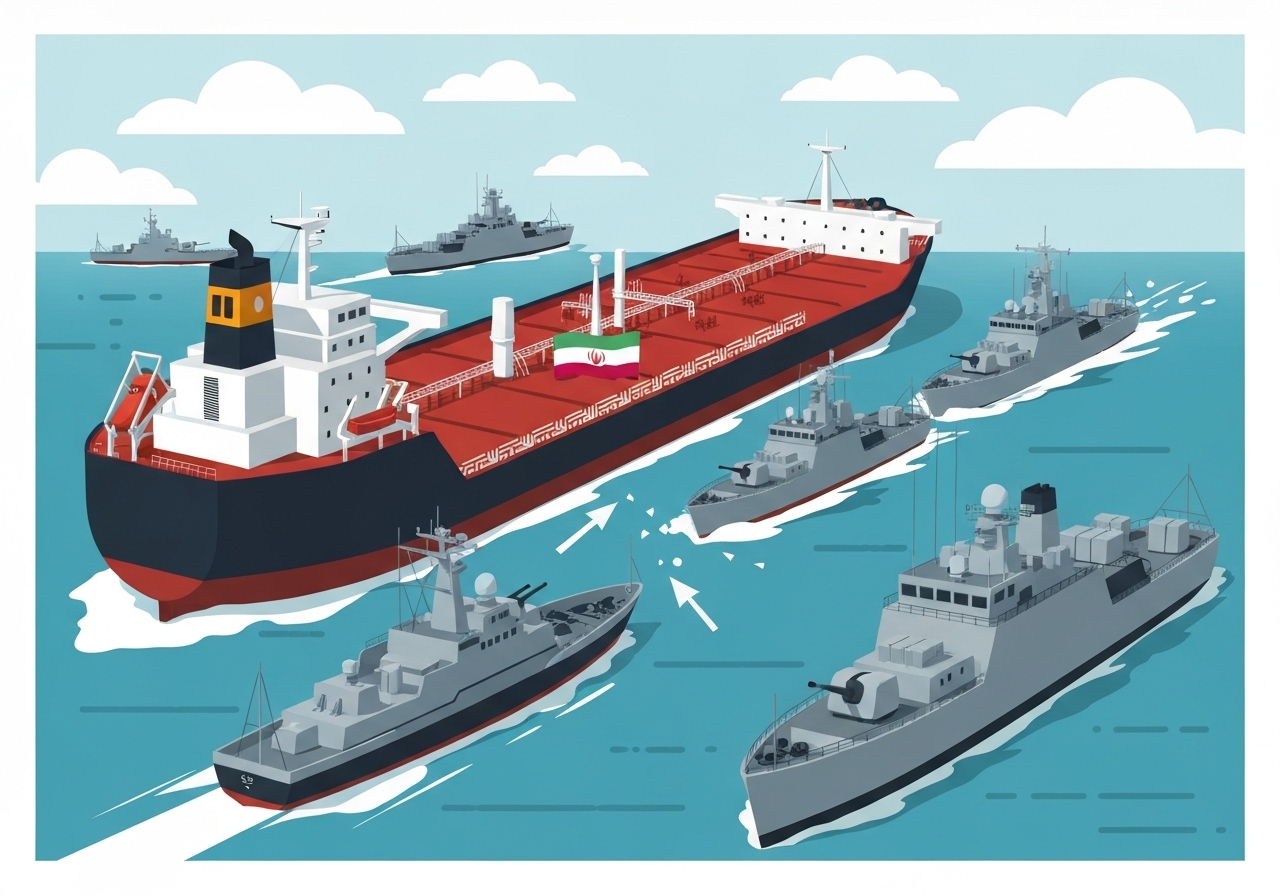
On November 14, 2025, Iranian forces seized the Marshall Islands‑flagged oil tanker Talara after the vessel passed the Strait of Hormuz, U.S. defense officials and maritime monitors reported. The ship was about 20 nautical miles east of Khor Fakkan in the United Arab Emirates when it lost contact with its manager, Columbia Shipmanagement. U.S. officials said the vessel was diverted toward Iranian territorial waters; maritime intelligence firm Vanguard Tech reported the Islamic Revolutionary Guard Corps Navy intercepted the tanker. The incident prompted immediate concern among regional states and commercial shipping operators because of its timing and location in the busy Gulf of Oman shipping lane.
Key Takeaways
- The seizure occurred on November 14, 2025; initial public reporting began at 10:37 AM UTC with an update at 4:07 PM UTC.
- The vessel is the Talara, flagged to the Marshall Islands and managed by Columbia Shipmanagement; contact with the manager was lost near Khor Fakkan, UAE.
- The tanker was approximately 20 nautical miles east of Khor Fakkan in the Gulf of Oman when it stopped reporting, according to the manager’s statement.
- U.S. defense sources said the ship was diverted toward Iranian territorial waters after transiting the Strait of Hormuz.
- Maritime intelligence provider Vanguard Tech reported interception by the Islamic Revolutionary Guard Corps Navy; that attribution is reported by third‑party monitors and cited by officials.
- The seizure takes place in a region that handles roughly a fifth of global oil seaborne exports, raising immediate commercial and security implications.
Background
The Strait of Hormuz and the adjacent Gulf of Oman are among the world’s busiest chokepoints for energy and cargo shipments. Hundreds of oil and product tankers transit the strait each month; any disruption there has outsized effects on shipping routes, insurance costs and global energy markets. Regional tensions have periodically flared into ship seizures, inspections and confrontations, often involving state navies, coastguards and paramilitary forces.
Since the 2010s, the Islamic Republic and Western navies have exchanged accusations over harassment and interdiction of commercial vessels, with incidents sometimes linked to sanctions, maritime law disputes or security operations. Flag states such as the Marshall Islands provide registry services for many commercial tankers; classification and management are handled by private firms like Columbia Shipmanagement. Responsibility for crew safety, cargo manifests and communications normally rests with the ship operator and manager.
Main Event
According to the manager’s statement, the Talara lost contact with Columbia Shipmanagement while sailing roughly 20 nautical miles east of Khor Fakkan, in UAE waters, on November 14, 2025. Company officials said the loss of contact coincided with a change in the ship’s reported course. U.S. defense sources later described the vessel as being diverted toward Iranian territorial waters after it had completed passage through the Strait of Hormuz.
Vanguard Tech, a maritime intelligence provider, reported that the Islamic Revolutionary Guard Corps Navy intercepted the tanker and that the ship was under Iranian control. U.S. officials confirmed the seizure to reporters but did not provide public evidence of boarding or the number of personnel involved. Columbia Shipmanagement confirmed loss of communication with the vessel in a brief public statement and said it was working to clarify the crew’s status.
At the time of reporting there were no independently verified accounts from the ship’s crew or a public announcement from Iranian authorities detailing the operation. Regional maritime traffic services registered an abrupt disappearance of the vessel from some automated tracking feeds, consistent with a loss of AIS broadcast or deliberate signal interruption, a pattern seen in prior interdictions.
Analysis & Implications
The seizure of a Marshall Islands‑flagged tanker after it passed the Strait of Hormuz is significant for several reasons. First, it demonstrates that transits through the strait do not guarantee uninterrupted passage in adjacent waters, complicating route planning for commercial operators that rely on predictable transits. Carriers and insurers will likely reassess routing, hull and war‑risk premiums for voyages in the Gulf of Oman and nearby approaches.
Second, the involvement of an IRGC naval unit, if confirmed, underscores Tehran’s capability to project maritime force beyond territorial limits and its willingness to act against commercial shipping when it judges national interests involved. Such actions can be used as leverage in broader diplomatic or sanctions disputes; they also risk escalating tit‑for‑tat measures with other states active in the region, including the United States and coalition naval forces.
Third, the incident carries potential commercial and legal consequences for the ship’s owners, managers and charterers. Disruptions can expose these parties to cargo liability, insurance claims and complex salvage or detention disputes under international maritime law. For shippers of crude and refined products, a single interdiction can delay deliveries and tighten short‑term market balances, particularly if the vessel was carrying crude destined for a constrained market.
Finally, the event may prompt renewed diplomatic pressure and calls for coordination among Gulf states to ensure freedom of navigation. International shipping organizations and coastal states will be watching for Iran’s official explanation and for confirmations about the crew’s safety, cargo details and whether the vessel will be detained or released.
Comparison & Data
| Item | Detail |
|---|---|
| Vessel | Talara (Marshall Islands‑flagged) |
| Manager | Columbia Shipmanagement |
| Location at loss of contact | ~20 nautical miles east of Khor Fakkan, UAE (Gulf of Oman) |
| Date | November 14, 2025 |
The table summarizes verified, reported data points about the incident. Past high‑profile interdictions in the region have produced similar operational patterns: sudden loss of automated tracking, rapid changes in course, and conflicting official narratives. Analysts will compare AIS data, satellite imagery and port records to confirm the vessel’s final location and status.
Reactions & Quotes
“Contact was lost with the vessel while it was operating east of Khor Fakkan,”
Columbia Shipmanagement (manager statement)
The company issued a brief notice acknowledging the communications lapse and said it was seeking clarification on the crew’s condition. That limited public statement is typical in early stages of an incident pending verification.
“The vessel was diverted toward the country’s territorial waters,”
U.S. defense official (on condition of anonymity)
U.S. defense sources relayed that description to reporters; officials did not release imagery or boarding verification in the initial briefings. Such cautious public language reflects both operational security concerns and the need to corroborate intelligence.
“We have indications the tanker was intercepted by an IRGC naval unit,”
Vanguard Tech (maritime intelligence)
Third‑party maritime monitors flagged an interception pattern consistent with IRGC naval activity; independent confirmation will rely on satellite or in‑situ observations.
Unconfirmed
- Whether IRGC personnel physically boarded and remained on the Talara has not been independently verified.
- The ship’s cargo manifest and whether the tanker was laden or in ballast at the time have not been publicly disclosed.
- Iranian authorities have not released an official statement detailing the reasons for interception or the vessel’s final port of destination.
Bottom Line
The seizure of the Talara on November 14, 2025, is a concrete reminder that commercial navigation in the Gulf approaches remains exposed to state action and that passage through the Strait of Hormuz does not eliminate risk in adjacent waters. For shippers, insurers and energy markets, the immediate priorities are confirmation of the crew’s welfare, clarity on the ship’s fate, and assessment of near‑term route and insurance implications.
In diplomatic terms, expect urgent communications between the vessel’s flag state, the manager, regional governments and international maritime organizations. The incident may also prompt calls for increased surveillance and escorts in the short term if similar patterns recur. Analysts will watch for additional verification from satellite imagery, port records and official Iranian comment to move items in the Unconfirmed list into the established record.
Sources
- Bloomberg — news media (original detailed report)
- Columbia Shipmanagement — ship manager statement (company website)
- U.S. Department of Defense — official source (reported comments by defense official)