
Lead
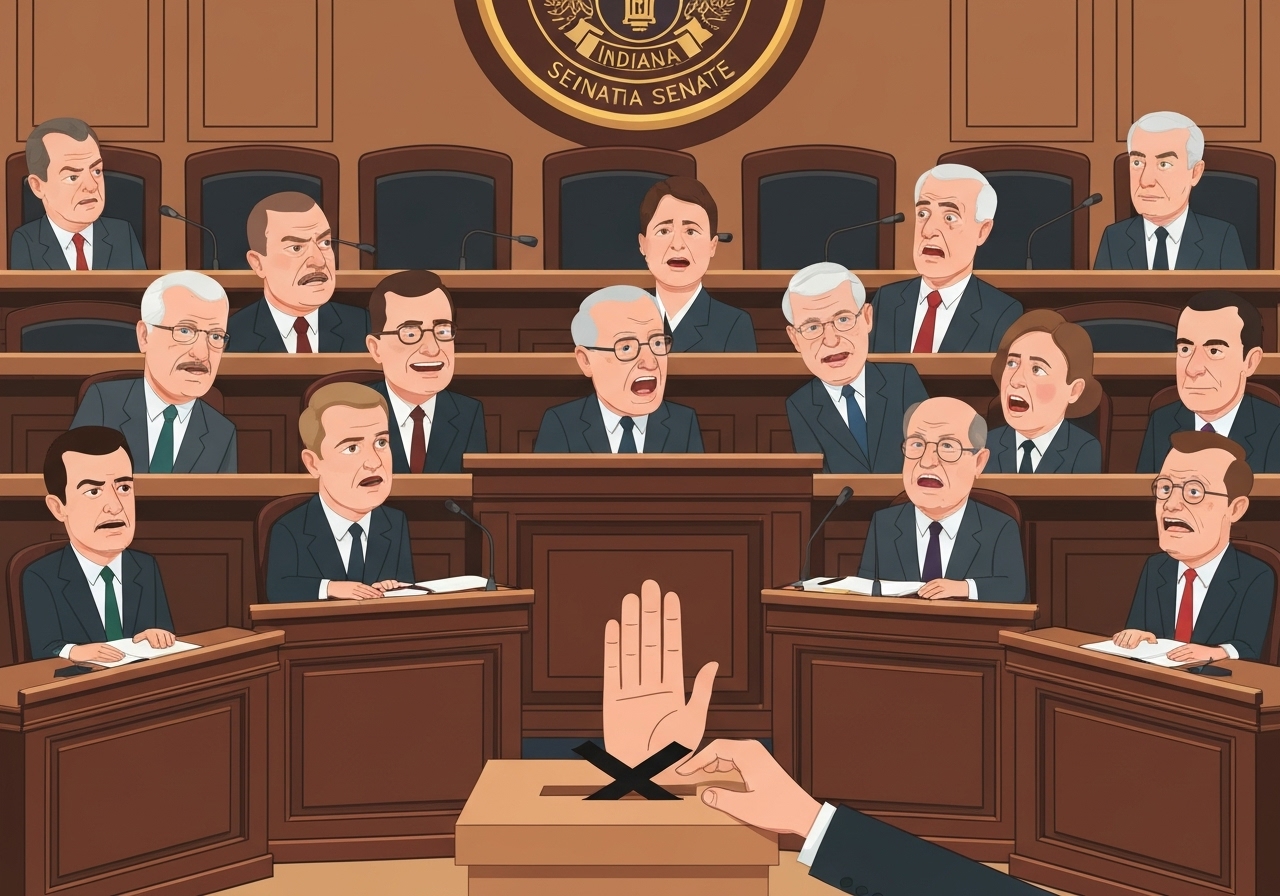
On Nov. 14, 2025, the Indiana Senate announced it will not reconvene in December to vote on a congressional map championed by former President Donald Trump, leaving two Democratic-leaning districts intact for next year’s midterms. Senate president pro tem Rodric Bray said there are insufficient votes to advance the proposal, overruling a call for a special session by Republican Governor Mike Braun. The decision follows a similar GOP rebuke in Kansas and underscores growing resistance among some Republican state legislators to off-cycle redistricting. The outcome preserves the status quo for Indiana’s nine U.S. House seats ahead of filing and primary deadlines.
Key Takeaways
- Indiana Senate leader Rodric Bray announced on Nov. 14, 2025 that the chamber will not meet in December to vote on the proposed congressional map.
- The move likely preserves two Democratic-leaning districts and keeps Indiana’s current nine-seat House allocation unchanged for the 2026 midterms.
- Governor Mike Braun had called a special session to consider the map, aiming to redraw districts pushed by former President Trump and allies.
- Vice President JD Vance visited Indiana twice and Trump participated in conference calls to lobby for the new map, reflecting White House-level involvement.
- Indiana’s decision follows Kansas Republicans’ inability to secure enough votes for a special session, signaling intra-party skepticism about out-of-cycle remaps.
- Outside groups, including Fair Maps Indiana backed by Chris LaCivita, campaigned for redrawing; some Republican senators reported constituent opposition during local listening sessions.
- If enacted, the proposed map could have targeted Representatives André Carson and Frank Mrvan, potentially enabling Republicans to contest all nine seats.
Background
Redistricting typically occurs once every ten years after the census, but in 2025 several states have revisited lines outside that cycle. The push accelerated after Texas Republicans approved a new map this year with President Trump’s support, prompting counter-moves from Democrats in states such as California. Those developments prompted national-level organizing and pressure campaigns aimed at shifting the balance of House seats before the 2026 midterms.
In Indiana, Republicans control the governorship and both legislative chambers with supermajorities, creating a plausible path for a new map despite internal objections. Some GOP lawmakers nevertheless voiced practical and philosophical reservations about redrawing districts between censuses, citing precedent, legal risk and constituent feedback. The prospect of a statewide remap drew intense attention because Mr. Trump won Indiana by 19 percentage points in 2024 and party strategists saw an opportunity to convert that margin into a clean sweep of House seats.
Main Event
On Nov. 14, 2025, Senate president pro tem Rodric Bray issued a statement saying there were not enough votes to move forward and that the Senate would not reconvene in December. Governor Mike Braun had announced a special session last month to consider the map and urged senators to return to Indianapolis to vote; he criticized the Senate’s decision and said voters deserved clarity on their representatives’ positions. White House officials did not immediately comment on the announcement.
Proponents of the new boundaries argued a remap was needed to address Democratic gerrymandering in other states and to align Indiana’s congressional districts with political realities after the 2024 election. Vice President JD Vance visited the state twice to lobby lawmakers, and former Trump campaign aide Chris LaCivita helped form Fair Maps Indiana to advocate publicly for change. Supporters framed the effort as correcting unfair lines and maximizing Republican representation.
Opponents, including some Republican senators and local constituents, raised objections on grounds ranging from timing and legal exposure to grassroots opposition. One GOP senator reported that more than 60 constituents who spoke at a district listening session this month expressed no support for a new map. Democrats hailed the Senate announcement as a win and cautioned that future sessions could reopen the issue when the legislature reconvenes in January.
Analysis & Implications
The Senate’s decision signals a notable fissure within state Republican ranks: despite a governor and party leadership pushing for a partisan advantage, some legislators balked. That hesitation reflects both political calculus—risk of voter backlash or legal challenges—and practical concerns about altering districts outside the decennial cycle. If other GOP-led states follow suit, the national remapping campaign could lose momentum ahead of filing deadlines for many primaries.
For Democrats in Indiana, the outcome preserves two districts they are likely to defend in 2026 and reduces the immediate threat to incumbents such as Representatives André Carson and Frank Mrvan. Strategically, maintaining the current lines forces Republicans to pursue the more familiar route of candidate recruitment and campaigning rather than relying on new boundaries to flip seats. National party committees will adjust resource plans accordingly.
However, the matter is not settled. State leaders in Kansas and other states have indicated they may attempt renewed efforts when legislatures reconvene in January, and pressure from outside groups and national figures could intensify. The existence of active organizations like Fair Maps Indiana and continued interest from senior Republican officials means the remapping campaign remains a live political front through the winter and into the next legislative sessions.
Comparison & Data
| Metric | Current (Indiana) | Proposed Impact |
|---|---|---|
| U.S. House seats | 9 | 9 (potential partisan flip of 2 districts) |
| 2024 Presidential margin | Trump +19% | N/A |
| Reported district listening feedback | 60+ speakers opposing remap | N/A |
The table above summarizes core figures relevant to Indiana’s dispute: a nine-seat House delegation, Mr. Trump’s 19-point 2024 win, and documented local opposition at a recent listening session. These data points show why national actors invested effort in Indiana—the state’s baseline Republican advantage suggested opportunity—but also why legislators faced pushback from constituents and peers.
Reactions & Quotes
“Over the last several months, Senate Republicans have given very serious and thoughtful consideration to the concept of redrawing our state’s congressional maps…there are not enough votes to move that idea forward.”
Rodric Bray, Indiana Senate president pro tem (statement)
Bray framed the vote as the culmination of deliberation and pointed to a lack of legislative consensus. His announcement immediately drew criticism from Governor Braun and allied operatives who urged senators to reconvene.
“Our state senators need to do the right thing and show up to vote for fair maps. Hoosiers deserve to know where their elected officials stand on important issues.”
Governor Mike Braun (statement)
Governor Braun emphasized accountability and framed his special session call as a response to perceived gerrymandering elsewhere. National Republican operatives posted critical reactions on social media after the Senate’s decision.
“Just because our legislature is a supermajority, it does not mean every outcome is predetermined…good is always worth fighting for.”
State Senator Andrea Hunley (Democrat)
Democratic lawmakers celebrated the setback for the remap and cautioned that vigilance would be required in future sessions, while acknowledging the issue could resurface.
Unconfirmed
- Whether national Republican leaders will redirect resources to force a vote in Indiana during the January session remains unresolved and may depend on shifting legislative alignments.
- Reports that specific legislators received direct assurances from Trump allies in exchange for support have not been substantiated publicly.
Bottom Line
The Indiana Senate’s refusal to convene for a redistricting vote marks a significant intra-party check on a national effort to redraw maps ahead of the 2026 midterms. It preserves two Democratic-leaning districts and underscores the limits of outside pressure even when a party controls state government. Lawmakers cited a mix of constituent opposition, precedent concerns and insufficient support as reasons for halting the effort.
Still, the issue is likely to persist into the new year: leaders in Kansas and other states signaled potential renewed attempts when legislatures reconvene in January, and outside groups remain prepared to lobby intensively. For now, Indiana’s status quo shapes party strategy and resource allocation for the upcoming elections, but the door remains open for future maneuvering.
Sources
- The New York Times (national newspaper)