
Lead
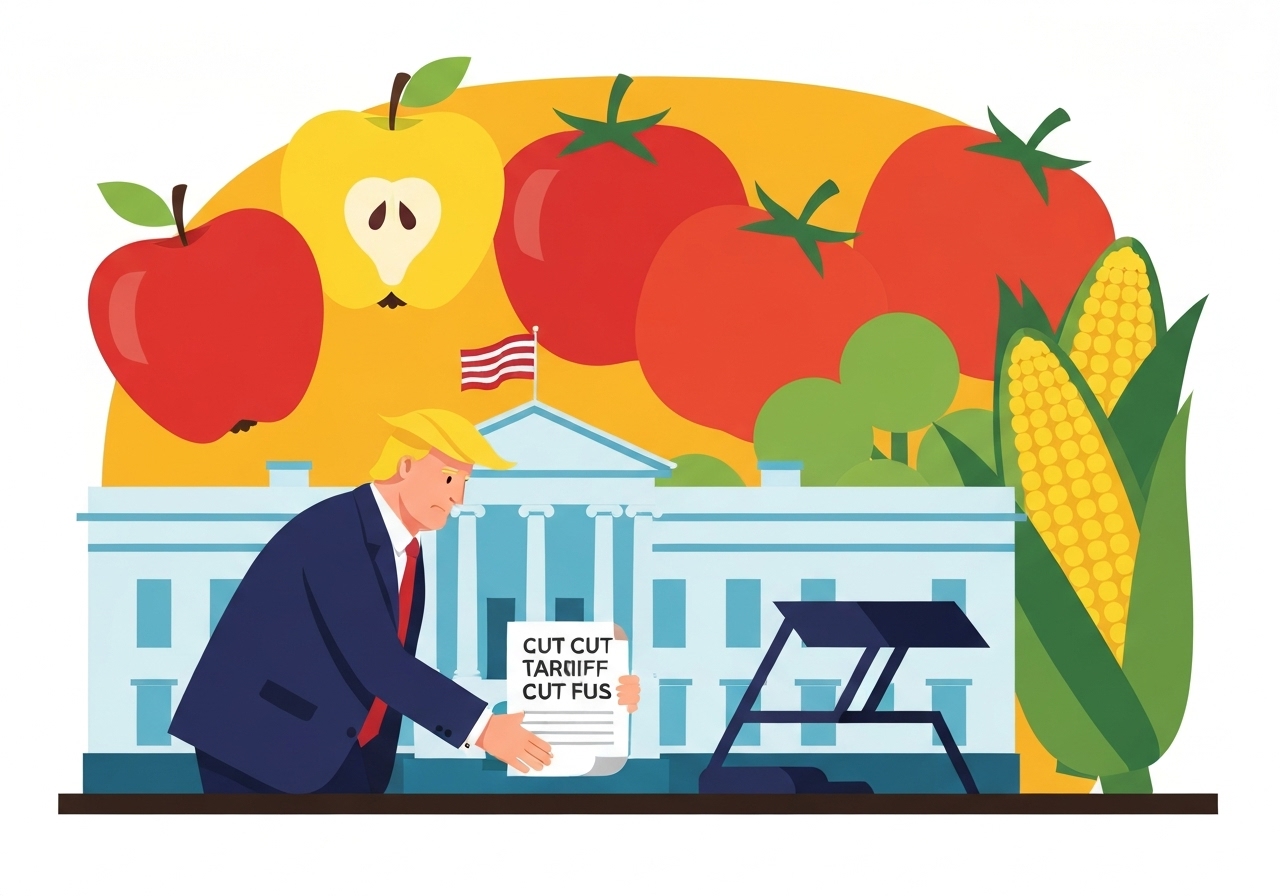
On Friday, 14 November 2025, President Donald Trump issued an executive order that reduces import duties on a range of food products — including beef, tomatoes, coffee and bananas — with the changes made retroactive to midnight on Thursday. The move represents a sharp policy reversal for an administration that earlier this year imposed a 10% base tariff on all imports plus additional, product- and state-specific levies. The White House framed the step as strengthening the economy and national security amid progress in reciprocal trade talks, while critics say the change responds to mounting public concern about grocery affordability. The decision arrives after recent Democratic wins in state and local contests where cost-of-living issues figured prominently.
Key Takeaways
- The executive order, signed on Friday, 14 November 2025, cuts tariffs on specified food items and is effective retroactively to midnight on Thursday.
- Products named by officials include beef, tomatoes, coffee and bananas — categories cited for their price sensitivity and broad consumer impact.
- Earlier this year the administration imposed a 10% base tariff on imports from all countries, with additional duties varying by product and state.
- The announcement follows a separate deal reducing Swiss tariffs from 39% to 15% and framework accords to remove certain food tariffs from Argentina, Ecuador, Guatemala and El Salvador once finalized.
- A Harris Poll for the Guardian found a majority of Americans report monthly household costs rose by $100–$749, highlighting affordability as a political pressure point.
- Top Democrats on the House Ways and Means Committee criticized the move as a reversal and argued the administration is “putting out a fire that they started,” citing links between tariffs and higher prices.
Background
Since early 2025 the Trump administration pursued an aggressive tariff strategy, introducing a blanket 10% base duty on imports from every country, layered with additional specific tariffs. Officials framed the measures as reciprocal trade remedies intended to bolster domestic manufacturing and national security, while opponents warned the levies would raise consumer prices. Economists have pointed to import tariffs as one of several inflationary pressures that have affected grocery bills, along with supply-chain constraints and energy costs. Politically, the cost of living has emerged as a pivotal issue in recent state and local elections — notably Democratic victories in Virginia, New Jersey and New York City — intensifying pressure on the White House to address rising household expenses.
The administration has been negotiating a series of bilateral and regional agreements this year intended to recalibrate tariff schedules. On Friday officials unveiled a pact that cuts Swiss tariffs from 39% to 15% and outlined framework trade deals that, when finalized, will remove tariffs on certain foods from Argentina, Ecuador, Guatemala and El Salvador. The White House issued a factsheet saying these developments made it “necessary and appropriate to further modify the scope of the reciprocal tariffs.” Congressional Democrats have framed the new order as an implicit admission that tariffs contributed to consumer price increases.
Main Event
Late on Thursday night, and formalized on Friday, the president signed an executive order narrowing the scope of reciprocal tariffs and exempting specific food categories from the administration’s earlier duties. The order was implemented retroactively to the previous midnight so customs adjustments could take effect immediately. The measure targets staples that feed into everyday grocery spending and supply chains, with officials arguing the step is possible now because of recent progress in trade negotiations.
The White House factsheet accompanying the order emphasized both economic and security rationales, saying reciprocal tariff adjustments are part of a broader negotiation strategy and reflect concessions from trading partners. Administration spokespeople portrayed the move as consistent with strengthening domestic producers while relieving price pressure on consumers. In public statements earlier the same day the president reiterated his view that overall costs were falling under his administration, a claim that conflicts with several market indicators and independent polling on household expenses.
Trade experts note that rolling back duties on a subset of goods is administratively straightforward compared with eliminating the 10% base tariff entirely; however, the practical consumer impact depends on how importers and retailers adjust prices. Officials also flagged ongoing talks aimed at additional agreements before year-end, suggesting this order could be one element in a broader recalibration of U.S. trade policy for foodstuffs and other consumer goods.
Analysis & Implications
The tariff rollback on select food items signals a tactical pivot: the administration appears to be responding to immediate political and economic pressures without abandoning its broader tariff architecture. By carving out exemptions for staples, the White House may aim to blunt consumer anger and soften Democratic messaging ahead of further elections while keeping leverage in trade negotiations. Economists caution that partial rollbacks may lower import costs for targeted items but will not automatically reverse inflationary trends shaped by multiple factors.
For supply chains and importers, the retrospective effective date reduces near-term uncertainty and could temper price adjustments in the coming weeks. But the extent to which retailers pass savings to shoppers is uncertain and will vary across markets and product categories. Manufacturing sectors that had benefited from protectionist measures could see renewed competitive pressure if some tariff relief persists or expands.
Internationally, the move coincides with bilateral advances such as the Switzerland tariff cut from 39% to 15% and framework agreements with several Latin American countries. If those deals are finalized, they would represent a shift toward targeted liberalization in agricultural and food trade while maintaining broader reciprocal tariffs elsewhere. The administration’s strategy may be to use selective concessions to secure concessions from partners on issues like intellectual property or market access.
Comparison & Data
| Item | Previous Tariff | New/Planned Tariff | Notes |
|---|---|---|---|
| General imports (base) | 10% (introduced early 2025) | 10% (base remains) | Additional exemptions apply to select foods |
| Switzerland (selected lines) | 39% | 15% | Reduction announced as part of a trade pact |
| Argentina, Ecuador, Guatemala, El Salvador | Varies by product | Framework deals to eliminate certain food tariffs once finalized | Subject to final agreements |
The table shows the administration’s approach: retain a uniform base tariff while narrowing its scope for targeted items and negotiating bilateral reductions. Analysts stress that headline tariff rates only capture one part of import costs; compliance, logistics and distribution markups also affect shelf prices.
Reactions & Quotes
Officials and lawmakers offered contrasting interpretations of the order. The president used social media and recent broadcast interviews to assert progress on prices, while congressional Democrats argued the move was overdue and politically motivated.
“Costs under the TRUMP ADMINISTRATION are tumbling down,”
President Donald Trump (Truth Social)
That post, published earlier on Friday, echoed the president’s repeated public claims about low inflation under his administration, comments that critics say conflict with independent price measures and household reports.
“The Trump administration is putting out a fire that they started and claiming it as progress,”
Rep. Richard Neal (House Ways and Means Committee)
Richard Neal, the top Democrat on the committee, argued the tariff program raised costs for consumers and manufacturing, and accused the administration of reversing course only after political setbacks in recent local and state elections.
“Given substantial progress in reciprocal trade negotiations, it is necessary and appropriate to modify the scope of the reciprocal tariffs,”
White House factsheet (official)
The White House factsheet framed the change as a negotiation-driven adjustment rather than a retreat from the broader tariff strategy.
Unconfirmed
- Whether the tariff rollbacks were timed primarily as a political response to recent Democratic electoral gains is not independently verifiable.
- The precise timeline and scope for finalizing framework deals with Argentina, Ecuador, Guatemala and El Salvador remain subject to negotiation and are not yet confirmed.
- How quickly and fully retailers will translate lower import duties into lower shelf prices for consumers is uncertain and will vary by product and region.
Bottom Line
The administration’s decision to cut tariffs on specific food items is a clear tactical shift that addresses a politically sensitive issue: grocery affordability. While the measures provide immediate administrative relief by taking effect retroactively, their lasting impact on consumer prices depends on downstream pricing decisions and the course of broader inflationary forces. Retaining the 10% base tariff while exempting select goods suggests the White House is seeking a middle path: easing public pressure without abandoning its leverage in trade negotiations.
Observers should watch whether the exemptions expand, how trade partners respond to bilateral concessions like the Switzerland deal, and whether consumers see measurable relief at the register. Lawmakers and market analysts will likely press for data on how much of the tariff reduction is actually passed through to shoppers and whether additional trade agreements are concluded before year-end.
Sources
- The Guardian (media) — original reporting on the executive order and political context.
- Reuters (news agency) — contributed reporting noted in coverage and follow-up on trade negotiations.
- The White House (official) — administration factsheets and statements regarding tariff modifications.
- The Harris Poll (polling organization) — survey data cited on household cost changes.