
Lead
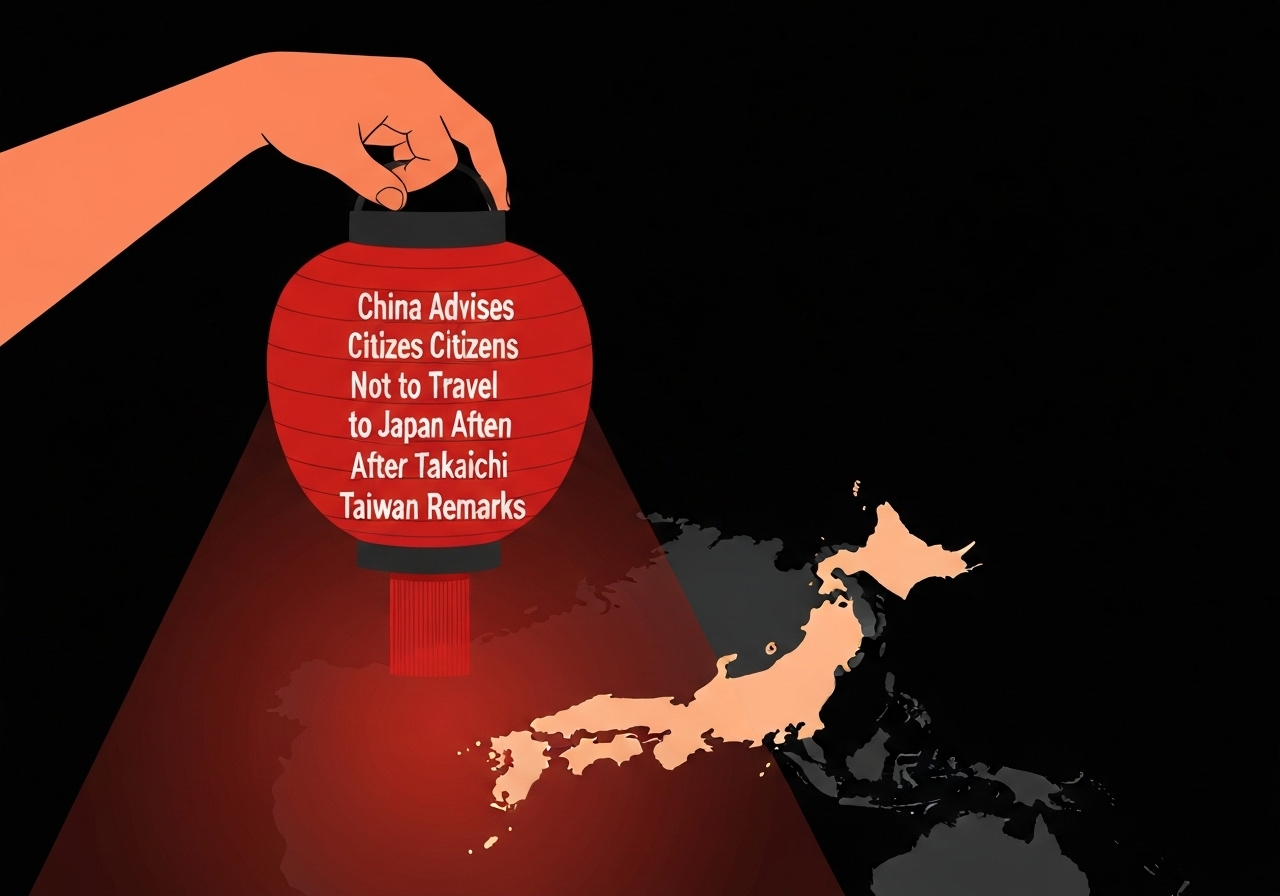
On Nov. 14, 2025, Beijing urged Chinese nationals to avoid traveling to Japan, marking the first clear retaliation in a diplomatic dispute triggered by comments from Japan’s Prime Minister, Sanae Takaichi. The advisory followed Takaichi’s remarks last week that military force used in any Taiwan conflict could amount to a “survival-threatening situation,” a classification she said might legally justify Japanese intervention. The travel guidance was issued amid heightened cross‑strait tensions and has immediate implications for diplomacy, tourism and bilateral contacts. Updated responses from Tokyo and third‑party governments were still unfolding as of Nov. 15, 2025.
Key Takeaways
- On Nov. 14, 2025 Beijing formally urged its citizens to avoid travel to Japan; the notice is an advisory, not a travel ban.
- Prime Minister Sanae Takaichi’s remark that a Taiwan conflict could be a “survival‑threatening situation” was made the previous week and prompted Beijing’s response.
- Chinese officials framed the advisory as the first significant retaliatory step in the dispute between the two governments.
- The advisory risks short‑term impacts on tourist flows and business travel between China and Japan, two of Asia’s largest tourism markets.
- Analysts warn the move raises diplomatic and economic spillover risks, including effects on supply chains and security coordination in the region.
- Tokyo has not announced reciprocal travel restrictions; official statements emphasized de‑escalation and clarification of Takaichi’s remarks.
- Observers note this escalation could complicate trilateral dynamics involving the United States, Taiwan and regional security partners.
Background
The China–Japan relationship remains shaped by economic interdependence and underlying strategic rivalry. In recent years, Beijing and Tokyo have balanced robust trade ties with growing disputes over security, maritime encounters and regional alignment. Japan’s political debate over collective self‑defense and broader roles in regional crises has sharpened since changes in Japan’s security posture after 2014.
Sanae Takaichi’s comments last week, describing any military use of force in a Taiwan contingency as potentially constituting a “survival‑threatening situation,” entered that sensitive policy debate. That legal framing could, in Tokyo’s view, open domestic avenues for intervention or other extraordinary measures under Japanese law. Beijing viewed the remarks as a direct challenge to its core interest in Taiwan and responded with the travel advisory.
Main Event
Beijing’s advisory, issued on Nov. 14, 2025, told Chinese nationals to refrain from traveling to Japan in the near term. Chinese state outlets and official channels presented the guidance as a protective measure for citizens and as a measured diplomatic response. Chinese officials characterized Takaichi’s language as escalatory and argued it risked normalizing military intervention in cross‑strait affairs.
In Tokyo, government spokespeople sought to clarify the prime minister’s remarks, emphasizing Japan’s commitment to regional stability while defending the need to review contingency plans. Tokyo stopped short of rescinding Takaichi’s words but offered explanations that some diplomats described as aimed at reducing immediate tensions. Key ministries in both capitals opened hotlines for consular and diplomatic queries.
The advisory’s immediate practical effects are uneven: individual travelers receive cautionary guidance, and airlines and tour operators are monitoring demand, but there were no widespread reports of canceled services linked directly to the advisory as of Nov. 15. Industry groups warned that uncertainty alone can depress bookings and business travel in the near term.
Analysis & Implications
The advisory marks a calibrated step by Beijing: it signals displeasure without imposing sweeping trade or diplomatic sanctions. Such graduated responses allow Beijing to signal resolve while preserving room for diplomacy. For Tokyo, the incident raises questions about how political rhetoric on national security is calibrated and communicated internationally.
Economically, a prolonged chill could reduce Chinese outbound tourism to Japan, a segment that accounted for tens of millions of visits in pre‑pandemic years and remains a significant revenue source for Japan’s hospitality and retail sectors. Even short‑term reductions in Chinese visitors can disproportionately affect regional economies that cater heavily to Chinese tourists.
Strategically, the advisory complicates security cooperation frameworks in East Asia. U.S. and allied planning assumptions rely on predictable diplomatic channels; heightened mistrust between Beijing and Tokyo can strain those lines of communication and increase the risk of miscalculation around Taiwan. Regional states will watch whether this episode becomes an isolated diplomatic spat or a step toward broader containment measures.
Comparison & Data
| Measure | Date | Scope | Immediate Effect |
|---|---|---|---|
| China travel advisory vs Japan | Nov. 14, 2025 | Citizens urged to avoid travel | Heightened diplomatic tension; tourism uncertainty |
| Previous Beijing responses (typical) | Varied (past decade) | Targeted trade or regulatory steps | Economic pressure with mixed political impact |
The table outlines the advisory as a targeted diplomatic tool rather than a broad economic sanction. Historical episodes show Beijing often prefers calibrated measures—consumer advisories, selective sanctions—before escalating to large‑scale trade restrictions. That pattern suggests Beijing is signaling displeasure while reserving more severe levers.
Reactions & Quotes
Officials and commentators offered measured responses within hours of the advisory.
“Military force in a Taiwan contingency could constitute a ‘survival‑threatening situation.'”
Sanae Takaichi, Prime Minister of Japan (quoted)
Tokyo emphasized it would explain context and intent behind the prime minister’s words to regional partners. In Beijing, state spokespeople described the comments as unacceptable and warned of consequences.
“We strongly oppose remarks that escalate tensions and will take measures to safeguard our citizens and sovereignty.”
Chinese foreign ministry spokesperson (official statement)
Independent analysts stressed the broader strategic stakes and the need for both sides to manage rhetoric to avoid accidental escalation.
“Rhetoric that shifts legal thresholds for intervention increases risk in an already tense neighbourhood.”
Regional security analyst, think tank (paraphrased)
Unconfirmed
- Whether Beijing will escalate beyond a travel advisory to broader economic or diplomatic sanctions remains unconfirmed.
- It is not yet clear if Takaichi’s remark was intended to signal a change in official Japanese policy or to describe hypothetical legal interpretations; Tokyo’s formal position is still being clarified.
- Reports of immediate, large‑scale travel cancellations or airline suspensions directly tied to the advisory were unconfirmed at the time of reporting.
Bottom Line
The travel advisory is a symbolic but meaningful escalation that signals Beijing’s readiness to respond to rhetoric it deems provocative on Taiwan. For Tokyo, the episode underscores the domestic political balance between signaling deterrence and avoiding diplomatic blowback. For businesses and travelers, uncertainty around advisories can quickly translate into lost revenue even if formal sanctions do not materialize.
Looking ahead, the dispute will test crisis‑management channels between Beijing and Tokyo and could draw in allied capitals. Observers should watch for additional official clarifications from Tokyo, any further Chinese measures, and whether third‑party diplomacy—particularly from the United States—seeks to mediate public messaging and reduce the risk of escalation.
Sources
- Bloomberg (media: international business/newspaper) — initial report on Beijing’s advisory and Takaichi’s remarks.
- Ministry of Foreign Affairs of the People’s Republic of China (official: government statement) — official channels and routine foreign ministry responses.
- Prime Minister of Japan and Cabinet Office (official: government statements) — Tokyo’s clarifications and policy context.