
Lead
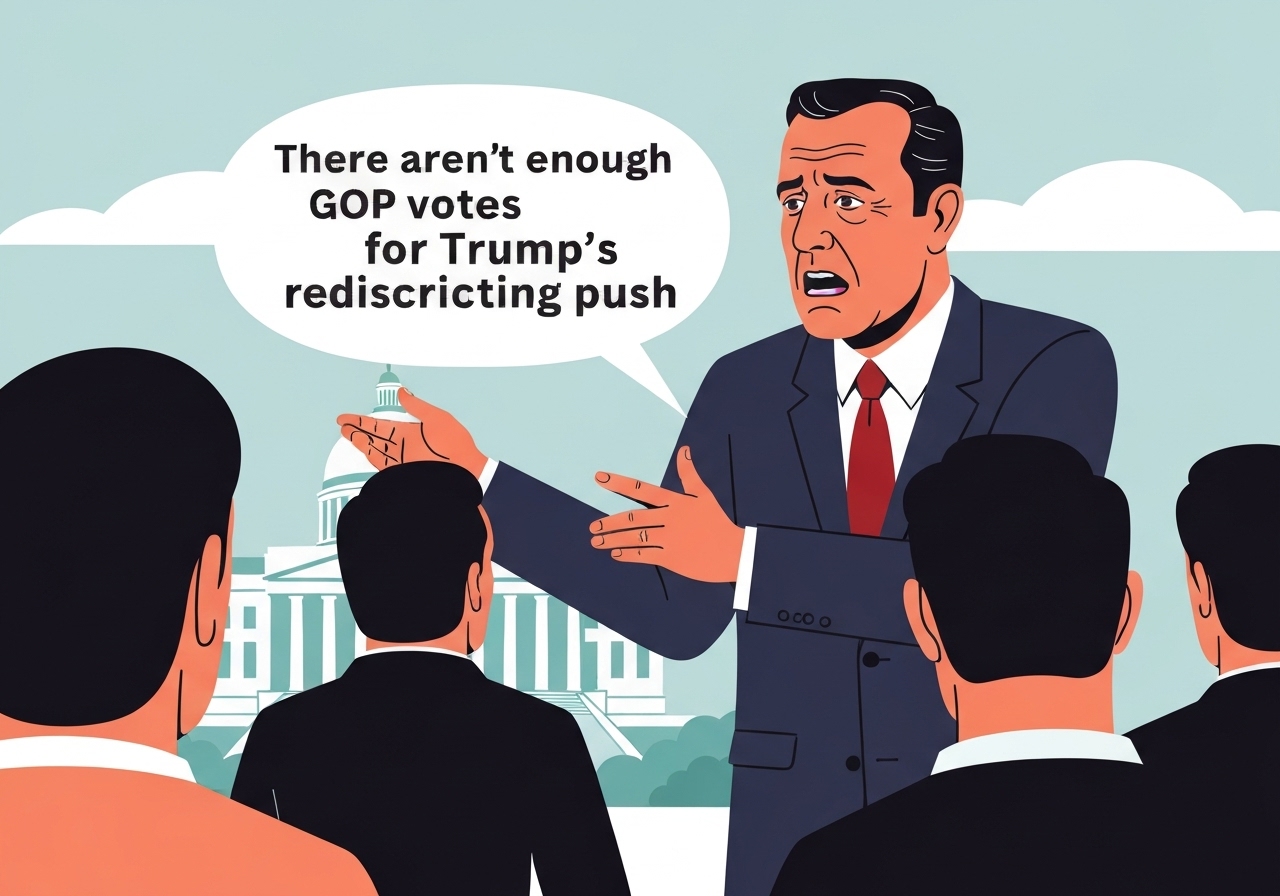
Indiana Senate President Pro Tempore Rodric Bray announced the Senate will not reconvene in December because there are not enough Republican votes to pursue a mid-decade congressional map redraw. The decision rebuffs pressure from President Donald Trump, Vice President JD Vance and Republican Governor Mike Braun, who had urged a special session. The move leaves Indiana, where Republicans hold seven of nine seats, outside the immediate wave of GOP-led mid-decade redistricting efforts. Senate Republican leaders said the vote count—and cost concerns—prevented a call to action this month.
Key Takeaways
- Rodric Bray stated the Indiana Senate will not reconvene in December because there are insufficient GOP votes to advance a redistricting plan.
- Republicans currently hold seven of Indiana’s nine U.S. House seats; the White House sought a mid-decade map to strengthen the party’s narrow House majority.
- Vice President JD Vance visited Indiana twice and President Trump contacted state lawmakers to press for a special session.
- Governor Mike Braun called a special session last month to force the issue; lawmakers initially cited cost savings by delaying until December.
- Some national allies criticized the Senate GOP split and called for primary challenges against holdouts.
- Several other states—Kansas, Nebraska and New Hampshire—also declined special sessions; Texas, Missouri and North Carolina enacted new maps after pressure from Trump.
Background
Mid-decade redistricting has become a strategic tool since the 2020s, used by both parties when state governments permit departures from the decennial cycle. The White House and allied operatives view targeted redraws as a way to protect or expand a fragile House majority ahead of a midterm election. In states with Republican trifectas—control of the governorship and both legislative chambers—pressure has intensified for GOP-led map changes that could shift several seats.
Indiana’s political structure is one such battleground. Republicans control the governorship and the legislature and currently hold seven of nine congressional districts, a configuration national Republicans hoped could be further optimized. Lawmakers have to weigh political gains against legal exposure, public backlash, and the administrative cost of special sessions. That mix shaped the calculus behind Bray’s announcement that the Senate would not reconvene this month.
Main Event
On Friday, Senate President Pro Tempore Rodric Bray issued a statement saying there were not enough votes to move a redistricting idea forward and that the Senate would not meet in December to consider it. Bray framed the decision as the product of internal deliberations among Republican senators about feasibility and timing. The statement effectively ended the governor’s recent push to force a mid-decade redraw through a special session called last month by Gov. Mike Braun.
The White House mounted a direct campaign to persuade Indiana lawmakers. Vice President JD Vance traveled to the state twice to make the case to GOP legislators, and President Trump reportedly called lawmakers himself. Those high-level interventions reflected a broader national effort by Trump and allies to secure more favorable congressional lines where possible.
Outside voices reacted sharply. Governor Braun posted on X urging senators to show up and vote for what he called “fair maps,” arguing constituents’ voices could be diluted otherwise. Trump ally Alex Bruesewitz described holdouts as obstructive and called for primary challenges to remove them. State Senate Republicans who opposed reconvening cited concerns about cost, timing and the political risk of a contentious special session.
Analysis & Implications
Bray’s decision signals limits to national pressure when local lawmakers judge the political or logistical upside as insufficient. Even in states where the same party controls state government, internal divisions—over which incumbents benefit, legal exposure, or constituent reaction—can block coordinated redistricting efforts. For the national GOP, Indiana’s refusal is a setback in a coordinated mid-decade strategy aimed at maximizing House gains.
Strategically, Indiana staying put means the current seven-of-nine Republican delegation remains unchanged for now, preserving the status quo rather than producing new GOP-friendly lines. That outcome reduces the short-term upside for Republicans nationally but also spares the party from costly litigation and negative publicity that have accompanied aggressive mid-decade redraws in other states.
Politically, the episode exposes potential intra-party fault lines. Calls from national figures for primary challenges risk deepening factionalism within state GOP ranks and could prompt an electoral reckoning in primaries. Conversely, lawmakers who resisted the push may be betting that voters prefer stability or that legal threats to mid-decade maps could nullify any advantage gained.
Comparison & Data
| State | Recent redistricting action | Outcome |
|---|---|---|
| Indiana | Special session proposed; not reconvened | No map change; status quo retained |
| Kansas | Declined special session | Possible revisit next year |
| Texas, Missouri, North Carolina | Mid-decade maps enacted | New GOP-favorable lines implemented |
| Ohio | New court-ordered map | More favorable to Republicans |
| California, Virginia | Democratic-led responses | Maps pursued to protect Democratic seats |
The table above summarizes recent state actions related to mid-decade redistricting. While some states enacted new lines that analysts judge advantageous to the GOP, several legislatures declined to act amid legal uncertainty or political calculations. The patchwork of decisions underscores that redistricting outcomes are now a mix of local judgment, court supervision and national pressure.
Reactions & Quotes
Senate leaders presented their decision as procedural and numerical rather than personal. The announcement aimed to close a contentious chapter while framing the choice as responsible governance.
“Today I’m announcing there are not enough votes to move that idea forward, and the Senate will not reconvene in December.”
Rodric Bray, Indiana Senate President Pro Tempore
Bray’s brief statement served as the formal end to the special-session push this month. It conveyed the procedural reality—insufficient support among Senate Republicans—without detailing which members opposed or the exact vote tally.
The governor framed his call for a session as a defense of voters’ representation, pressing the legislature to act quickly to prevent what he described as dilution of Hoosier voices in Washington.
“I called for our legislators to convene to ensure Hoosiers’ voices in Washington, DC are not diluted by the democrats’ gerrymandering.”
Gov. Mike Braun (post on X)
Braun’s public post emphasized the electoral stakes and sought to mobilize public opinion. His language echoed a national GOP narrative that mid-decade maps are a corrective to perceived Democratic advantages in some states.
Outside the formal institutions, some activists and national allies issued harsher calls for political consequences against holdouts—suggesting primary campaigns or public rebukes as the next step. Those statements raised the prospect of an intra-party enforcement dynamic if state leaders remain resistant.
“Spineless RINO ‘legislators’ have sabotaged and buried Republicans’ vital redistricting push.”
Alex Bruesewitz, Trump ally (post on X)
Unconfirmed
- Reports of the exact number of Republican senators opposed were not published in the governor’s or Senate statement; the precise vote count inside GOP ranks remains unspecified.
- Claims about an organized nationwide MAGA mobilization to primary Indiana lawmakers were made publicly by allies but lack independent confirmation of coordinated plans or timelines.
- Any negotiations or side agreements among Republican senators about concessions tied to the decision have not been disclosed and remain unverified.
Bottom Line
Indiana’s Senate decision to decline a December reconvening illustrates the limits of national pressure when local legislators weigh cost, legal exposure and intra-party consequences. For Republicans nationally, missing Indiana is a tactical setback in a pattern of mixed wins and losses on mid-decade redistricting. The party secured new maps in some states but met resistance or caution in others.
Going forward, the episode could prompt intensified intra-party organizing—either through primary challenges or renewed lobbying ahead of the regular legislative session. Observers should watch whether holdout lawmakers face electoral consequences and whether other state legislatures revisit redistricting plans in 2025.
Sources
- NBC News (national news report)