
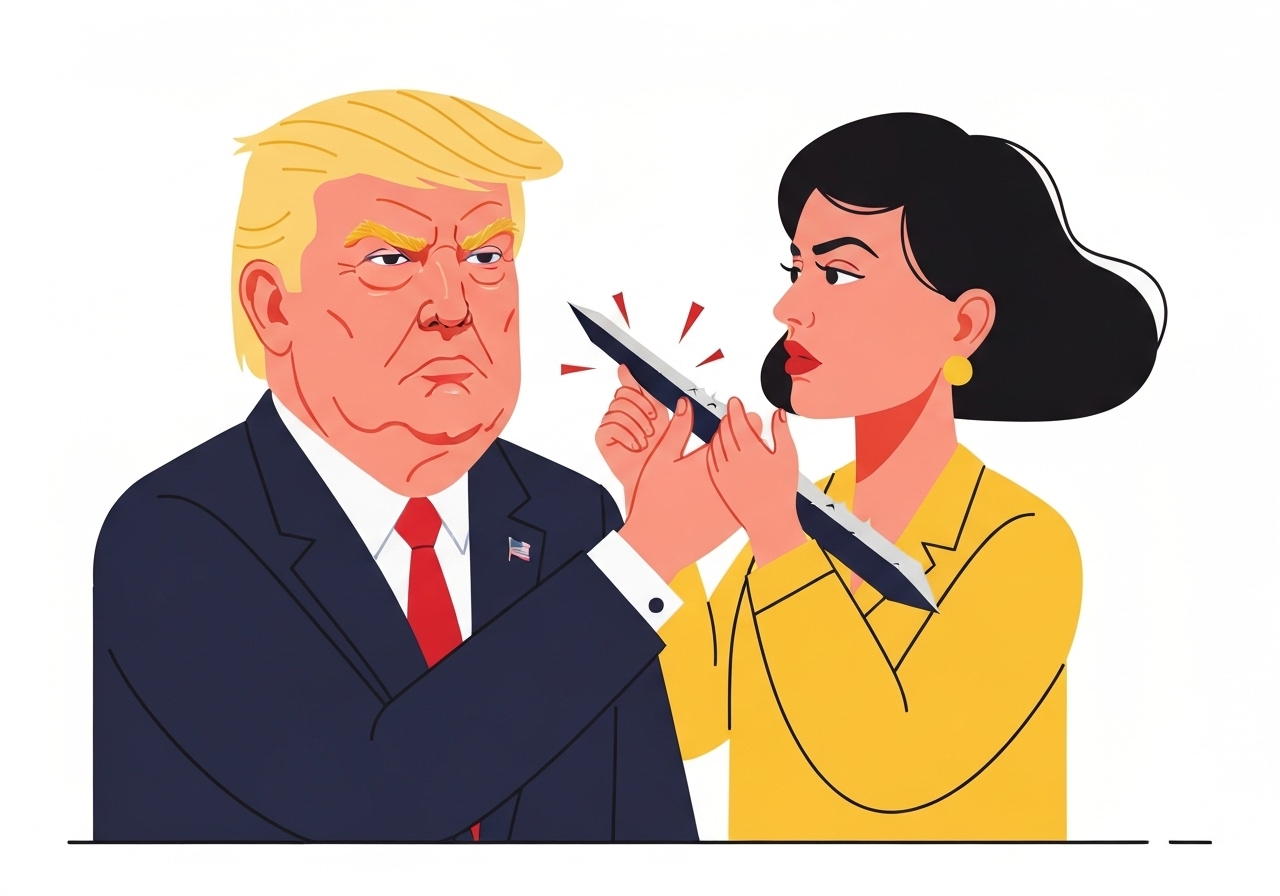
Lead: On Nov. 15, 2025, President Donald Trump publicly declared he was cutting ties with Rep. Marjorie Taylor Greene (R-Ga.), calling her “Wacky Marjorie” and saying he would back a primary challenger “if the right person runs.” The split played out on social media and followed months of visible friction as Greene shifted her tone and publicly criticized GOP leaders. Greene replied on X, accusing Trump of lying and sharing a screenshot she says shows a text about releasing the Jeffrey Epstein files. The exchange signals a potentially consequential rupture between a former close ally and the party’s dominant 2024 figure.
Key Takeaways
- Trump wrote on X on Nov. 15, 2025 that Greene has become “Wacky” and accused her of going “Far Left,” adding he would endorse a challenger in next year’s midterms “if the right person runs.”
- Greene responded on X saying Trump “attacked me and lied about me,” and posted a screenshot she said was a text urging release of the Jeffrey Epstein files — a matter the House will vote on next week.
- Greene, a three-term U.S. House member, has recently moderated public messaging with appearances on HBO’s Real Time and ABC’s The View and interviews aimed beyond core MAGA audiences.
- Her public tensions with Republican leaders included criticism during the recent federal government shutdown and calls for a plan to help people losing subsidies afford health insurance.
- Key moments in the fraying relationship: May 2025 — Greene announced she would not run for Senate against Jon Ossoff; June 2025 — she sided with Tucker Carlson; July 2025 — she said she would not run for governor.
- Trump framed Greene’s shift as recent, saying “something happened to her over the last month or two,” and linked his China trip to protecting jobs in Georgia by addressing magnet export curbs.
- Off-cycle governor races in New Jersey and Virginia were cited as context for voter concern about cost-of-living issues that may be reshaping GOP strategy heading into 2026.
Background
Marjorie Taylor Greene emerged after 2020 as a prominent face of the MAGA movement, known for combative rhetoric and high-profile loyalty to Donald Trump. She played visible roles on Capitol Hill, once acting as a conduit between Trump and other House Republicans and famously appearing with pro-Trump iconography — including a red cap at President Joe Biden’s 2024 State of the Union address. That public identity helped her build a national profile and sustain a base in her northwest Georgia district.
Since 2024 and into 2025, fractures have grown within the GOP between traditional national-security conservatives, establishment figures and hardline MAGA allies. Greene’s recent pivot — interviews reaching broader audiences and critiques of party leaders — intersected with a string of decisions in which she declined higher-profile statewide runs. Those choices, and her public disagreements with party managers and donors, altered perceptions of her political trajectory.
Main Event
On Nov. 15, 2025, Trump posted on X that Greene had become a “Wacky” figure and accused her of incessant complaining, quoting her as saying “COMPLAIN, COMPLAIN, COMPLAIN!” He wrote he could not “take a ranting Lunatic’s call every day” and floated the possibility of backing a primary opponent in the 2026 midterms. Trump framed the rupture as the culmination of months of behavior he found unacceptable.
Greene immediately answered on X, saying Trump had “attacked me and lied about me,” and she attached a screenshot she said was a text to the president urging public release of the Jeffrey Epstein files — a release scheduled for a House vote the following week. Greene suggested that the Epstein-files demand had provoked Trump to lash out, alleging he was fighting to keep those materials private.
The public spat followed several weeks in which Greene adopted a less combative, more outreach-focused posture. She appeared on HBO’s Real Time with Bill Maher, ABC’s The View (where co-host Sunny Hostin said she felt like “a completely different Marjorie Taylor Greene” and Joy Behar quipped “Maybe you should become a Democrat”), and on podcasts and broadcast interviews targeting audiences beyond hardcore MAGA supporters.
Trump sought to explain the timing by pointing to recent events, including his trip to China to meet Xi Jinping; he argued that without that visit there would have been economic consequences for Georgia jobs because of magnet export curbs. He also referenced off-cycle losses for Republicans in New Jersey and Virginia as part of a broader tactical reassessment that influenced his view of Greene’s standing.
Analysis & Implications
Politically, a public break between Trump and Greene could reframe intra-GOP dynamics ahead of the 2026 midterms. Greene has been both a mobilizer on the hard-right and an irritant to some establishment figures; a Trump-backed primary challenger could test how much nationalized endorsement power he retains versus local incumbent advantages. In Georgia specifically, where manufacturing and technology supply chains are sensitive to international trade moves, Trump’s defense of his China outreach ties directly into constituent economic arguments.
Greene’s recent moderation and media outreach suggest a dual strategy: keep core supporters while courting broader voters concerned about bread-and-butter issues. That repositioning coincided with her public criticism of House leadership over the shutdown and health-subsidy affordability, signaling friction not just with Trump but with the party’s governing apparatus. If Greene continues to distance herself from gatekeepers, she may face both primary and donor pressures.
The Epstein-files matter injects a separate dynamic. Greene framed the files as the proximate catalyst for Trump’s reaction; if the dispute centers on transparency and sensitive records, the confrontation may attract attention from both civil-liberties advocates and voters seeking accountability. How the House vote goes, and whether additional revelations emerge, could reshape the news cycle and influence local and national perceptions of both figures.
Comparison & Data
| Date | Event |
|---|---|
| May 2025 | Greene declines Senate run against Jon Ossoff |
| June 2025 | Publicly sides with Tucker Carlson after Trump calls Carlson “kooky” |
| July 2025 | Greene says she will not run for governor |
| Oct–Nov 2025 | Media appearances on Real Time and The View; outreach beyond MAGA base |
| Nov 15, 2025 | Trump publicly disavows Greene on X and hints at endorsing a challenger |
The timeline shows a pattern of high-profile decisions through 2025 in which Greene scaled back statewide ambitions while increasing media outreach. That sequence helps explain why both her allies and critics saw the relationship with Trump evolving rather than snapping suddenly.
Reactions & Quotes
“All I have seen from her in recent months is COMPLAIN, COMPLAIN, COMPLAIN! I can’t take a ranting Lunatic’s call every day.”
President Donald Trump (post on X, Nov. 15, 2025)
“He attacked me and lied about me.”
Rep. Marjorie Taylor Greene (post on X, Nov. 15, 2025)
“I feel like I’m sitting next to a completely different Marjorie Taylor Greene.”
Sunny Hostin, co-host, ABC’s The View
Unconfirmed
- Greene’s claim that her text about releasing the Epstein files “is what sent [Trump] over the edge” is her interpretation; direct evidence linking that single message to Trump’s decision has not been independently verified.
- Whether Trump will formally endorse and financially back a specific primary challenger to Greene remains unannounced; his statement was conditional — “if the right person runs.”
Bottom Line
This public rupture between Trump and one of his erstwhile marquee supporters underscores persistent volatility within the Republican coalition. It reflects both personality-driven conflicts and deeper strategic disagreements about messaging, priorities and electability after mixed results in recent off-cycle races.
For Greene, the split risks energizing both critics and loyalists: critics may see an opening for a more traditional Republican alternative, while her supporters could rally behind her as an outsider fighting party orthodoxy. For Trump, the move signals an ongoing willingness to recalibrate alliances to protect perceived electoral interests ahead of 2026.
In the near term, watch the House vote on the Epstein files, any formal endorsement Trump makes, and whether a credible primary opponent emerges in Georgia. Those developments will determine whether this episode is a temporary spasm or the start of a lasting realignment within the GOP.
Sources
- NPR (national media reporting)
- Associated Press (news agency; photo credit: Rod Lamkey/AP)