
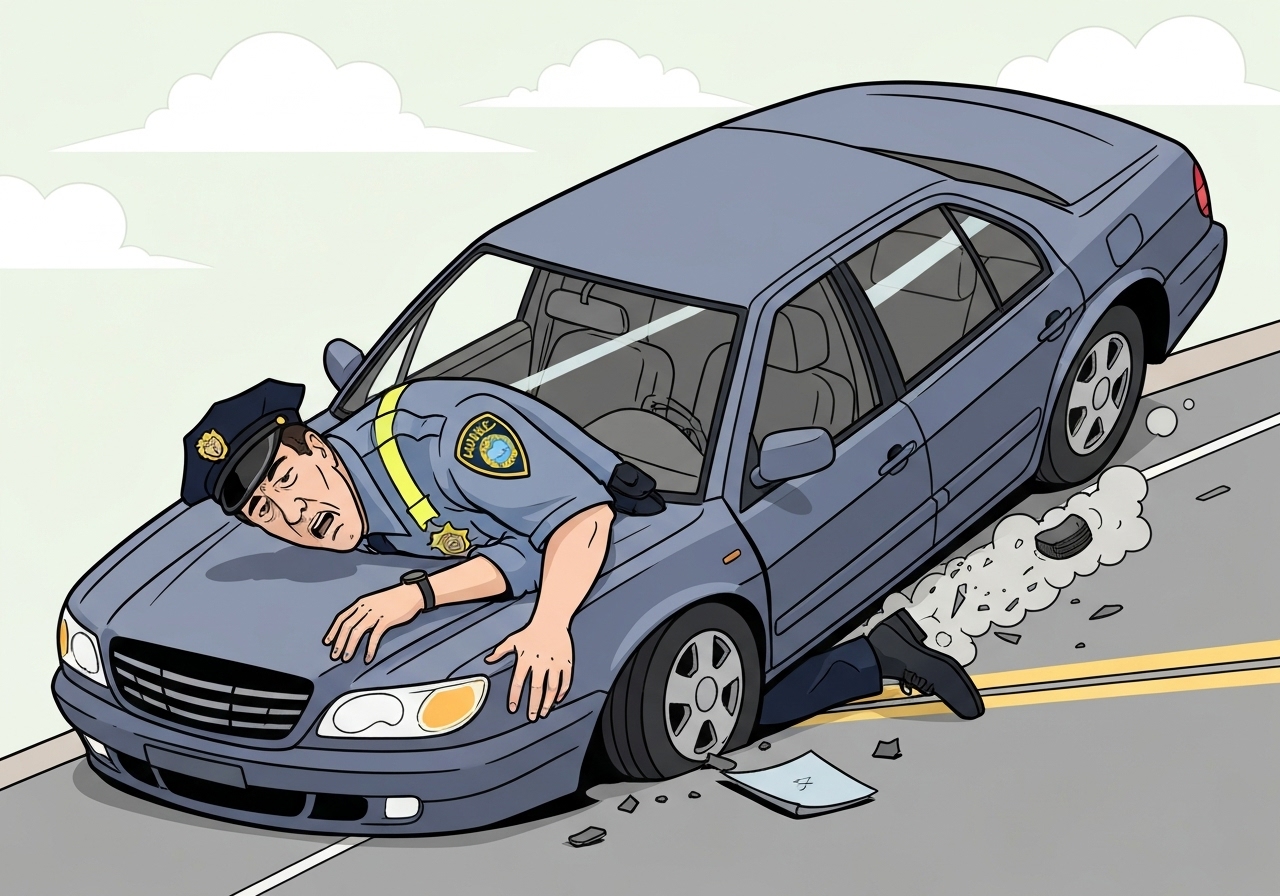
Lead: On the night of Friday, November 14, 2025, two law-enforcement vehicles supporting Vice President JD Vance’s motorcade collided in Maryville, Tennessee, about 17 miles south of Knoxville. The crash involved a Tennessee state trooper vehicle and a Maryville Police Department motorcycle officer; the officer was taken to the University of Tennessee Medical Center in critical condition. Officials say an ambulance from the motorcade provided immediate aid, and both injured officers were transported for evaluation. Local and state authorities are investigating while the U.S. Secret Service says the motorcade’s protective mission was not affected.
Key Takeaways
- The crash occurred Friday night, November 14, 2025, in Maryville, Tennessee, roughly 17 miles south of Knoxville.
- Two law-enforcement vehicles were involved: a Tennessee state trooper vehicle and a Maryville Police Department motorcycle officer.
- One officer was reported in critical condition and both were taken to the University of Tennessee Medical Center for evaluation and treatment.
- An ambulance assigned to the motorcade stopped immediately to provide rapid medical assistance at the scene.
- The Tennessee Highway Patrol has opened an investigation into the collision.
- The U.S. Secret Service reported that the safety and movement of its protectees were not affected by the incident.
- Local officials asked the public to keep the injured officer, their family and medical staff in their thoughts.
Background
Motorcade operations for senior federal officials routinely involve coordinated movement by local police, state troopers and federal agents. Tennessee, like other states, assigns state troopers and municipal officers to manage traffic, clear routes and provide direct escort for visiting protectees. Incidents within motorcades are rare but carry elevated risk because vehicles operate in close formation and often travel at varying speeds in response to route changes.
Maryville is a city of approximately 30,000 residents located about 17 miles south of Knoxville; its police department has partnered with state and federal agencies on many dignitary movements. The presence of ambulances and medical assets in a motorcade is standard protocol to ensure immediate care if an emergency occurs. Investigations of any crash involving law-enforcement escorts typically examine vehicle speed, spacing, signaling, roadway conditions and communications among units.
Main Event
According to city and state statements, the crash involved a Tennessee state trooper and a motorcycle officer from the Maryville Police Department while both were supporting Vice President JD Vance’s motorcade on Friday night. Sources indicate one of the motorcade ambulances stopped at the scene to provide rapid medical assistance, and emergency responders then transported the injured officers to the University of Tennessee Medical Center.
Maryville Police Department Chief Tony Crisp posted that the officer was in critical condition and requested public prayers for the officer, their family and the medical staff. Initial communications from the Tennessee Department of Safety suggested the trooper might not have been transported, but the city later confirmed both the trooper and the officer were taken to the hospital for evaluation.
The Tennessee Highway Patrol has assumed the investigative lead and is gathering evidence, witness statements and vehicle data. The U.S. Secret Service’s resident agent in charge in Knoxville, Katherine Pierce, said the agency was monitoring the situation closely and that the protective mission was not disrupted. No names have been released for the two injured officers while the investigation and hospital notifications proceed.
Analysis & Implications
An in-motorcade collision raises immediate operational questions about spacing, communication and the integration of local and federal protective details. Motorcade formations compress vehicle headways to maintain security, which reduces reaction time; when one unit has an unexpected stop or maneuver, following units may have limited ability to avoid a collision. Investigators will examine whether standard spacing and speed protocols were maintained and whether any equipment malfunction or roadway factor contributed.
Beyond the immediate cause, the incident may prompt reviews of training and interagency procedures in Tennessee and among agencies that regularly coordinate with the Secret Service. Departments often conduct after-action reviews after high-profile movements; if systemic gaps are found, agencies can revise protocols for ambulance placement, motorcycle operation in close formations, and real-time communications. Any recommended changes could affect future motorcade planning nationwide given the routine nature of such escorts for federal officials.
Politically and publicly, the crash underscores the hazards faced by officers providing protective services. While the Secret Service emphasized that protectees were not endangered, the hospitalization of a city officer in critical condition may draw public and media attention to resource allocation, local agency staffing and the burden on municipal police when supporting national security operations. The investigation’s findings will shape whether this event is treated as an operational anomaly or as a cautionary case prompting broader procedural adjustments.
Comparison & Data
| Item | This incident |
|---|---|
| Date | Night of Nov. 14, 2025 |
| Location | Maryville, Tennessee (≈17 miles south of Knoxville) |
| Vehicles involved | Tennessee state trooper vehicle; Maryville PD motorcycle |
| Injuries | One officer critical; both officers taken to University of Tennessee Medical Center |
The table above distills the confirmed factual elements available from official statements and the reporting to date. As typical with active investigations, additional data — such as exact timing, vehicle speeds, and witness accounts — will be disclosed as the Tennessee Highway Patrol completes its review.
Reactions & Quotes
“We ask everyone to keep the officer, family and the medical staff in your prayers,”
Tony Crisp, Chief, Maryville Police Department
Chief Crisp’s appeal highlights the immediate human concern driving local messaging while the incident response and hospital care are underway.
“The safety and movement of our protectees were not impacted by this incident,”
Katherine Pierce, Resident Agent in Charge, U.S. Secret Service — Knoxville
Pierce’s statement aims to reassure that the protective detail’s primary mission continued uninterrupted despite the crash and ensuing emergency response.
Unconfirmed
- Specific cause of the collision — whether mechanical failure, human error, road conditions or communications lapse — has not been released by investigators.
- The current medical prognosis beyond the initial “critical” status has not been publicly disclosed by hospital officials.
- Whether body-worn camera or dashcam footage exists and will be released remains unclear pending the Tennessee Highway Patrol investigation.
Bottom Line
This crash, while limited in scope, spotlights the risks inherent in close-formation protective movements and will likely trigger at least a procedural review by the agencies involved. The Tennessee Highway Patrol’s ongoing investigation should clarify the proximate causes and produce recommendations for preventing similar incidents in the future.
In the short term, the focus remains on the injured officer’s medical care and on providing transparent, accurate information to a concerned public. Long-term implications will hinge on the investigation’s findings and any resulting changes to interagency coordination, training or motorcade configuration.