
Lead
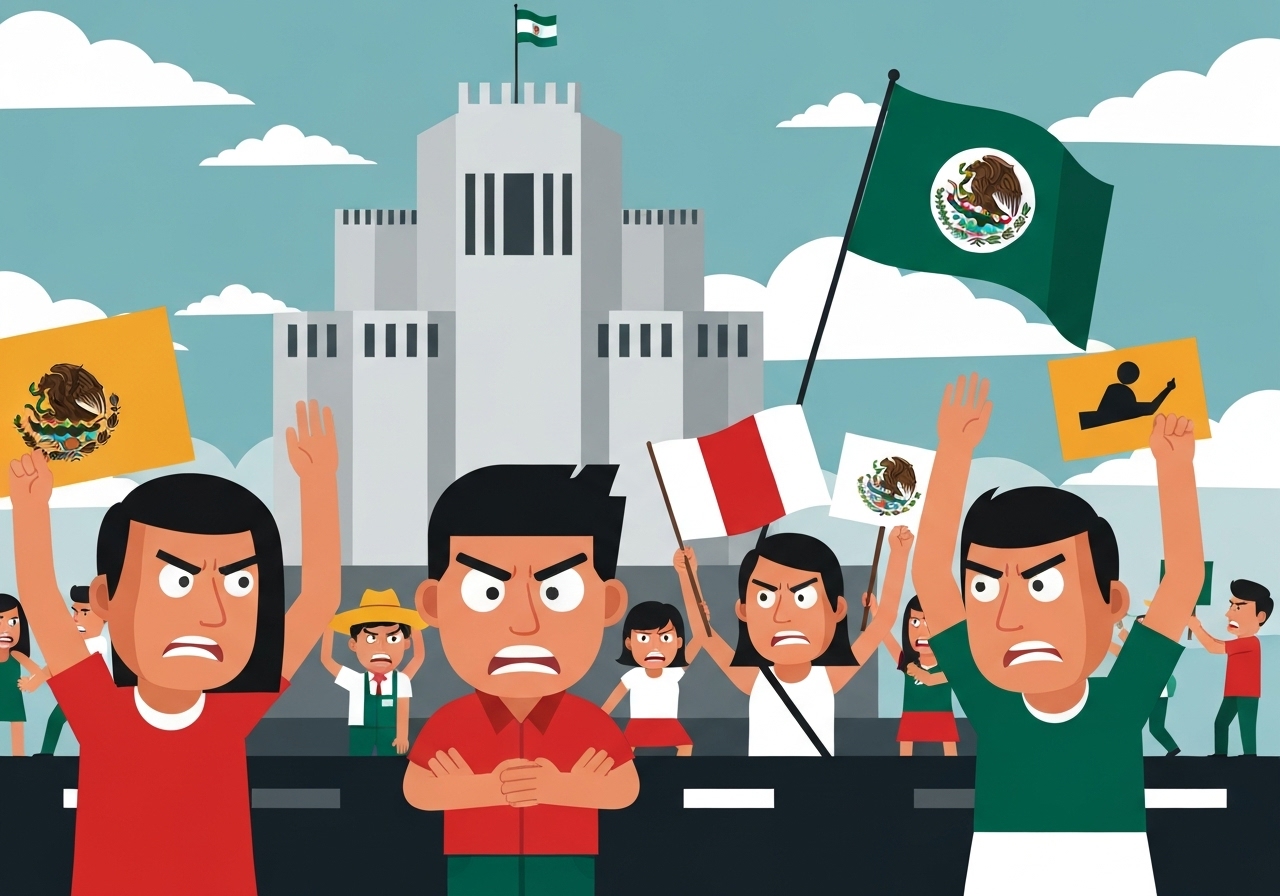
On , mass demonstrations erupted in more than 50 Mexican cities after the assassination of a prominent mayor, with large gatherings and clashes in Mexico City’s central plazas. Protesters — spanning Generation Z activists to pensioners — rallied against persistent violence, extortion and perceived government corruption, demanding change. Authorities said hundreds confronted police at the Zócalo and near the National Palace, where tear gas was used and metal barricades were torn down. The unrest exposed deep public frustration despite President Claudia Sheinbaum’s continued polling strength.
Key Takeaways
- Protests took place in over 50 cities nationwide on Nov. 15, 2025, fueled by outrage after the assassination of Carlos Manzo, a mayor from Michoacán.
- Mexico City demonstrations included confrontations at the Zócalo and National Palace; officials reported about 100 police officers injured, 40 hospitalized, and 20 arrests.
- The government presented an intelligence-style briefing alleging an “inorganic, paid” campaign to promote the protests and claimed nearly $5 million was spent on promotion.
- Organizers and participants ranged from Gen Z users coordinating on platforms like Discord to older voters and farmers citing extortion and insecurity as daily realities.
- Prominent opposition voices such as Ricardo Salinas Pliego were named by officials as linked to promotion of the demonstrations; he denied the accusation.
- Protest iconography included white flags and cowboy hats memorializing Carlos Manzo; some banners compared him to El Salvador’s Nayib Bukele for his hardline stance on crime.
Background
Mexico has grappled with high levels of organized-crime violence and pervasive extortion for years, problems that continue to shape voters’ perceptions of safety and governance. Recent months saw a spike in public outrage after the assassination of Carlos Manzo, an outspoken Michoacán mayor who had advocated a forceful response to cartels and founded a local political effort called the Sombrero Movement. Extortion is frequently cited by rural producers and urban merchants as a chronic drain on livelihoods, while several states have turned into battlegrounds for well-armed criminal groups.
President Claudia Sheinbaum has prioritized weakening criminal organizations through a mix of security operations and institutional reforms, and remains broadly popular in many polls. Her administration has also resisted foreign security operations on Mexican soil, stressing sovereignty even as it cooperates with U.S. intelligence sharing. The disputed balance between security gains and ongoing violence has been a central political fault line ahead of future electoral cycles.
Main Event
Demonstrations began in the morning in numerous regional capitals and swelled in Mexico City by afternoon, concentrating at the Zócalo plaza and along Paseo de la Reforma. Organizers and participants — many young and some using social apps to coordinate — demanded accountability for corruption and for the authorities’ handling of violence. In the capital, clashes escalated near the National Palace after some demonstrators tore down metal fencing; police responded with tear gas and there were reports of rocks thrown at officers.
Authorities reported roughly 100 police officers were injured, with 40 requiring hospitalization, and that 20 people were detained in connection with the clashes. Officials described a tense standoff when masked protesters confronted security forces guarding government buildings. Demonstrators carried banners honoring the slain mayor Carlos Manzo and shouted calls for the resignation of the president; several participants described the movement as broader than any single leader or party.
The Sheinbaum administration characterized the protests as part of an “inorganic, paid” campaign promoted by opposition-linked actors and new social accounts, presenting a government analysis that traced online promotion to a set of accounts and estimated promotional spending at nearly $5 million. Those at the demonstrations disputed that depiction, saying the turnout reflected genuine anger over corruption, extortion and insecurity.
Analysis & Implications
The protests crystallize a tension between measured security policy and popular demand for immediate, visible results. Even with initiatives targeting cartels, the perception that organized crime continues to exert a heavy influence — through killings, extortion and brazen attacks — has left many citizens skeptical of institutional progress. For President Sheinbaum, the demonstrations pose a political risk: they reveal openings for opponents to depict her approach as ineffective despite her remaining broadly popular in many polls.
Politically, the unrest could reshape the narrative ahead of future elections by amplifying security as a decisive voter concern. If protesters sustain momentum, candidates offering harder-line security measures may gain traction, potentially pushing public debate toward proposals that could increase confrontations with armed groups. Conversely, a more repressive response risks alienating moderates and international observers concerned about civil liberties.
Economically, continued instability in key states and rising extortion can depress investment and squeeze small producers, further fueling rural discontent. Internationally, debates over cooperation with the United States may intensify: some protesters called for U.S. intervention to weaken cartels, while official policy continues to prioritize Mexican sovereignty and intelligence collaboration over foreign deployments. The government’s allegation of paid online promotion — if substantiated — would also raise questions about political financing and digital manipulation in Mexican politics.
Comparison & Data
| Metric | Reported Figure |
|---|---|
| Cities with demonstrations | More than 50 |
| Police officers injured | About 100 (40 hospitalized) |
| Arrests | 20 |
| Government alleged promotion spending | Nearly $5 million |
| High-profile assassination | Carlos Manzo (Nov. 2025) |
The table summarizes official tallies and widely reported figures from the Nov. 15 events. While the numbers provide a snapshot of immediate physical harms and the scale of demonstrations, longer-term metrics — such as trends in homicide rates, extortion incidents and political approval over subsequent months — will better indicate whether the protests change policy or public safety outcomes.
Reactions & Quotes
“I am tired and saddened by the situation in the country today — the goal is to remove the president and show that the people are not with her,”
Rodrigo Santana, protest participant
Mr. Santana, a 21-year-old performer, framed removal of the president as a starting point rather than a fully formed plan. Other young protesters emphasized broad discontent over education, jobs and disappearances rather than a single demand.
“This is part of an inorganic, paid campaign,”
Sheinbaum administration presentation (official)
The government’s statement attributed organized online promotion to opposition-linked figures and new social accounts, and produced an estimate of promotional spending; those claims remain contested by participants and some named individuals.
“I demand that you present a single piece of evidence for the lies you are spreading,”
Ricardo Salinas Pliego (social media)
The business leader denied government accusations he helped orchestrate the demonstrations, reflecting an immediate public dispute over responsibility for the unrest.
Unconfirmed
- The government’s claim that nearly $5 million was spent to promote the protests has been publicly asserted but not independently verified in detail.
- Specific accusations that named individuals or companies orchestrated the demonstrations remain contested and lack judicial findings as of publication.
- Reports that protesters planned a coordinated break-in at the National Palace via Discord channels reflect planning chatter but are not confirmed as organized, executed plots.
Bottom Line
The Nov. 15 demonstrations exposed widespread frustration over corruption, extortion and violent crime, bringing together diverse social groups and elevating security as a political flashpoint. While President Sheinbaum retains significant public support in many polls, the protests reveal vulnerabilities in public confidence about safety and governance that opponents may exploit.
Whether the unrest produces policy shifts will depend on follow-through from authorities, verification of claims about paid online promotion, and whether protest networks sustain pressure or crystallize around clear political alternatives. For citizens and policymakers alike, the events underscore that security and accountability remain central and unresolved challenges in Mexico.
Sources
- The New York Times (news report)