
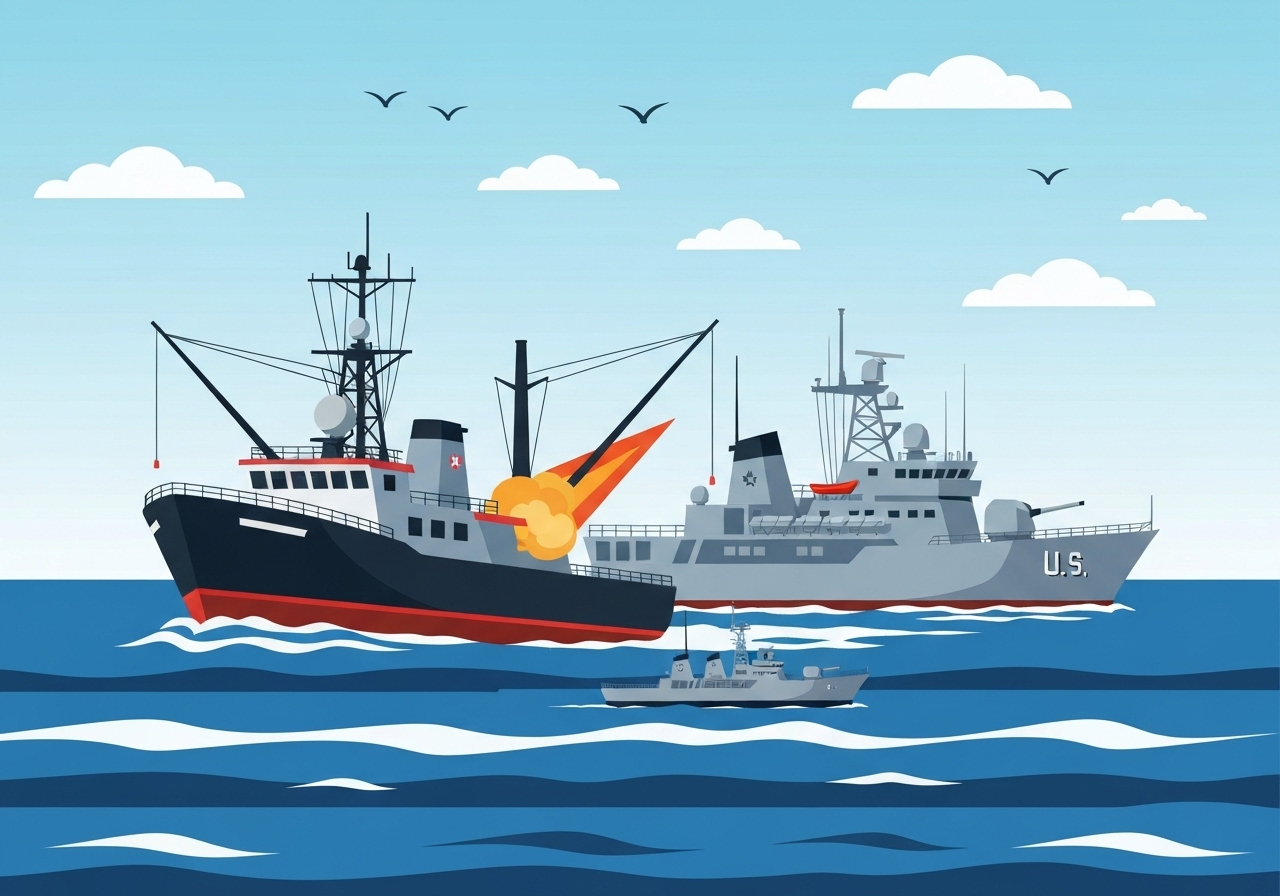
The U.S. military on Saturday struck a vessel in the Eastern Pacific that authorities said was carrying narcotics, killing three people, U.S. Southern Command (SOUTHCOM) announced on November 16, 2025. SOUTHCOM described the target as a craft run by what it called “a Designated Terrorist Organization,” and said the boat was transiting a known drug-trafficking route in international waters. The command characterized this action as one of a string of recent interdictions; it described this as the 21st such strike in recent weeks. The move comes as the nuclear-powered carrier USS Gerald R. Ford and its strike group arrived in the Caribbean Sea, part of a broader U.S. military buildup that officials say is aimed at curbing narcotics flows.
Key Takeaways
- U.S. forces carried out a strike on a vessel in the Eastern Pacific on Saturday; SOUTHCOM reported three people killed in the attack.
- SOUTHCOM labeled the boat as operated by “a Designated Terrorist Organization” but did not name the group or the vessel’s port of origin.
- SOUTHCOM said this was the 21st strike in recent weeks; separate reporting notes at least 22 vessels struck since September and at least 83 fatalities overall.
- The strike occurred in international waters along a commonly used trafficking corridor, according to SOUTHCOM’s social media post.
- The USS Gerald R. Ford carrier strike group arrived in the Caribbean Sea on Sunday, reinforcing a wider U.S. presence in the region.
- The administration frames the operations as an anti-drug campaign, calling the effort Operation Southern Spear; critics have demanded more legal and evidentiary detail.
- Regional leaders, the U.N. human rights office and some U.S. lawmakers have called for clearer justification and transparency about targets and legal authority.
Background
Since September 2025, U.S. military units have increased maritime strikes on vessels suspected of carrying narcotics from South America toward the United States. Officials portray the operations as part of a campaign to break trafficking networks and limit the flow of illegal drugs into the U.S., while the Pentagon has released only limited operational details publicly. Defense Secretary Pete Hegseth has promoted the wider anti-trafficking push under the name Operation Southern Spear; the administration frames the effort as responding to an “armed conflict” with transnational cartels. That framing and the frequency of strikes have prompted questions from governments in the region, human rights bodies and members of Congress about the legal basis and the criteria used to designate targets.
Drug-smuggling routes across the Eastern Pacific have long been monitored by multiple agencies, with transits often taking place in international waters before interdiction or inland distribution. Previous interdictions and law-enforcement operations have sometimes involved cooperation with partner nations; the recent uptick in U.S. naval and strike operations marks a more overt military posture. The deployment of the USS Gerald R. Ford strike group to Caribbean waters this week is the most visible element of that buildup and signals increased capacity for sustained maritime operations in the hemisphere.
Main Event
SOUTHCOM’s announcement on November 16, 2025, identified the targeted vessel as operating under the control of “a Designated Terrorist Organization” and said the craft was carrying narcotics. The command released video on social media it said documented the vessel’s cargo and movement along a trafficking corridor; SOUTHCOM did not share intelligence supporting the identity of the organization or the chain of custody for the narcotics claim. Military officials reported three fatalities resulting from the strike and characterized the action as part of a series of similar interdictions in recent weeks.
The strike took place in international waters in the Eastern Pacific; SOUTHCOM did not disclose the vessel’s departure point or intended destination. U.S. spokespeople reiterated that the operations aim to disrupt the maritime flow of illicit drugs into the United States, and they said the expanded naval presence — including the arrival of the USS Gerald R. Ford strike group on Sunday — supports sustained interdiction capability. The Navy carrier is the largest in the fleet and represents a significant escalation in surface and air assets available for regional operations.
Officials have not publicly released detailed evidence linking the people killed on the boats to terrorist organizations, and they have described some aspects of the operations only in broad terms. Congressional members from both parties have pressed for briefings and documents explaining target selection, rules of engagement and legal authority for strikes in international waters. Regional governments and human rights groups have likewise sought more transparency and assurances about civilian protection and investigative follow-up when strikes cause casualties.
Analysis & Implications
The U.S. campaign reflects a strategic prioritization of interdiction over expanded law-enforcement cooperation in parts of the hemisphere. Using military strikes against small vessels marks an escalation in tactics; it signals U.S. willingness to apply lethal force at sea rather than rely solely on seizures, arrests or partner-nation prosecutions. That choice raises legal and diplomatic questions about the standards used to identify targets, the evidence required to justify lethal force, and the potential for misidentification in complex maritime environments.
Politically, the strikes risk straining relations with Latin American governments that emphasize national sovereignty and judicial processes. Several regional leaders have protested unilateral use of force and called for multilateral approaches. International human rights bodies have urged transparency and independent investigation whenever lethal force is used; continued limited disclosure by U.S. authorities is likely to amplify those calls and could prompt formal inquiries or diplomatic protest.
Operationally, a concentrated military presence — including a carrier strike group — enhances U.S. capacity to observe and interdict maritime trafficking but also concentrates high-value assets within the theater. That posture may deter some smuggling activity or push traffickers to adapt routes and methods, potentially raising risks to smaller, less-visible vessels. In the medium term, sustained military interdiction without parallel judicial cooperation and capacity-building in source and transit countries could displace trade flows rather than dismantle networks.
Comparison & Data
| Period/Report | Reported strikes | Reported fatalities |
|---|---|---|
| This strike (Nov 15–16, 2025) | 1 | 3 |
| SOUTHCOM — “recent weeks” (statement) | 21 | — |
| Since September 2025 (reported) | 22+ | 83+ |
The table above reconciles the immediate toll from the Nov. 15–16 incident with public tallies cited in recent reporting: SOUTHCOM characterized the operation as the 21st in recent weeks, while press accounts note at least 22 vessels struck since September and at least 83 people killed overall. Differences in counting periods and sources complicate precise aggregation; some tallies may include separate incidents that overlap reporting windows.
Reactions & Quotes
“The vessel was carrying narcotics and was transiting along a known drug‑trafficking route,”
SOUTHCOM (military statement)
SOUTHCOM released a short social-media post and accompanying video to justify the action, emphasizing narcotics carriage and the route used. The command did not provide corroborating documentation of the vessel’s ownership or operational control beyond a public assertion of terrorist organization involvement.
“Operation Southern Spear”
Pentagon / Defense Secretary Pete Hegseth (designation)
Defense leadership has framed the broader effort with this label, indicating a named campaign to disrupt trafficking. Officials have used the term to communicate strategic intent but have so far shared limited operational detail in public forums.
Lawmakers and rights bodies have urged more information on who is being targeted and the legal basis for such strikes,
U.N. human rights office & members of Congress (reaction)
Regional governments and international human-rights officials have expressed concern about due process and civilian harm, asking for transparency and independent oversight. Several U.S. lawmakers — including Republicans and Democrats — have requested more substantive briefings.
Unconfirmed
- Identity of the “Designated Terrorist Organization” allegedly operating the vessel has not been publicly confirmed by SOUTHCOM or corroborated with open-source evidence.
- No public release of chain-of-custody evidence proving the seized cargo were narcotics or linking personnel aboard to terror designations has been provided.
- The legal rationale and specific rules of engagement used to authorize the strike in international waters have not been publicly disclosed in full.
Bottom Line
The November 15–16 strike that killed three people underscores a sharp intensification in U.S. maritime operations aimed at disrupting drug flows from South America. While U.S. officials present the campaign as a focused effort to intercept narcotics and curtail cartel violence, limited public disclosure about target identification and legal authority has generated domestic and international concern. Transparent evidence and clearer legal explanations would help address questions from partner governments, rights bodies and members of Congress.
Looking ahead, sustained military interdictions accompanied by greater intelligence and judicial cooperation with regional partners would be more likely to degrade trafficking networks than strikes alone. Policymakers should weigh immediate interdiction benefits against diplomatic costs and the risk that opaque operations could fuel regional strain or unintended civilian harm.