
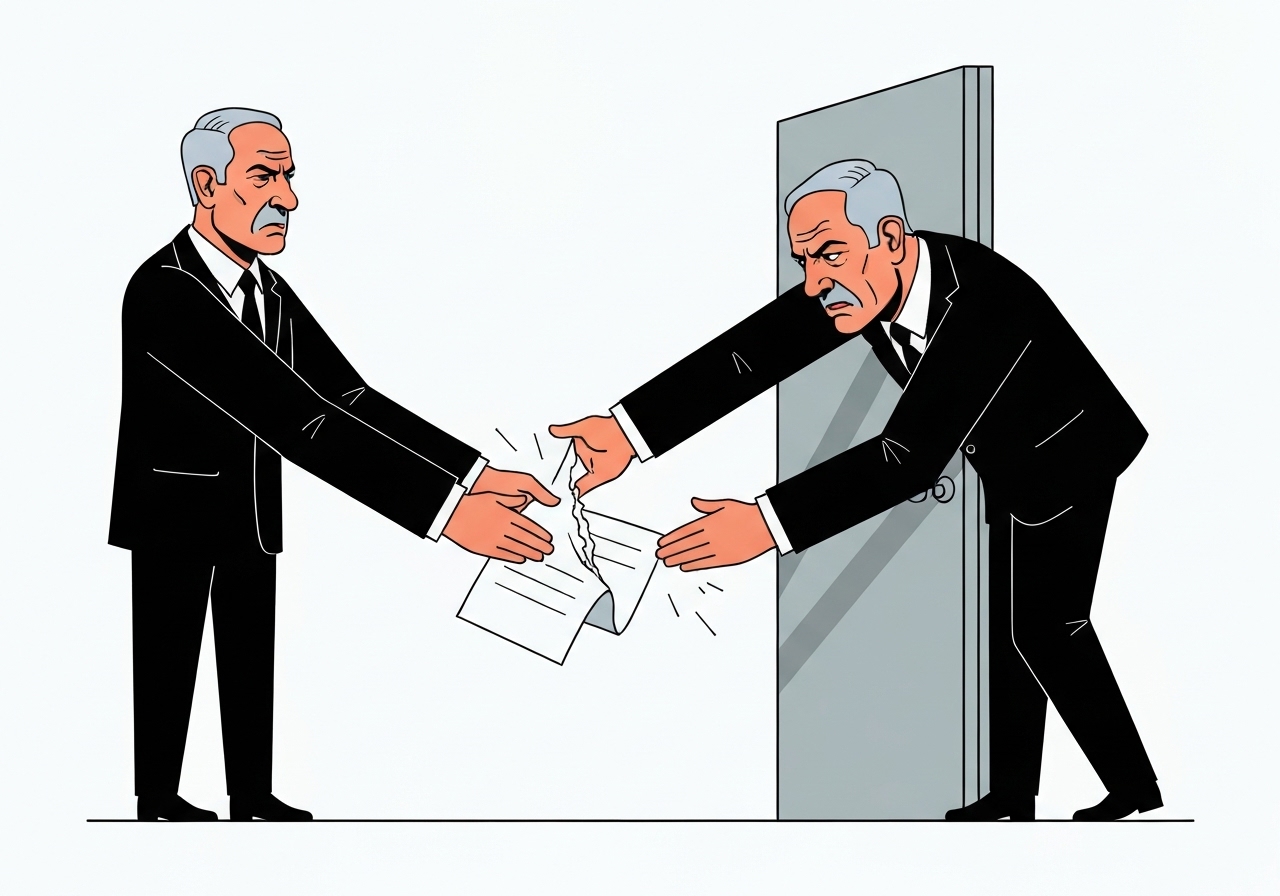
In Tel Aviv on November 16, 2025, Prime Minister Benjamin Netanyahu said Israel will oppose any effort to establish a Palestinian state, a day before the U.N. Security Council was set to vote on a U.S.-drafted resolution that leaves that possibility open. The vote concerns a proposed international stabilization force for Gaza and updated language that says President Donald Trump’s plan may create a “credible pathway” to Palestinian statehood. Netanyahu reiterated his long-standing warning that statehood would empower Hamas and risk a larger Hamas-run entity along Israel’s border. The declaration deepens a diplomatic standoff as the United States seeks international backing for a Gaza ceasefire framework.
Key Takeaways
- The U.N. Security Council prepared to vote Nov. 17, 2025, on a U.S. draft resolution to authorize an international stabilization force in Gaza and include language about a possible path to Palestinian statehood.
- Netanyahu told his Cabinet Israel will oppose any Palestinian state, saying disarmament of Hamas and demilitarization of Gaza must occur “the easy way” or “the hard way.”
- Russia, China and some Arab states opposed the U.S. proposal; a rival Russian plan uses stronger language endorsing Palestinian statehood.
- Hamas and allied Palestinian factions rejected the U.S. text, saying the force must be U.N.-supervised, exclude Israel and not be used to prevent Palestinian self-government.
- U.N. human rights monitors reported more than 260 settler attacks on Palestinians and property in the West Bank in October 2025, the highest monthly total since 2006.
- Palestinian health officials said a 19-year-old was the seventh person killed by Israeli fire in the West Bank over two weeks; six teenagers (ages 15–17) were also reported shot and killed in four separate incidents in that period.
- In Gaza, displacement camps such as Muwasi faced new hardships after heavy rain, underlining civilian vulnerability even as diplomatic debates proceed.
Background
The notion of a Palestinian state alongside Israel has long been framed internationally as the most viable long-term solution to the Israeli-Palestinian conflict. Successive U.S. administrations and many other governments have endorsed a two-state outcome in principle, but details — borders, security arrangements, refugees and sovereignty — remain deeply contested. The latest diplomatic effort centers on a U.S. text that would authorize an international stabilization presence in Gaza while acknowledging the possibility that a U.S.-backed plan could open a pathway to statehood.
Netanyahu and his right-leaning coalition partners have consistently opposed formal Palestinian sovereignty, arguing that statehood would reward Hamas and threaten Israel’s security. That stance intensified after several countries — including the U.K., Australia and Canada — recognized a Palestinian state in September 2025, prompting sharp criticism from the prime minister. At the same time, Washington has faced pressure from prospective troop contributors to clarify language on Palestinian self-determination, leading to a revised draft with explicit wording about a “credible pathway.”
Main Event
On Nov. 16, 2025, Netanyahu addressed his Cabinet ahead of the Security Council vote and rebutted international calls for recognizing Palestinian independence. He said Israel’s position “has not changed one bit” and dismissed external criticism. The U.S. proposal seeks authority for a multinational stabilization force in Gaza, but it met resistance from Russia, China and some Arab delegations that question the mandate’s scope and impartiality.
Hamas and several Palestinian factions issued a joint statement denouncing the U.S. draft as an attempt to impose a mandate biased toward Israel and to limit Palestinian control over Gaza’s affairs. The groups insisted any force must be under direct U.N. supervision and must not involve Israeli forces. They also rejected language in the U.S. draft that calls for disarming Gaza.
Meanwhile, violence in the West Bank added urgency to regional diplomatic discussions. Israeli forces reported engagements in Nablus and the Far’a area where they said suspected assailants were shot after posing threats; Palestinian health authorities recorded multiple fatalities, including a 19-year-old and six teenagers killed in four separate shootings over two weeks. Settler attacks, according to U.N. monitoring, rose sharply in October 2025.
In Gaza, residents of displacement sites such as the Muwasi tent camp struggled after heavy rain flooded tents and ruined possessions, underlining the acute civilian humanitarian needs even as leaders spar over political outcomes. Israeli military statements also described an incident in northern Gaza in which forces said they killed someone who crossed into territory under their control and posed an immediate threat.
Analysis & Implications
The immediate diplomatic impact hinges on the Security Council vote’s outcome and whether the mandate secures sufficient troop contributors. If the resolution passes with language that suggests a path to statehood, it could shift international momentum toward renewed focus on Palestinian self-determination — but legal and practical obstacles to creating a sovereign Palestinian state would remain substantial. Any stabilization force would face complex rules of engagement, questions about U.N. command and control, and political sensitivities about perceived partiality.
Domestically in Israel, Netanyahu’s firm rejection of statehood reflects political calculations: coalition partners from the settler movement and the political right view concessions as existential risks. That domestic posture constrains Israel’s flexibility in negotiations and reduces the political space for U.S.-mediated compromises. Conversely, international pressure on Israel — including recognition moves by other governments and criticism from human rights bodies — increases diplomatic costs for maintaining an absolute veto on statehood.
For Gaza, the proposal’s call for demilitarization and disarming Hamas raises practical questions. Disarmament would require either negotiated surrender, a comprehensive security transition involving credible alternative authorities, or sustained operations — each with high risks. The prospect of a multinational force might reduce direct Israeli military footprint but would still require participating states to accept casualties and complex on-the-ground politics.
Regionally, rival proposals — notably from Russia — that more directly endorse Palestinian statehood could harden divisions in the Security Council and complicate coordination among external actors. If the council fractures, practical steps for stabilization and reconstruction in Gaza could be delayed, worsening humanitarian conditions and potentially fueling more violence that undermines political solutions.
Comparison & Data
| Proposal | Statehood Language | Force Supervision |
|---|---|---|
| U.S. draft (Nov. 2025) | Says Trump plan may create a “credible pathway” to statehood | International stabilization force; U.N. authorization |
| Russian alternative | Uses stronger language favoring Palestinian statehood | Claims greater U.N. oversight (rival text) |
| Status quo | No formal new U.N. mandate | Israeli security control in key areas; humanitarian actors on ground |
The table highlights how competing drafts frame statehood and supervision differently. The U.S. text attempts to bridge troop contributors’ concerns and U.S. strategic goals by adding statehood language; the Russian draft pushes more directly for an endorsement of Palestinian independence. Practically, differences over supervision and the role of Israel are likely to determine whether any new mandate can be implemented.
Reactions & Quotes
Israeli leadership framed the vote as a security, not just diplomatic, issue. Before the cabinet, Netanyahu warned of the consequences of leaving Hamas armed and reiterated a hard line on sovereignty and security measures.
“Either this will happen the easy way, or it will happen the hard way.”
Prime Minister Benjamin Netanyahu
Palestinian factions and Hamas pushed back strongly against any text they view as limiting Palestinian authority or permitting Israeli involvement in an international force.
“We reject any proposal that imposes a mandate biased toward Israel or deprives Palestinians of the right to manage their own affairs.”
Hamas and allied Palestinian factions
Human rights monitors highlighted rising violence in the West Bank as an element that could destabilize broader efforts, citing record monthly figures for settler attacks.
“The U.N. recorded more than 260 attacks by Israeli settlers against Palestinians and their property in the West Bank in October, more than in any month since 2006.”
U.N. Human Rights Office spokesperson Thameen Al-Kheetan
On the humanitarian front in Gaza, displaced residents described the weather’s toll on fragile shelter and possessions.
“Our bathroom is made of fabric. Everything is made of fabric … the rain pours down on us. It’s indescribable suffering.”
Abdallah Abu Quta, displaced Palestinian
Unconfirmed
- Whether the U.S. draft will ultimately produce a Palestinian state remains unconfirmed; the text offers only a potential pathway, not an automatic mechanism for statehood.
- Claims about the exact composition and command arrangements of any stabilization force are unresolved; participating countries had not finalized troop commitments publicly.
- Allegations that the Israeli government officially condones settler violence are contested; rights groups report impunity while government spokespeople characterize incidents as the acts of a small minority.
Bottom Line
The immediate outcome of the Security Council vote will be a key indicator of international unity or division over Gaza and Palestinian statehood. Passage of a U.S.-backed mandate that references a path to statehood could shift diplomatic dynamics, but practical and political barriers on the ground make rapid progress unlikely. Implementation will depend on troop contributors, the force’s rules of engagement, and whether Palestinian actors accept any terms tied to demilitarization.
Domestically, Netanyahu’s uncompromising public stance consolidates his position with right-wing partners but narrows Israel’s negotiating room internationally. Observers should watch the vote text, endorsements from potential troop-contributing countries, and whether a credible mechanism for disarmament and civilian governance in Gaza is negotiated — absent those, humanitarian needs and violence in the West Bank and Gaza are likely to persist.