
Lead
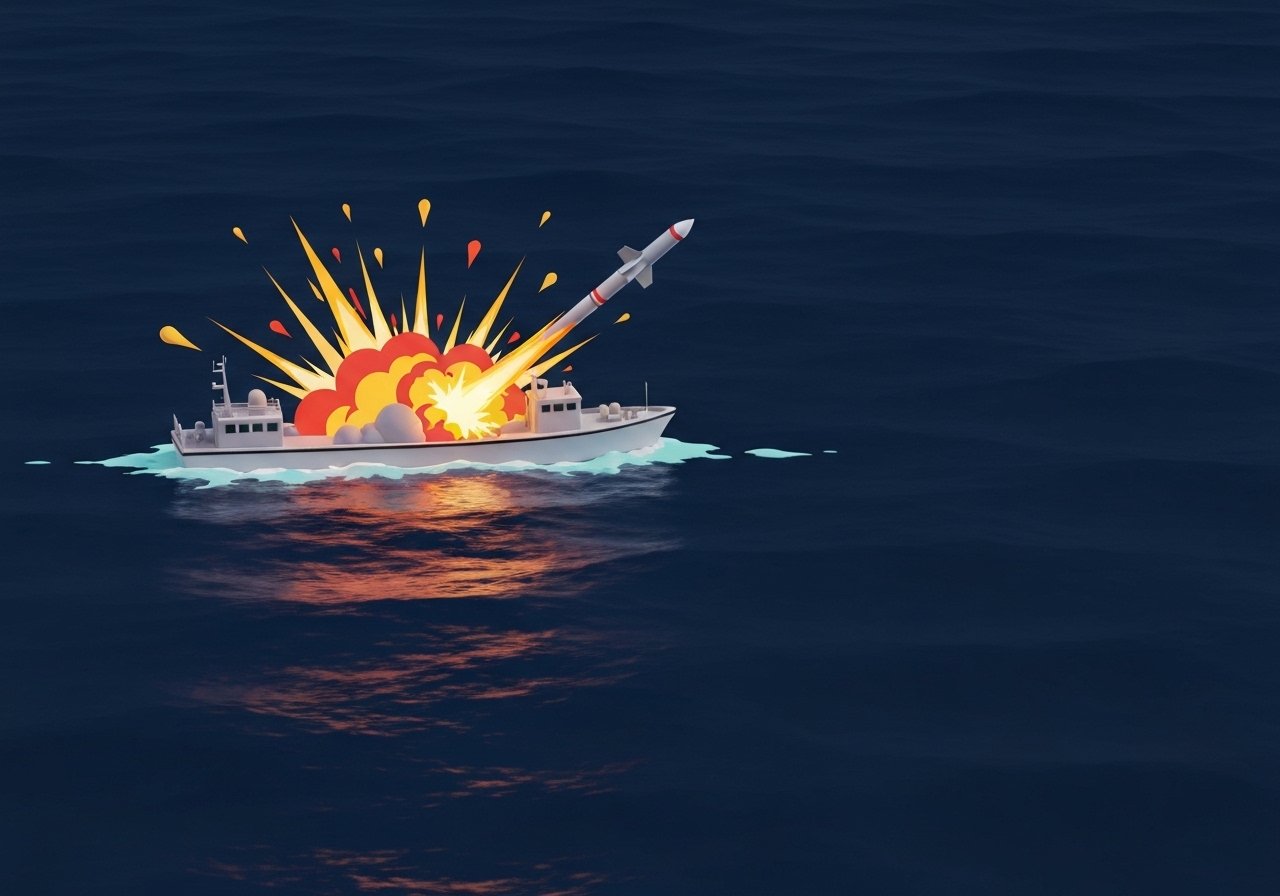
On Nov. 16, 2025, U.S. Southern Command reported that a U.S. strike in the eastern Pacific killed three people alleged to be involved in maritime drug trafficking. The announcement said the attack was carried out by Joint Task Force Southern Spear at the direction of Defense Secretary Pete Hegseth and included video posted to social media showing an explosion. The Southern Command described the vessel as operated by a “designated terrorist organization,” a claim for which it has not publicly produced evidence. The strike is part of a campaign that the Trump administration says targets narcotics shipments by sea.
Key Takeaways
- Three people were reported killed in the Nov. 16, 2025 strike in the eastern Pacific, according to U.S. Southern Command.
- The administration has carried out at least 21 known boat strikes since early September 2025, linked by officials to narcotics interdiction operations.
- Officials say the campaign has resulted in at least 83 known deaths since early September 2025; independent verification of all incidents is incomplete.
- The strike was attributed to Joint Task Force Southern Spear and said to be ordered by Defense Secretary Pete Hegseth.
- The Navy announced the aircraft carrier U.S.S. Gerald R. Ford arrived in the Caribbean the same weekend, adding about 5,500 personnel to a roughly 10,000-strong regional force.
- Legal experts and international law scholars have criticized the strikes as potentially unlawful under the laws of armed conflict when civilians are targeted.
- U.S. officials say the buildup increases capacity for additional maritime strikes and could enable operations against land targets in Venezuela if ordered.
Background
Since early September 2025, the Trump administration has publicly framed a series of maritime strikes as part of an effort to disrupt sea-based narcotics trafficking off Central and South America. The administration asserts that certain vessels are operated by organized criminal groups it treats as combatants; officials say that posture changes the legal framework for targeting. Those claims have not been accompanied by broad public disclosures of the evidence used to determine individual targets.
U.S. Southern Command, which runs military operations in the region, has overseen the strikes and posted operational summaries and footage on social platforms. The campaign has drawn international attention because the attacks are lethal, cross maritime zones, and involve nonstate actors suspected of criminal — rather than conventional — military activity. Victims have included noncombatant mariners; families of at least one deceased Colombian fisherman have publicly demanded investigations.
Main Event
Southern Command posted an announcement on social media late Saturday saying a joint U.S. task force struck a boat in the eastern Pacific and that three people were killed. The statement described the vessel as engaged in narcotics trafficking and alleged it was linked to a “designated terrorist organization,” but the post did not present supporting forensic or chain-of-custody evidence for those claims. The release included a short video clip that the command characterized as showing the strike and a subsequent explosion.
U.S. officials identified the operational unit as Joint Task Force Southern Spear and said the strike was directed by Defense Secretary Pete Hegseth. The command did not provide coordinates or more granular details about the engagement in its public post. Independent verification by third-party monitors or regional governments has not been publicly released for this specific incident.
Separately, U.S. Navy officials confirmed the U.S.S. Gerald R. Ford — the Navy’s newest and most advanced aircraft carrier — arrived in the Caribbean on the same weekend, bringing roughly 5,500 sailors and aircrew into a regional force that officials say numbers about 10,000 personnel. U.S. statements tie the carrier’s presence to increased operational flexibility in the hemisphere, including a greater capacity for maritime interdictions and potential land operations if ordered.
Analysis & Implications
Legally, the strikes raise acute questions. Under established laws governing the use of force, states generally may not intentionally target civilians or use lethal force outside armed conflict absent imminence or domestic law enforcement frameworks. The administration’s position — that a formal armed conflict exists with drug trafficking organizations and that vessel occupants are combatants — is contested by many international law scholars and human rights experts.
If the U.S. treats cartel-linked maritime actors as lawful military targets, that sets a precedent for expanding battlefield definitions to include transnational criminal groups. That shift could be cited to justify further extraterritorial uses of force beyond interdiction at sea, potentially increasing the risk of escalation with regional states and raising sovereignty concerns among Central and South American governments.
The deployment of a carrier strike group into the Caribbean signals a substantive increase in U.S. kinetic capacity in the region. Operationally, the Gerald R. Ford brings aviation, surveillance, and strike options that could be used to intensify maritime operations or to support strikes on land if authorities decide to expand mission parameters. Politically, this posture may be intended both as deterrence and as leverage as U.S. officials publicly weigh options related to Venezuela’s government.
From a policy standpoint, the campaign could produce short-term disruption of trafficking flows but at a potentially high cost: diplomatic fallout, legal challenges, and civilian harm that fuels local grievances. The absence of transparent, case-level evidence will make it difficult for outside observers to assess whether each engagement met legal and operational norms, complicating oversight and accountability.
Comparison & Data
| Metric | Value |
|---|---|
| Known boat strikes (since early Sept. 2025) | 21 |
| Reported deaths tied to campaign (known) | At least 83 |
| U.S.S. Gerald R. Ford added personnel | ~5,500 |
| Estimated regional U.S. force after arrival | ~10,000 |
The table summarizes publicly reported operational figures: 21 strikes and a minimum of 83 known deaths across the campaign to date, plus the carrier’s personnel contribution. These counts derive from government statements and press reporting; independent verification of all incidents varies by case. The numbers show a concentrated, lethal interdiction effort combined with a significant conventional force presence.
Reactions & Quotes
“The vessel was operated by a ‘designated terrorist organization’ and was trafficking narcotics in the eastern Pacific,”
U.S. Southern Command (official statement)
The Southern Command post framed the engagement as part of a counter-trafficking campaign and supplied a short video. Officials cited command-and-control authorization but did not publish underlying evidence to the public.
“These strikes risk running afoul of core principles that prohibit deliberate attacks on noncombatants when evidence of hostile intent or imminence is lacking,”
International law scholars (group assessment)
Legal experts who have reviewed the campaign say the administration’s public legal rationale — treating cartel-linked actors as combatants — is contested and could prompt litigation or international criticism.
“The carrier’s arrival increases U.S. operational options in the region,”
U.S. Navy (operational statement)
Navy statements emphasized force posture and readiness, noting the Gerald R. Ford’s capabilities but declining to link the deployment to specific future operations.
Unconfirmed
- Public, verifiable evidence that the specific vessel targeted on Nov. 16, 2025 was trafficking narcotics has not been released.
- The claim that the boat was operated by a formally “designated terrorist organization” has not been corroborated in a public factual record.
- The extent to which each of the 21 known strikes complied with legal standards has not been independently verified for all incidents.
Bottom Line
The Nov. 16 strike is the latest and most recent in a pattern of U.S. lethal maritime actions that the administration frames as counter-narcotics operations but that many legal experts and regional observers view as legally and politically fraught. Public reporting credits at least 21 strikes and 83 deaths since early September 2025, while detailed, case-level evidence has not been released for independent assessment. The administration’s decision to treat suspected traffickers as combatants marks a significant legal shift with broad implications for how the United States uses force extraterritorially.
With the Gerald R. Ford now in the Caribbean and a larger U.S. force in the region, the capacity for further maritime strikes — and potentially operations on Venezuelan soil if ordered — has increased. Policymakers, courts, and international observers will likely press for greater transparency and legal justification as the campaign continues, while regional governments weigh diplomatic and security responses.