
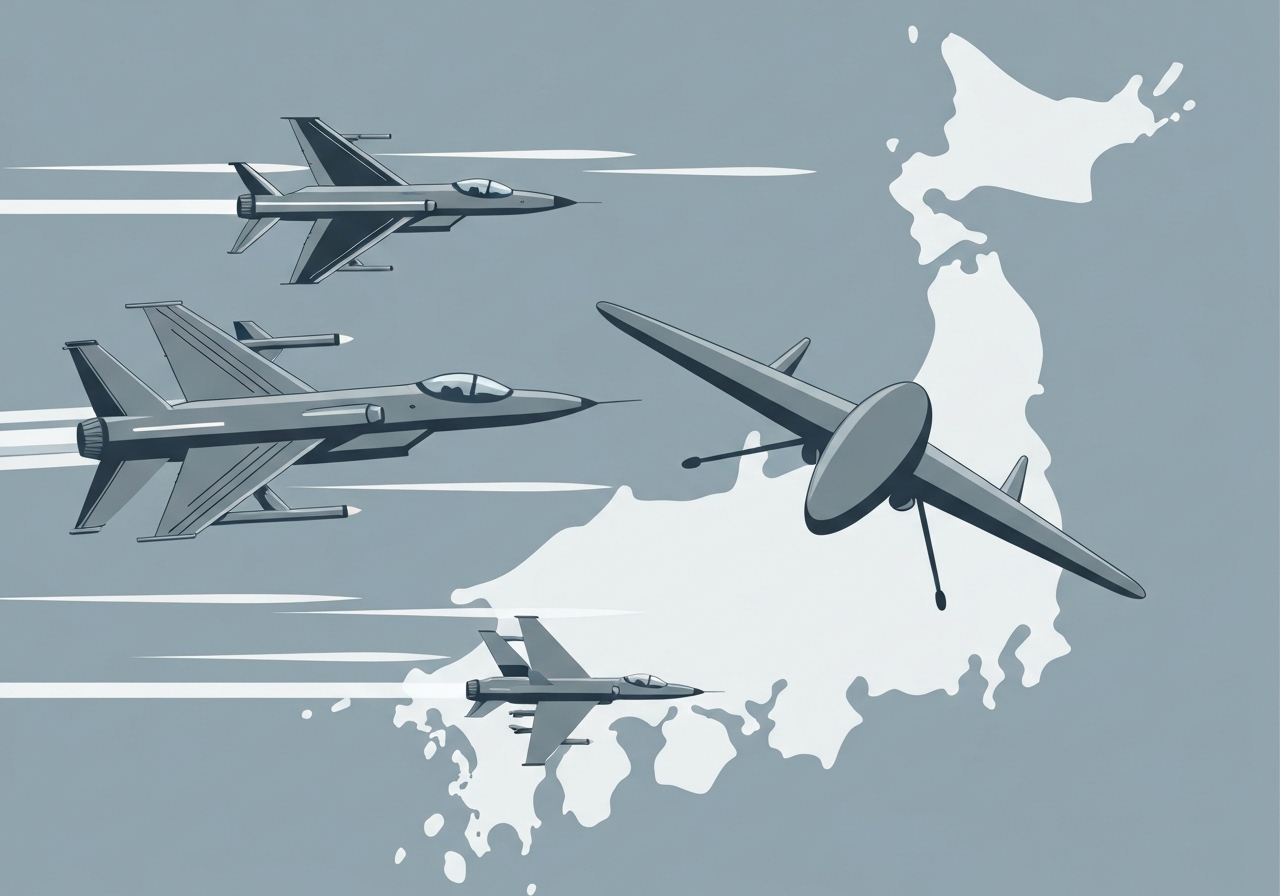
Lead: Tokyo — On Saturday, Nov. 15, 2025, Japan said it scrambled military aircraft after detecting a suspected Chinese drone close to the southern island of Yonaguni, which lies about 60 miles from Taiwan. The move came as Chinese coast guard vessels spent hours in waters around the disputed Senkaku Islands on Sunday, prompting high-level diplomatic exchanges between Tokyo and Beijing. Both incidents followed remarks by Japan’s new prime minister, Sanae Takaichi, on Nov. 7 about potential intervention in a Taiwan contingency, and triggered immediate economic and diplomatic fallout. Tokyo described the aerial and maritime activity as provocative; Beijing characterized some Japanese comments as irresponsible.
- Japan scrambled aircraft on Saturday, Nov. 15, 2025, after detecting a suspected Chinese drone near Yonaguni, a Japanese island about 60 miles from Taiwan.
- Chinese coast guard ships operated for several hours around the Senkaku/Diaoyu Islands on Sunday, Nov. 16, 2025, according to Japan’s Chief Cabinet Secretary Minoru Kihara.
- Prime Minister Sanae Takaichi, 64, told parliament on Nov. 7 that a Taiwan emergency involving “battleships and the use of force” could qualify as a threat to Japan’s survival under its constitution.
- Beijing said Premier Li Qiang does not plan to meet Takaichi at the G20 summit in South Africa later that week; Japan sent senior diplomat Masaaki Kanai to China on Monday, Nov. 17, 2025.
- China advised citizens to avoid travel to Japan and warned some 100,000 Chinese students in Japan of alleged safety risks; Japanese tourism and retail shares fell sharply Monday, with Shiseido down 9%, Mitsukoshi down 11.3%, Pan Pacific down 5.3%, and Japan Airlines down 3.4%.
- Chinese visitors accounted for almost 7.5 million arrivals to Japan in the first nine months of 2025 and spent more than $1 billion per month in Q3, representing nearly 30% of total tourist spending.
Background
Tokyo and Beijing have long stood on opposite sides of a complex regional landscape shaped by history, competing sovereignty claims and security anxieties. The Senkaku Islands, administered by Japan but claimed by China (which calls them Diaoyu), are a repeated flashpoint: coast guard patrols, fishing disputes and air identification zone scrambles have occurred regularly over recent years. Japan’s postwar constitution restricts the use of force but allows limited collective self-defense and action in cases deemed existential, a legal framework that frames debate in Tokyo over how to respond to threats to Taiwan.
Sanae Takaichi assumed office last month as a conservative leader who has publicly criticized China’s military expansion in the region. Her Nov. 7 parliamentary remarks — delivered in the context of hypothetical scenarios — have been read in Beijing as a signal Japan might take a more assertive stance if a Taiwan crisis endangered Japanese survival. China asserts that Taiwan is part of its territory; Japan governed Taiwan from 1895 until 1945, a historical fact that adds sensitivity to the present rhetoric. Geography compounds the stakes: some Japanese islands, including Yonaguni, sit just tens of miles from Taiwan’s main island.
Main Event
Japanese officials reported that military aircraft were launched after radar and other sensors detected an unmanned aerial object they assessed as a suspected Chinese drone near Yonaguni on Saturday. The Defense Ministry described the object’s trajectory as near Japanese airspace and said jets were dispatched to monitor and track the contact. Local authorities in Okinawa prefecture were notified, and no damage or injuries were reported.
On Sunday, Chief Cabinet Secretary Minoru Kihara said Chinese coast guard vessels spent several hours within waters Tokyo considers its territorial sea around the Senkaku Islands. Japanese coast guard units monitored the vessels and lodged protests through diplomatic channels, according to government statements. The two maritime and aerial episodes occurred against the backdrop of heightened rhetoric between Tokyo and Beijing following Takaichi’s remarks.
Beijing responded to the prime minister’s comments with sharp diplomatic language and measures: China summoned Japan’s ambassador and issued travel advisories urging citizens to avoid Japan, and warned Chinese students in Japan about alleged risks. Chinese officials also said Premier Li Qiang would not meet Takaichi at the forthcoming G20 summit — a diplomatic snub with symbolic weight — while Tokyo dispatched senior foreign ministry official Masaaki Kanai to China in a bid to stabilize ties.
Analysis & Implications
The Yonaguni drone sighting and the Senkaku coast guard presence mark a significant uptick in proximity incidents at a time of fragile diplomacy. For Tokyo, even suspected incursions near remote islands can create domestic pressure to demonstrate deterrence and protection of territorial integrity. Takaichi’s framing of a Taiwan contingency as potentially existential for Japan has narrowed Tokyo’s political room for maneuver: that language makes it easier for critics to argue for stronger responses, while complicating low-profile crisis diplomacy.
Beijing’s travel advisories and public warnings signal a mix of diplomatic signaling and economic pressure. China is Japan’s largest source of tourists and a major commercial partner; the sudden market reaction — sharp falls in key retail and travel-related stocks — illustrates how security disputes can spill swiftly into economic channels. Investors reacted immediately: cosmetics, department stores and travel firms with heavy reliance on Chinese visitors saw the largest losses on Monday trading.
Regionally, the incidents could push U.S. and allied policymakers to reassess force posture and contingency planning around Taiwan and the East China Sea. Tokyo’s actions will be watched closely in Washington, Taipei and Seoul for indications of how far Japan might go under its constitutional constraints. Diplomacy in the coming days — including whether Tokyo and Beijing can resume high-level contacts at or after the G20 meeting in South Africa — will determine if this episode cools or escalates.
| Metric | Value (2025) |
|---|---|
| Chinese visitors to Japan (Jan–Sep) | ~7.5 million |
| Average tourist spending (Q3) | > $1 billion per month (Chinese tourists ≈30% of total) |
| Stock moves (Nov. 17, 2025) | Shiseido -9%, Mitsukoshi -11.3%, Pan Pacific -5.3%, Japan Airlines -3.4% |
The table aggregates traveler and market figures cited by government and media sources to show the immediate economic sensitivity of the dispute. The near-term effect on inbound tourism will depend on whether Beijing sustains travel advisories and on consumer sentiment in China; longer-term trends will reflect exchange rates and Japan’s broader appeal as a destination.
Reactions & Quotes
Tokyo framed its immediate response as defensive and aimed at de-escalation, while also lodging formal diplomatic protests. Government spokespeople emphasized monitoring and restraint even as they criticized provocative behavior in adjacent air and sea spaces.
“We scrambled aircraft after detecting a suspected unmanned aerial vehicle near Yonaguni and are taking steps to safeguard our territory,”
Japanese government statement / Chief Cabinet Secretary Minoru Kihara
This statement was issued to explain the military response and to underline Tokyo’s position that such contacts threaten national security. Officials stressed that there were no injuries and that monitoring would continue.
Beijing has characterized Takaichi’s comments as inflammatory and warned of consequences, including travel guidance for Chinese citizens. Chinese officials framed their actions as protective of sovereign rights and public safety.
“The remarks by Japan’s leader are extremely unreasonable and risk destabilizing regional peace,”
Chinese foreign ministry commentary (translated)
That comment reflects Beijing’s diplomatic posture in public messaging; Chinese state media and officials coupled rhetoric with practical measures such as advising against travel to Japan.
Voices in Taiwan called for restraint from both sides and underscored the importance of upholding regional stability and international rules.
“China should show restraint and act like a major power, not the troublemaker,”
Taiwan President Lai Ching-te
President Lai’s comment urged de-escalation and framed Taiwan’s appeal for adherence to a rules-based order as central to preserving peace and prosperity in the Asia-Pacific.
Unconfirmed
- The nationality and command linkage of the drone have not been independently verified beyond Japan’s assessment that it was a suspected Chinese unmanned aerial vehicle.
- Precise intentions of the Chinese coast guard vessels in Senkaku/Diaoyu waters — whether routine patrol, deliberate provocation, or a response to other activity — remain unconfirmed.
- Reports of direct threats targeting specific Japanese leaders, while widely reported in media, have varying translations and attributions that have not been fully corroborated in open-source records.
Bottom Line
The Yonaguni drone sighting and coast guard activity near the Senkaku Islands crystallize how a mix of geography, rhetoric and maritime operations can rapidly elevate regional tensions. Japan’s decision to scramble jets was defensive and measured in immediate terms, but political language by Tokyo’s new prime minister has already narrowed diplomatic options and increased sensitivities in Beijing.
Economic fallout was immediate: travel advisories and market reactions underscored the interdependence of the two economies and the potency of non-military levers in a diplomatic dispute. The coming days — including high-level interactions at the G20 and bilateral diplomacy led by officials such as Masaaki Kanai — will be decisive in determining whether this episode cools or escalates into a longer-term rupture with broader security implications.
Sources
- CBS News — media report (original article summarizing Japan and China incidents)
- Agence France-Presse (AFP) — international news agency (coverage cited by multiple outlets)
- Prime Minister of Japan and Cabinet (Kantei) — official statements and government context
- Japan Ministry of Defense — official defense monitoring and responses