
Lead
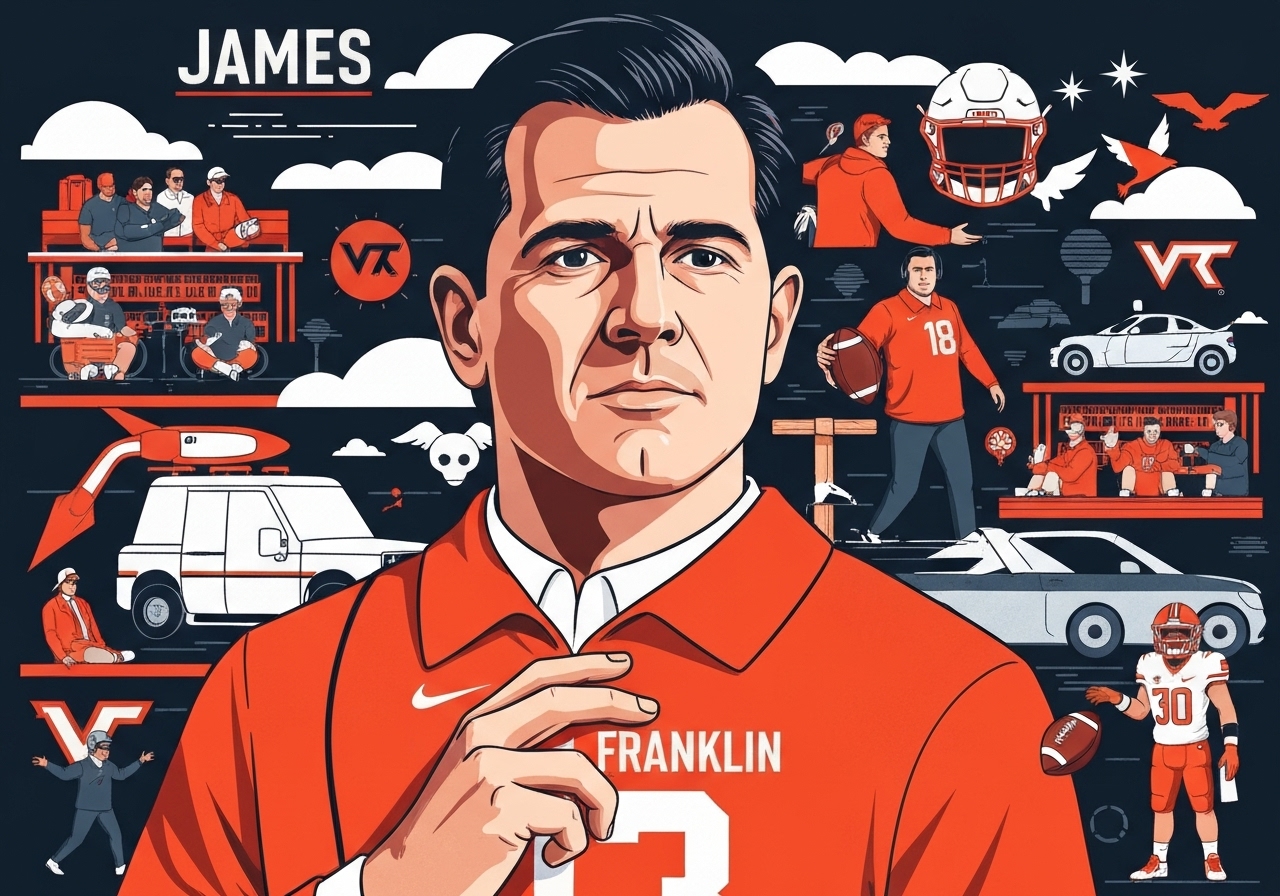
Virginia Tech announced on Nov. 17 that James Franklin will be the university’s next head football coach, a move presented by the Board of Visitors, president and athletic director as the start of an ‘Invest to Win’ era. The hiring will be formally introduced at a public press conference at 10 a.m. ET on Wednesday, Nov. 19, at Cassell Coliseum. University leaders framed the decision as a collective effort by the Board, a search committee and major supporters to restore competitive standing. The announcement follows Franklin’s 12 seasons at Penn State and a coaching career that the release summarizes as program-building and consistently successful.
Key Takeaways
- James Franklin is the newly hired head coach of Virginia Tech Football; the hire was announced Nov. 17 and a public introduction is scheduled for Nov. 19 at 10 a.m. ET.
- Franklin has more than 30 years of collegiate coaching experience and a career head-coaching record of 128–60.
- He won 104 games in 12 seasons at Penn State, the second-most wins in that school’s history, and reached 100 wins there in 2024.
- Under his direction, Penn State finished in the top 12 of the final College Football Playoff (CFP) rankings seven times in the last nine seasons and earned seven New Year’s Six bowl berths, winning four.
- Virginia Tech framed the hire as aligned with an institutional ‘Invest to Win’ strategy backed by the Board of Visitors, university leadership and donors.
Background
Virginia Tech has publicly signaled a renewed emphasis on national competitiveness for its football program, positioning the James Franklin hire as a cornerstone of that effort. The Board of Visitors, university leaders and a broadly composed Search Committee collaborated on a recruiting process the university describes as seeking a proven leader capable of elevating the program. The phrasing used by officials—’Invest to Win’—indicates a plan that pairs coaching leadership with sustained institutional and donor support. That strategy aligns with a broader trend in major college football where administrations invest in facilities, staff and recruiting to regain or maintain national relevance.
Franklin arrives with a résumé that includes sustained winning at Power Five programs and notable turnaround results at Vanderbilt and Penn State. At Vanderbilt (2011–2013) he led the program to consecutive nine-win seasons, rare in that program’s modern history. At Penn State (2014–2025) he rebuilt a roster and staff into a multi-year CFP top-12 presence and multiple New Year’s Six appearances. The university emphasized those accomplishments as the core rationale for the hire, while also highlighting Franklin’s reputation as a recruiter and leader of NFL-bound players.
Main Event
The announcement was delivered by Board of Visitors Rector John Rocovich, President Tim Sands and Director of Athletics Whit Babcock, who together framed Franklin as the candidate best suited to restore Virginia Tech’s national standing. Officials credited a unified search process and donor support for enabling the hire, underscoring an administrative commitment to an elevated investment model. The brief release and accompanying media plan scheduled a public press introduction at Cassell Coliseum on Nov. 19 with livestreams on Virginia Tech’s social platforms.
Franklin’s statistical credentials were highlighted in the release: a 128–60 career record and 104 wins at Penn State across 12 seasons, making him one of a small group of active FBS coaches with both high winning percentage and extensive tenure. The university also emphasized Franklin’s recruiting record, the number of All-America selections and NFL draftees coached under him, and his 2016 Big Ten Championship at Penn State. Those items were presented as indicators of the program-building skills Virginia Tech seeks.
The release noted Franklin’s prior success at Vanderbilt, including the 2012 nine-win season and back-to-back nine-win campaigns in 2012–2013, and summarized his earlier assistant and position-coach stops dating back to the mid-1990s. It also introduced Franklin’s family—his wife, Fumi, and daughters Shola and Addison—and referenced his academic background, including a bachelor’s degree from East Stroudsburg University and a master’s degree from Washington State.
Analysis & Implications
Strategically, Virginia Tech’s hire signals an immediate intent to accelerate recruiting and player development by installing a coach with an established track record for producing NFL talent and high-level bowl appearances. Franklin’s history of mentoring All-Americans and NFL picks suggests the program seeks to leverage his network to improve recruiting pipelines, both regionally and nationally. That could yield quicker on-field returns if staff hires and resource allocations follow the Athletic Department’s stated Invest to Win priorities.
Financially and operationally, the success of the hire will depend on concrete follow-through: staffing decisions, facility upgrades and recruiting budgets that match the administration’s public commitments. College football programs that pair experienced head coaches with focused institutional investment tend to shorten the timeline to competitive relevance; however, such outcomes are conditional and require multi-year continuity. The university’s emphasis on donor involvement suggests private funding will play a significant role in executing the plan.
On the competitive map, Franklin’s arrival may alter Virginia Tech’s recruiting battles in the Mid-Atlantic and Southeast, where he has previous success and national recruiting ties. In the Atlantic Coast Conference landscape, restoring consistent top-25 presence will require improved conference records and marquee non-conference wins. NCAA transfer activity and NIL dynamics also shape short-term roster building, creating both opportunities and uncertainties for a new coaching staff.
Comparison & Data
| Year | Team | Record | Notable Bowl/Result |
|---|---|---|---|
| 2012 | Vanderbilt | 9–4 | Music City Bowl: W vs. NC State, 38–24 |
| 2013 | Vanderbilt | 9–4 | BBVA Compass Bowl: W vs. Houston, 41–24 |
| 2016 | Penn State | 11–3 | Big Ten Champions; Rose Bowl: L vs. USC, 52–49 |
| 2024 | Penn State | 13–3 | Fiesta Bowl: W vs. Boise State, 31–14; Orange Bowl: L vs. Notre Dame, 27–24 |
| Career (Head Coach) | 128–60 | 7 New Year’s Six berths (4 wins) | |
The table highlights selected seasons and outcomes used by Virginia Tech to frame Franklin’s record of turning programs into consistent postseason contenders. Officials emphasized the volume of high-level bowl appearances and conference success as evidence of his readiness to lead another Power Five program. While past results do not guarantee future performance, the data illustrate the pattern Virginia Tech aims to replicate: stable staff, strong recruiting classes and regular postseason play.
Reactions & Quotes
Virginia Tech leaders positioned the hire as a unifying institutional achievement, noting coordinated support across governance, administration and donors. Their statements emphasized both Franklin’s résumé and the university’s commitment to backing the new coach.
Virginia Tech has attracted and hired an incredible head coach and extraordinary recruiter in James Franklin. The Board of Visitors enthusiastically supports this hire.
John Rocovich, Rector of the Board of Visitors
Rocovich’s remarks were offered to signal trustee-level endorsement and to reassure alumni and donors that the Board approved the direction. The Board framed the hire as part of a larger strategic emphasis on athletics as a vehicle for institutional visibility.
President Tim Sands framed the hire in community and alumni terms, stressing expectations for on-field performance and campus engagement.
James will provide the leadership and inspiration our student-athletes need, and the performance on the field that our University community, alumni, and fans expect and deserve.
Tim Sands, President
Sands linked coaching leadership to broader campus morale and a hoped-for renewal of game-day atmosphere at Lane Stadium. He also emphasized collaborative work between athletic administration, alumni and donors in making the hire possible.
Athletic Director Whit Babcock described Franklin’s specific strengths as a recruiter and program-builder and positioned the hire as a turning point for the program’s future trajectory.
James is a dynamic leader, a relentless recruiter, and a coach who has proven he can build and sustain elite, championship-caliber programs.
Whit Babcock, Director of Athletics
Babcock’s comments were used to underline the operational rationale for selecting Franklin, with a clear expectation that the new staff will move quickly to assemble assistants and shore up recruiting efforts.
Unconfirmed
- The university has not disclosed Franklin’s contract length, compensation details or specific financial commitments tied to the ‘Invest to Win’ initiative.
- There is no public timeline yet for Franklin’s full staff hires, which will affect recruiting and immediate roster planning.
- Specific donor pledges or capital investments linked to the hire have not been publicly itemized by the university.
Bottom Line
Virginia Tech’s hiring of James Franklin is positioned as a deliberate step to restore the football program’s national competitiveness, leveraging an experienced coach known for recruiting and postseason appearances. The true test of the move will be whether administrative follow-through—staffing, facilities and recruiting investment—aligns with the university’s stated ambitions. Short-term wins may depend on transfer-market activity and early staff appointments, while sustained success will require multi-year continuity and resource commitment.
For Hokie Nation and stakeholders, Franklin’s arrival brings both optimism and measurable expectations: improved recruiting classes, a clearer path back to regularly appearing in top-25 conversations, and a renewed game-day identity at Lane Stadium. Observers should watch for the composition of Franklin’s staff, the scope of announced investments, and recruiting outcomes in the next one to two cycles as the clearest early indicators of progress.