
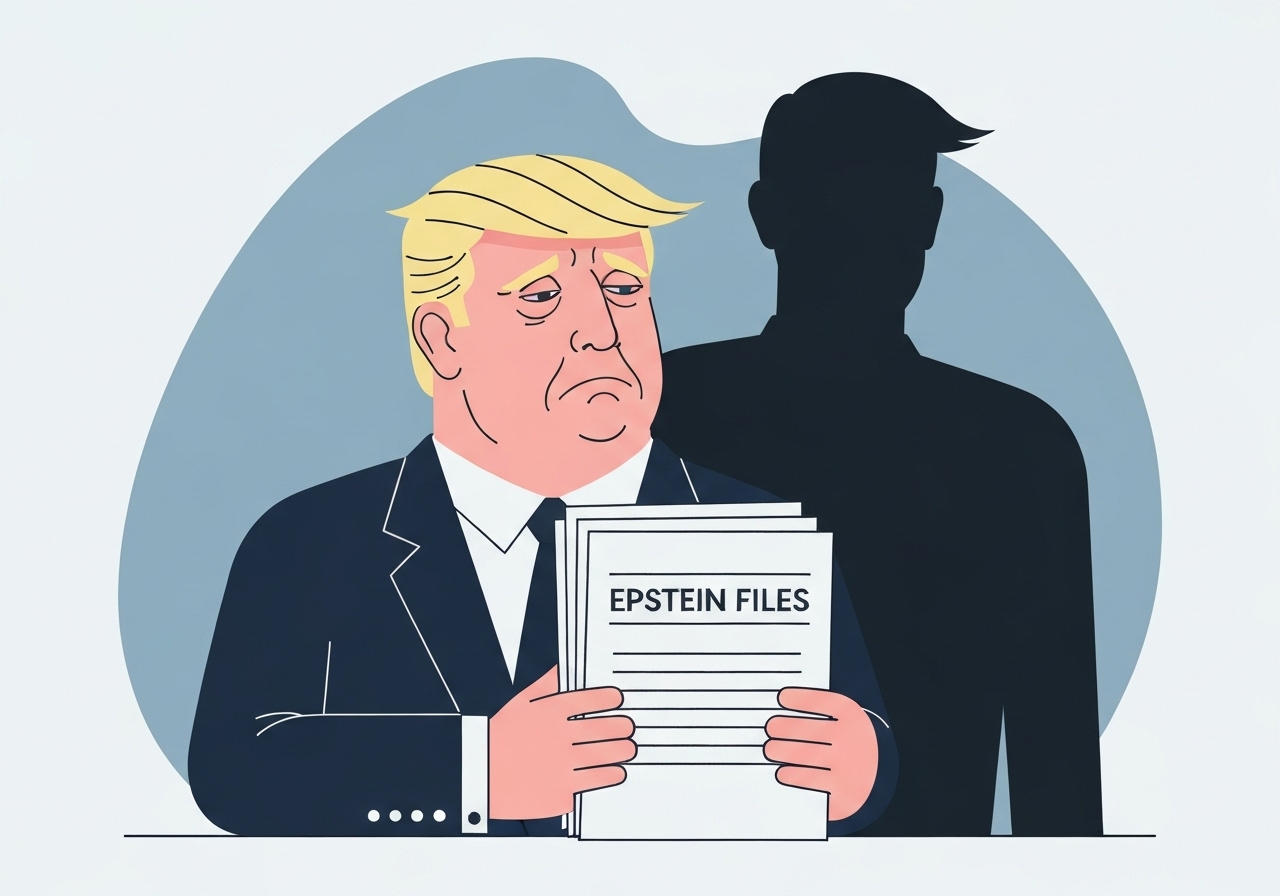
— President Donald J. Trump announced on Monday that he would sign legislation compelling the Justice Department to turn over additional records tied to the Jeffrey Epstein probe if the bill reached his desk. His public reversal, after weeks of resisting congressional pressure, reignited a simpler question: if Mr. Trump believes the files should be made public, why not instruct the attorney general to release them now? The administration says it has already produced large quantities of material; critics argue that withholding more suggests political motives and risks eroding public trust.
Key Takeaways
- The president said on Nov. 17, 2025, he would sign a congressional bill to force release of Epstein-related materials if presented to him.
- The White House maintains it has publicly disclosed “tens of thousands” of pages connected to the Epstein investigation, while Attorney General Pam Bondi released a few hundred pages in February that included flight logs, an evidence list and a contact book.
- Legal experts note the president has authority to direct disclosure of many executive-branch records, a power used historically for inquiries such as the Kennedy and King-era files.
- Congress is pursuing a discharge petition to compel the Justice Department; that legislative route could override departmental resistance but takes time and political votes.
- Civil liberties and grand-jury rules, privacy protections for victims, and possible classified information are cited by officials as constraints on full public release.
- Democrats accuse the president of protecting allies by delaying release; the White House calls such claims politically motivated and points to prior disclosures as evidence of transparency.
Background
Jeffrey Epstein, a financier convicted in 2008 on sex-offense charges, died by suicide in a Manhattan jail cell in 2019 while awaiting sex-trafficking charges that federal prosecutors had brought. His case has since prompted extensive law-enforcement probes, civil litigation and public calls for fuller transparency about associates, victims and investigative findings. The volume of material compiled by federal and local authorities has been the subject of repeated legal fights over what may be released, with competing claims about privacy, grand-jury secrecy and public interest.
In February 2025, then-Attorney General Pam Bondi made public several hundred pages of documents tied to the case, including an evidence index, certain flight manifests, a contact book and a redacted list of massage therapists. The White House has since said additional records are already available in other public sources and framed further demands as politically driven. Opponents, particularly congressional Democrats, argue that substantial relevant material remains sealed within Justice Department custody and that executive action could unlock it immediately.
Main Event
On Nov. 17, 2025, under intensifying congressional pressure, Mr. Trump said he would sign a bill that would compel the Justice Department to disclose more Epstein-related files if the legislation reached his desk. The statement followed weeks of public and private appeals from lawmakers seeking sworn documents and investigative materials they say are necessary to understand the full scope of Epstein’s network.
The president’s statement marked a reversal from earlier reluctance and triggered immediate political debate about why the White House would ask Congress to act when presidential authority could be used to direct the department. Legal scholars point out that presidents have previously ordered the release of sensitive investigatory files; advocates for disclosure cite those precedents as evidence that a unilateral directive is feasible.
Officials defending the current posture emphasize legal limits. Department of Justice and White House aides have cited grand-jury secrecy rules, victim privacy protections, and the presence of potentially classified or ongoing-investigation material as reasons for caution. They also contend that millions of pages and related public records are already available through other channels.
Analysis & Implications
The clash highlights a broader tension between political accountability and the legal safeguards that can prevent immediate transparency. Presidential authority to disclose executive-branch material is real but not absolute: some records are constrained by statutes protecting grand-jury material, statutes protecting minors, or national-security classification rules. A unilateral presidential order could invite lawsuits from victims seeking to block release, or from federal entities arguing statutory protections were violated.
Politically, delay in releasing additional records carries risks for the administration. Critics will interpret withholding as protective of associates or damaging evidence, and Democrats are using the episode to galvanize public scrutiny ahead of future elections. Conversely, a full and rapid release could produce politically inconvenient revelations for multiple actors, create new litigation, and force victims and witnesses back into the public eye—outcomes some officials may wish to avoid for privacy and fairness reasons.
Legally, Congress’s discharge petition route aims to compel the Justice Department irrespective of executive objections, but that path has trade-offs. Forcing production by statute could be challenged in court on separation-of-powers grounds or on procedural grounds concerning classified or grand-jury material. Judicial review would likely be protracted and could result in negotiated redactions or partial releases rather than a wholesale dump of records.
Comparison & Data
| Document set | Pages publicly cited | Notes |
|---|---|---|
| White House claims | “Tens of thousands” | Includes records already posted or released in related matters |
| Pam Bondi Feb. release | “A few hundred” | Included flight logs, evidence list, contact book, redacted masseuse list |
| Potential Justice Department holdings | Unknown | Exact volume in DOJ custody not publicly specified |
The table underscores that public counts diverge between administration statements and the volume observers believe remains sealed. That gap fuels both legal maneuvering and public skepticism about whether additional disclosures would materially change the public record.
Reactions & Quotes
Lawmakers and commentators reacted sharply to the president’s pledge and to the question of why executive action has not already been taken.
“If he truly wants transparency, he can order the material released today.”
Senate Democrat spokesperson
The senator’s office argued that waiting for a legislative mechanism amounts to unnecessary delay. Several House Democrats framed the move as a calculated political pause aimed at controlling timing and optics surrounding any disclosure.
“We have already provided thousands of pages and will continue to follow legal processes to protect victims.”
White House official
The White House response emphasized past disclosures and framed ongoing reviews as consistent with legal obligations. Administration aides reiterated concerns about privacy and statutory protections that, they say, require careful handling of certain material.
“We released a set of documents in February that addressed key investigative leads.”
Attorney General Pam Bondi
Ms. Bondi’s office highlighted that the February batch included specific investigative artifacts, while resisting calls to immediately disclose broader caches that officials describe as intertwined with sensitive legal constraints.
Unconfirmed
- That a specific tranche of sealed files contains definitive, previously unknown evidence tying named public figures to criminal acts — this claim remains unverified by independent records.
- That all remaining files are being withheld primarily to protect close associates of the president — motives for withholding are disputed and not proven.
Bottom Line
The central fact is procedural as much as substantive: President Trump has acknowledged he would sign a bill to compel disclosure, but officials insist legal protections and privacy concerns complicate immediate unilateral release. Historical precedent shows presidents can order disclosures, yet statutory safeguards and likely litigation mean a quick, complete unsealing is not guaranteed.
For the public and policymakers, the episode spotlights a broader governance question about how to balance transparency, due process and victim privacy. Expect further legal skirmishing, targeted releases or negotiated redactions rather than a single decisive disclosure, and continued political fallout as both parties use the timing and content of any release to advance their narratives.