
Lead
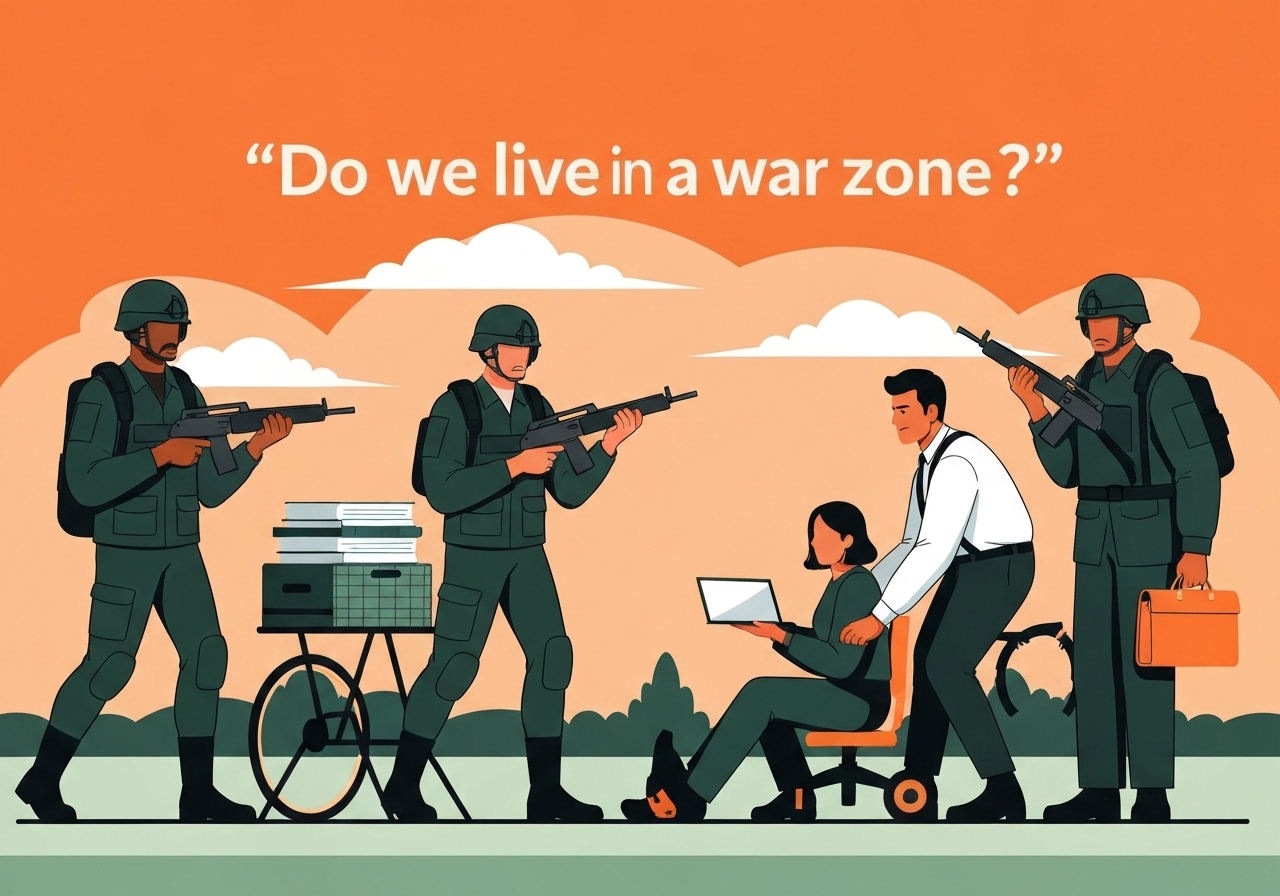
A new HBO documentary, Thoughts and Prayers, directed by Zackary Canepari and Jessica Dimmock, documents how American schools have adopted emergency plans and hardware aimed at active shooters. The film, released on HBO on 18 November 2025, shows lockdown drills, bulletproof backpacks, in-class shelters and realistic simulations that many children now experience regularly. Directors and students in the film describe a stark generational shift from the fire drills of earlier decades to an infrastructure built around the possibility of armed attack. The result, the filmmakers suggest, is an education environment reshaped by fear and a growing industry that treats schools like conflict zones.
Key takeaways
- The HBO documentary Thoughts and Prayers (aired 18 November 2025) catalogs widespread lockdown drills, specialised gear and immersive training across US schools.
- Filmmakers Zackary Canepari and Jessica Dimmock say nearly every US child encounters these measures regularly; Dimmock notes she has an eight-year-old daughter affected by this shift.
- Exhibits in the film include bulletproof backpacks, classroom shelters, flip-over tables used as ballistic shields and simulations with realistic injury makeup.
- The school-safety market is depicted as dominated by former military and law‑enforcement instructors who adapt battlefield tactics for young students.
- Teenagers interviewed in the film largely attribute the danger to the prevalence of guns; the filmmakers present their testimony in contrast to some consultants’ broader social‑factor explanations.
- The film shows immersive training that sometimes resembles large-scale video games, provoking questions about psychological harm as well as physical safety.
- Directors argue these stopgap measures are industry-driven responses in the absence of major political reform on gun policy.
Background
Active-shooter preparedness has grown in US K–12 schools over the past two decades, accelerating after high-profile massacres such as Columbine (1999), Sandy Hook (2012) and Parkland (2018). What began as incremental security upgrades and protocols has expanded into an entire market of products and programs aimed at preventing or surviving an attack. Many school districts, faced with political gridlock on national gun policy and local pressure to show action, have purchased hardware and training from private vendors.
That industry frequently employs veterans and former law-enforcement personnel who translate military and police tactics into curricula for educators and students. Critics say that expertise, while operationally competent in combat settings, raises ethical and developmental questions when applied to children in classrooms. Supporters counter that absent federal reform, practical measures can reduce casualties. Thoughts and Prayers locates these tensions at the center of why such measures proliferate.
Main event
The documentary arranges sequences of drills, product demonstrations and classroom simulations to convey the scale and texture of contemporary preparedness. Cameras record students performing lockdowns, staff rehearsing barricade procedures, and consultants demonstrating bullet-absorbent furniture. The filmmakers show vividly rendered simulations—including actors with makeup to mimic bullet wounds—that blur the line between training and trauma.
Canepari and Dimmock interview entrepreneurs pitching inventions such as bulletproof backpacks and tabletop shields that flip on their sides to stop rounds. These sales pitches are presented alongside footage of teens and children describing how the drills shape their daily school lives. The film highlights the contrast between vendors’ problem-solving rhetoric and the lived experiences of students raised with repeated active-shooter exercises.
Directors stress that the people profiled mostly intend to protect children. Dimmock emphasises that many operate out of practical concern rather than political positioning, and that the industry fills a policy vacuum. The film also points to an intergenerational divide: the consultants are often older veterans, while the students are members of a post-Columbine generation for whom such drills are commonplace.
Analysis & implications
Thoughts and Prayers frames current school-safety measures as a market response to political inaction on firearm regulation. By documenting a suite of rapid‑response products and services, the film implies that capitalism—rather than legislation—has become the primary mechanism for addressing school shootings. That dynamic raises normative dilemmas: who profits from fear, and how do commercial solutions shape policy debates?
Transposing military tactics into elementary classrooms may produce short-term protective benefits in an active attack, but it also carries potential long-term costs. Psychologists and child-development specialists worry that repeated exposure to simulated violence can increase anxiety, alter risk perception and normalise emergency conditions. The documentary prompts questions about whether training that prepares kids to survive is also conditioning them to expect violence as a routine part of childhood.
There are operational trade-offs too. Many devices and protocols are purpose-built for a narrow scenario—an armed intruder with a semiautomatic weapon—leaving schools vulnerable to other risks if resources are diverted. Moreover, the film suggests that seeing an accumulation of measures in sequence can create a sense that safety depends entirely on physical barriers and tactical drills, rather than on preventive public-health or legislative approaches.
Comparison & data
| 1990s | 2020s |
|---|---|
| Fire drills and basic evacuation procedures | Lockdown drills, active-shooter simulations, shelter-in-place hardware |
| Limited commercial safety market | Expansive school-safety industry with specialized products |
| Less frequent discussion of shootings in daily school life | Many students experience drills multiple times per year from early grades |
The table summarises qualitative shifts the film emphasises: preparedness has evolved from occasional fire‑safety exercises to a pervasive regime of active‑shooter readiness. The directors present interviews and footage that suggest frequency of drills, the variety of commercial products, and the immersive nature of modern simulations have all increased markedly since the 1980s and 1990s.
Reactions & quotes
The filmmakers and participants provide varied perspectives that the documentary juxtaposes rather than resolves.
“Almost every kid in America does drills like this, across the board.”
Jessica Dimmock, co-director
Dimmock made this comment in explaining why the film began as a response to her own child’s school experience: she and Canepari saw the drills as universally familiar to contemporary American families.
“We’re saying that’s what it takes to be safe in our country.”
Zackary Canepari, co-director
Canepari used this line to encapsulate the film’s observation that an accumulation of gear and procedures has become the default definition of safety.
“It’s the guns.”
Students interviewed in Thoughts and Prayers
The filmmakers fade from an instructor’s broader social‑factor explanation into teenagers who tersely identify firearm availability as the central issue, presenting a striking contrast in causal framing.
Unconfirmed
- Precise national penetration rates for specific products (for example, percentage of schools using bulletproof backpacks) are not established in the film and require independent verification.
- Claims about long-term psychological impacts of repeated drills are discussed but not quantified within the documentary; comprehensive longitudinal studies are not presented.
- Some vendors’ assertions about effectiveness in live incidents are shown in demonstrations but lack broad, peer-reviewed evaluations in the film.
Bottom line
Thoughts and Prayers documents a visible, industry-driven transformation in how US schools prepare for the rare but catastrophic event of an armed intruder. The filmmakers do not advance a simple partisan argument; instead they juxtapose earnest protective efforts with the lived experience of students who have grown up with drills as a routine. That contrast underlines a central question the film raises: if schools are being made to resemble battlefields, why are we accepting that condition rather than addressing root causes?
For policymakers, educators and parents, the documentary functions as a prompt for a broader conversation about prevention, regulation and the psychological welfare of children. Whether stopgap hardware and training materially reduce fatalities in the long term remains debated; the film makes clear only that, in contemporary America, preparing for a school shooting has become an ordinary part of childhood for millions.