
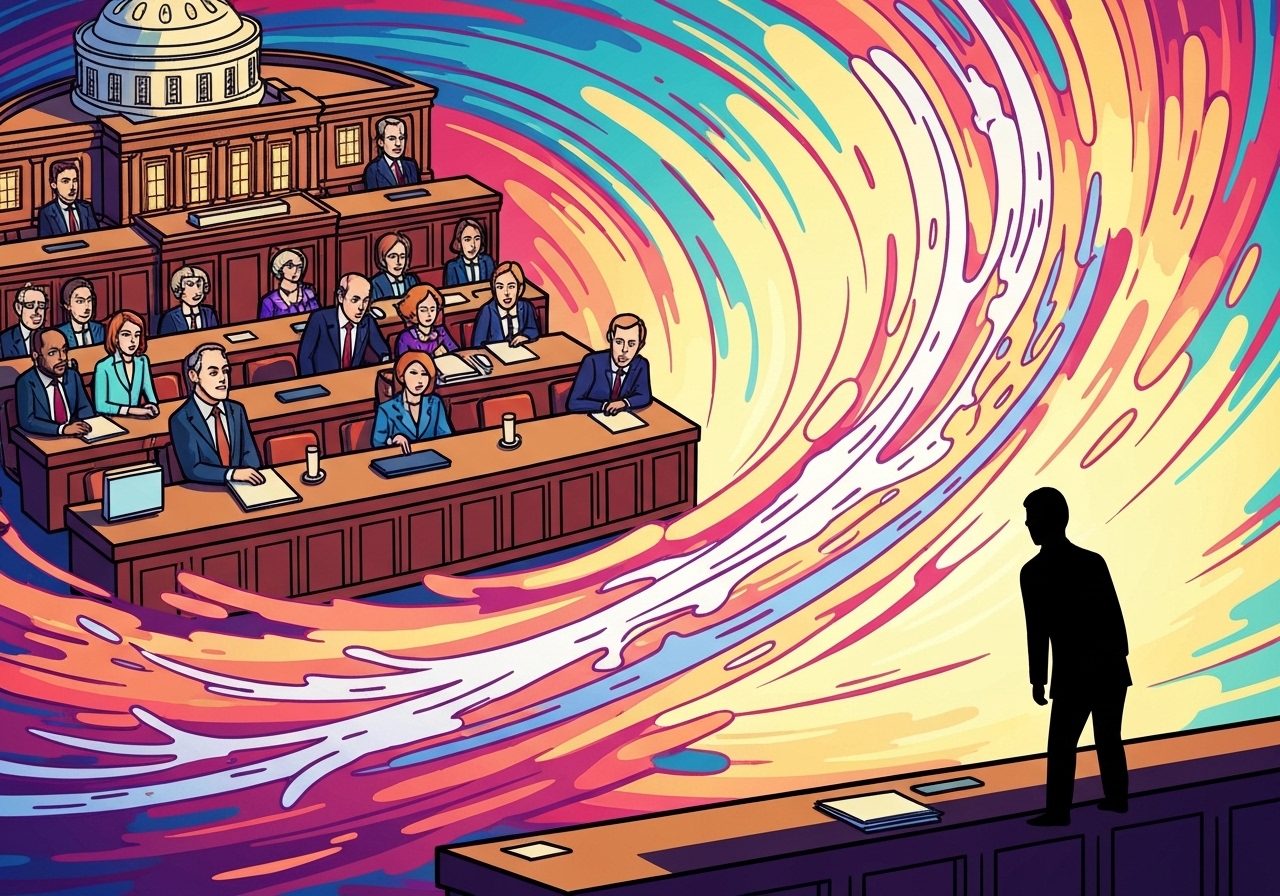
On Tuesday the House of Representatives voted 427-1 to discharge a bill directing the Justice Department to release its files related to the late sex offender Jeffrey Epstein. The lone dissenting vote came from GOP Rep. Clay Higgins. The tally unfolded with about a dozen Epstein victims, including the brother of Virginia Giuffre, seated in the front row of the gallery as lawmakers cast their ballots. With the margin well above a supermajority, several victims left the chamber once passage appeared assured; the bill now advances to the Senate where its fate remains uncertain.
Key Takeaways
- The House approved the measure 427-1; Rep. Clay Higgins cast the only no vote.
- The measure — titled the Epstein Files Transparency Act — would require Attorney General Pam Bondi to disclose all unclassified DOJ records related to Epstein and his convicted accomplice Ghislaine Maxwell.
- Victim-identifying information and any materials depicting child sexual abuse would be excluded from public release under the bill’s text.
- House Speaker Mike Johnson repeatedly criticized the legislation but confirmed he would vote to move it forward; he called it a “political exercise” on the floor.
- President Donald Trump publicly reversed earlier resistance and said Republicans should vote to release the files and that he would sign the bill if it reaches his desk, saying, “we have nothing to hide.”
- Advocates and several victims urged immediate transparency; a group of women victimized by Epstein rallied outside the Capitol before the vote.
- Even if enacted, DOJ officials say material tied to ongoing investigations or executive-privilege claims may remain withheld from public view.
Background
The push to force release of Justice Department records related to Jeffrey Epstein intensified after years of public scrutiny over how the investigations were handled. Epstein died by suicide in 2019 while awaiting trial on federal trafficking charges; his prosecution and prior plea deals prompted longstanding questions about the full scope of investigative files and who was mentioned or referenced in them. Public pressure rose as victims and their advocates pressed for transparency about any government officials, agreements, or investigatory decisions appearing in DOJ materials.
Within the House, the route to a floor vote was contentious. Speaker Mike Johnson resisted bringing the measure to the floor for months and in late July sent the chamber home early amid a stalemate over the matter. The speaker also sent members home during the extended interruption that left the House shuttered for more than 50 days in the longest government shutdown in U.S. history — a hiatus that delayed the swearing-in of Democrat Adelita Grijalva. Once Grijalva became the 218th signature on the discharge petition, House rules compelled the speaker to call the Khanna-Massie bill for a vote.
Main Event
The floor action unfolded on a Tuesday when members gathered and the roll call recorded 427 votes in favor, the single opposing vote by Rep. Clay Higgins, and no recorded abstentions. About a dozen people identified as Epstein victims were present in the gallery; several rose to speak publicly earlier that day outside the Capitol urging lawmakers to support the measure. As the vote total climbed, some victims left the chamber once it became clear passage was assured, signaling a mix of relief and recognition that the bill still faces the Senate.
House debate included repeated criticism of the bill from Speaker Johnson, who described it on the floor as a “political exercise” and said it contained “serious deficiencies,” though he nevertheless confirmed he would vote to move it forward. Proponents argued that the legislative path was necessary because judicial or executive channels had not produced a full public accounting. The bill’s sponsors — Rep. Thomas Massie (R-Ky.) and Rep. Ro Khanna (D-Calif.) — framed the measure as a targeted transparency effort aimed at records that are not classified.
The legislation text calls for all “unclassified records, documents, communications and investigative materials” in DOJ possession related to Epstein, Maxwell and other individuals named or referenced in connection with Epstein’s criminal activity to be made available. The text explicitly protects victims’ names and other identifying information as well as any child sexual abuse material. DOJ sources and legal analysts note, however, that exemptions for ongoing probes and claims of privilege could significantly limit what is ultimately released.
President Trump, who had previously opposed the measure, publicly shifted course in the days before the vote, urging Republicans to support disclosure and stating he would sign the bill if presented to him. Some reporting also indicated White House contacts with individual members to influence their votes; proponents of the bill argued the congressional record of a near-unanimous House vote will outlast political tenure and institutional resistance.
Analysis & Implications
The 427-1 margin is a striking example of bipartisan consensus on transparency in highly sensitive criminal matters. Legislatively, a discharge petition that reaches a floor vote with overwhelming support signals strong appetite among rank-and-file members to force executive-branch disclosure, especially where public interest and victim advocacy are intense. Even so, Senate dynamics differ: the chamber’s rules and leadership priorities will determine whether the bill reaches a vote and whether it is amended there.
If the measure becomes law and is signed by the president, its practical effect may be partial rather than wholesale. DOJ can still redact or withhold records under exemptions for national security, grand-jury secrecy, ongoing investigations, grand-jury material, or executive privilege. Legal challenges are likely if the department withholds materials that advocates believe should be public, setting up potential litigation over the scope of permissible redactions and privilege claims.
Politically, the vote places pressure on the Senate and the White House to reconcile competing claims: the public demand for transparency and the executive branch’s interest in protecting certain communications or active investigative steps. For victims and advocacy groups, the House outcome represents a symbolic and procedural victory that increases leverage to press for disclosures. Internationally, the move may set a precedent for legislative pushes to compel disclosure of government files in high-profile criminal cases.
Comparison & Data
| Measure | House Vote |
|---|---|
| Epstein Files Transparency Act | 427 in favor, 1 opposed |
| Simple majority threshold | 218 votes |
The table above highlights the scale of the vote relative to the 218-vote simple majority needed to pass most measures in the House. The 427 affirmative votes exceed the threshold by 209 votes, demonstrating an unusually broad coalition for a bill that has generated sustained controversy. That margin strengthens the bill’s political weight but does not eliminate procedural hurdles it faces in the Senate or constitutional hurdles related to executive privilege or law enforcement secrecy.
Reactions & Quotes
House Republican leadership and the White House offered mixed messages in public and behind the scenes. Speaker Johnson criticized the bill on the floor yet voted to move it forward; the president publicly shifted from opposing to supporting release and said he would sign. Victims and advocates framed the vote as overdue accountability and urged continued pressure in the Senate.
“This is a political exercise and the bill has serious deficiencies.”
Speaker Mike Johnson
Johnson’s floor remarks underscored his reservations even as procedural mechanics and the discharge petition forced a vote. Members who supported the bill countered that the House had an obligation to pursue records that may reveal governmental involvement or references tied to Epstein’s crimes.
“We have nothing to hide.”
President Donald Trump
That short statement captured the president’s public reversal ahead of the vote; however, sources and legal experts caution that a presidential assurance does not guarantee unredacted or complete disclosure once DOJ evaluates privilege and investigative sensitivities.
“Release of the files is necessary for victims to see the record and for the public to understand what happened.”
Epstein victim advocate (public statement)
Advocates emphasized the symbolic and practical importance of transparency for survivors. Their presence in the gallery and public appeals outside the Capitol helped sustain momentum for the measure on the floor.
Unconfirmed
- Reports that the White House tried to dissuade Rep. Lauren Boebert in the Situation Room are based on unnamed sources and remain unverified; the exact content and context of any discussions have not been publicly confirmed.
- Claims that the Justice Department will release the “entire” Epstein file if the bill becomes law are speculative; officials indicate materials tied to ongoing probes and privilege claims may be withheld.
Bottom Line
The House’s 427-1 vote marks a notable bipartisan push for transparency into government records tied to one of the highest-profile sex-trafficking scandals in recent U.S. history. For victims and their advocates, the result is a tangible legislative victory that elevates the demand for public accounting. However, the measure’s ultimate impact depends on Senate consideration, potential amendments, the president’s willingness to sign unamended text, and the Justice Department’s legal obligations and privilege claims.
Practically, even passage and presidential signature may not produce a complete public trove of documents: redactions and withheld materials are likely where ongoing investigations, grand-jury protections, or executive-branch privilege apply. The coming weeks will test whether Congress can secure a level of transparency that satisfies survivors and the public while navigating legal limits on disclosure.
Sources
- ABC News (U.S. media report)