
Lead
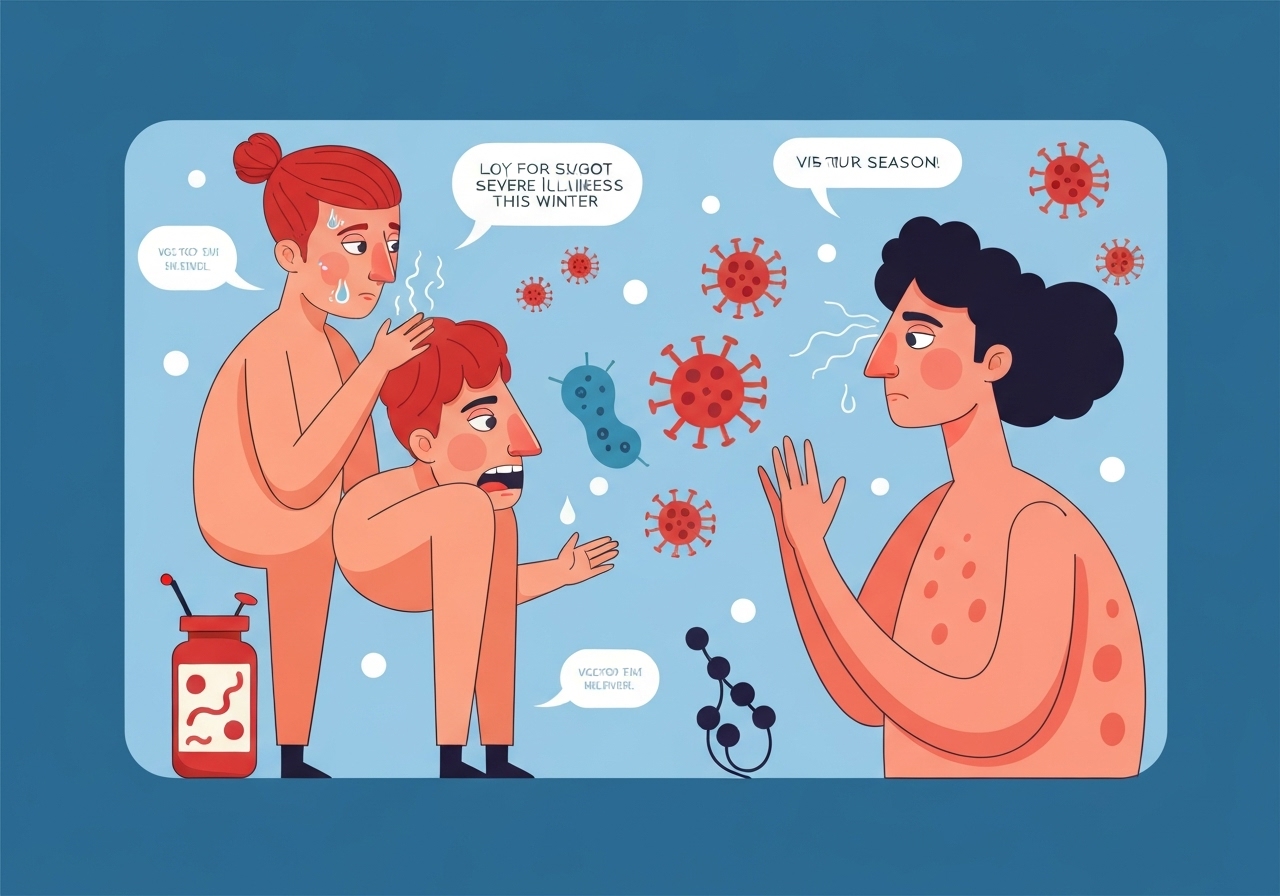
Early surveillance and expert assessments indicate the United States may face a more severe influenza season this winter. Signals include notable influenza activity in the southern hemisphere last winter, rising H3N2 circulation in parts of the northern hemisphere, and the emergence of a new H3N2 variant in the U.S. Public-health officials and researchers warn that vaccines may be a somewhat reduced match but still offer protection against severe illness. Health authorities urge prompt vaccination because population immunity and hospital pressure could become significant by the holidays.
Key Takeaways
- Southern-hemisphere influenza activity this year was above typical levels and lasted longer than usual, an early predictor for northern-hemisphere trends.
- H3N2 is the dominant strain circulating now in the northern hemisphere, a subtype historically linked to higher severity.
- A newly evolved H3N2 variant has become dominant in the U.S., which may reduce vaccine match compared with prior seasons.
- U.K. data show vaccines still reduce hospitalization risk: roughly 70–75% protection for children and 30–40% for adults against hospital admission.
- It takes about two weeks after vaccination to develop substantial immunity, so officials recommend getting the shot before Thanksgiving when activity often rises toward a holiday peak.
- Annual U.S. influenza mortality ranges from about 12,000 to 52,000 deaths per season; increased activity could raise hospital and mortality pressure.
- Public-health experts express concern that uptake of both flu and COVID-19 vaccines may decline this season, potentially worsening outcomes.
Background
Influenza in the northern hemisphere historically follows patterns observed in the southern hemisphere several months earlier; unusually strong or prolonged southern-hemisphere seasons often foreshadow tougher winters north of the equator. In recent months researchers monitoring global surveillance networks detected elevated activity across multiple southern-hemisphere countries and longer tails to the season than is typical.
H3N2 influenza viruses are well documented to cause relatively higher rates of severe disease and hospitalizations, particularly among older adults and the very young. The last season dominated by H3N2 with marked severity occurred in 2016–2017, and public-health agencies track subtypes closely because they influence vaccine strain selection and expected burden on health systems.
Main Event
Surveillance reports from the northern hemisphere now show H3N2 as the predominant subtype on many flu trackers, including those compiled by the U.S. Centers for Disease Control and Prevention. Parallel upticks have been reported in the U.K. and other European countries, where clinicians are already seeing increased outpatient visits and some hospital pressure tied to influenza.
Laboratories in the United States have detected a recent H3N2 variant that differs from strains used in this season’s vaccine formulation. Johns Hopkins epidemiologist Caitlin Rivers explained that the mutation is “different enough” that prior immunity or the vaccine may be less effective at preventing infection, though still useful against severe outcomes.
Researchers including Richard Webby at St. Jude Children’s Research Hospital described the signal as a potential for a “bigger season,” noting both increased transmissibility and a longer seasonal tail observed abroad. Health systems and public-health agencies are monitoring hospitalization trends and vaccine effectiveness studies closely to update guidance as new data arrive.
Analysis & Implications
The presence of a dominant H3N2 strain plus a newly evolved variant raises the risk of higher case counts and more severe illness, especially in populations with waning immunity. If vaccine effectiveness against infection is reduced, public-health impact will depend on vaccine protection against hospitalization and the proportion of people vaccinated this year.
U.K. interim effectiveness estimates—about 70–75% protection against hospitalization for children and roughly 30–40% for adults—suggest vaccines still blunt severe outcomes even when strain match is imperfect. That means vaccination can materially reduce ICU admissions and deaths even if breakthrough infections rise.
Lower uptake of flu and COVID-19 vaccines would compound risks by enlarging the susceptible population. Hospitals already face staffing and bed-capacity constraints in many regions; an unusually severe influenza season could strain emergency and inpatient services during the holiday period, complicating care for other conditions.
Policy implications include reinforcing vaccination campaigns, prioritizing high-risk groups for early access, and maintaining real-time surveillance and genomic sequencing to detect further viral evolution. Local health departments may need contingency plans for surge staffing, expanded testing, and communication strategies to counter vaccine hesitancy.
Comparison & Data
| Season | Dominant strain | Notable outcome |
|---|---|---|
| 2016–2017 | H3N2 | High hospitalizations and severe disease in older adults |
| 2024–2025 (current) | H3N2 (new variant) | Emerging signals of increased activity and altered vaccine match |
The simple comparison above highlights that H3N2-dominant seasons have historically correlated with higher severity. Current genomic data showing a variant in circulation mean continuous monitoring of vaccine effectiveness (VE) and hospitalization rates is essential to quantify the likely public-health burden.
Reactions & Quotes
“The signs are, it could be a big season,”
Richard Webby, St. Jude Children’s Research Hospital (researcher)
Webby put the observation in context by noting that H3N2-led seasons tend to produce a greater share of severe cases and hospitalizations, especially among vulnerable groups.
“There is basically a new variant of influenza circulating that has mutated a little bit,”
Caitlin Rivers, Johns Hopkins University (epidemiologist)
Rivers emphasized that the mutation may reduce how well prior infection or vaccination prevents infection, while underscoring that vaccines retain benefit against severe outcomes based on U.K. data.
“It is too early to know what viruses will spread this season, in what proportion, and how well the vaccine will work in the United States,”
U.S. Department of Health and Human Services (official statement)
The HHS statement urged individuals to consult healthcare providers about vaccination decisions while acknowledging uncertainty in the early season.
Unconfirmed
- Whether the current U.S. H3N2 variant will drive hospitalization rates higher than the 2016–2017 season is not yet established and requires further VE and hospitalization data.
- Predictions that uptake of influenza and COVID-19 vaccines will decline this season are based on surveys and rhetoric trends; definitive national uptake figures will only be available later.
- Claims that this season’s vaccine offers no protection are unsupported; interim data from other countries suggest retained protection against severe outcomes, but U.S.-specific VE estimates are pending.
Bottom Line
Multiple early indicators — elevated southern-hemisphere activity, H3N2 dominance, and the emergence of a new H3N2 variant in the U.S. — point toward a higher-risk influenza season this winter. While uncertainties remain about exact severity and vaccine match, evidence from the U.K. and influenza science indicate vaccines still substantially reduce hospitalizations, especially in children.
Public-health priority should be maximizing vaccine uptake now (allowing two weeks for immunity), protecting high-risk groups, maintaining robust surveillance, and preparing health systems for potential increased demand during the holiday peak. Individuals should consult healthcare providers about vaccination and take standard precautions to reduce transmission.
Sources
- NPR — news report summarizing expert comments and data (media)
- Centers for Disease Control and Prevention — U.S. influenza surveillance (official public-health)
- St. Jude Children’s Research Hospital — influenza research group (research institution)
- Johns Hopkins Bloomberg School of Public Health — epidemiology experts (academic)
- UK Health Security Agency — surveillance and VE reports (official public-health)